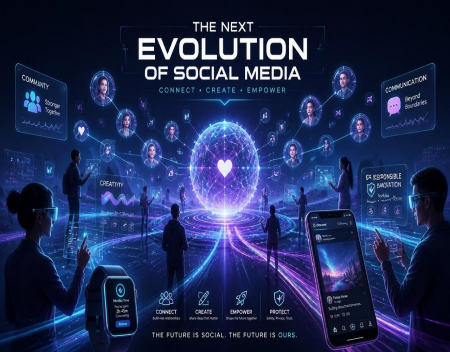
Social media has changed dramatically since the early days of Facebook, Twitter and YouTube. What began as a way to share photographs, update friends and communicate online has evolved into a massive global industry influencing entertainment, business, politics, shopping and everyday life.
However, social media is approaching another major transformation. Artificial intelligence, virtual reality, personalized content and changing user expectations are likely to reshape how people connect online. The next generation of social platforms may look very different from the services we use today.
Artificial Intelligence Will Transform Social MediaArtificial intelligence is already influencing what users see in their social media feeds. Algorithms recommend videos, suggest friends, identify interesting posts and determine which content receives the most attention.
In the future, AI could become much more involved in the actual creation of content. Users may be able to generate videos, photographs, animations and entire posts simply by describing what they want.
AI assistants could also manage social media accounts, respond to routine messages, schedule posts and help businesses communicate with customers. Instead of spending hours creating content, individuals and companies may rely on AI tools to handle much of the work.
However, the growing use of AI-generated content will create challenges involving authenticity, misinformation and trust.
Virtual Reality and 3D Social ExperiencesTraditional social media is largely based on photographs, videos and text displayed on flat screens. Virtual and augmented reality could introduce a completely different way of interacting.
Imagine attending a virtual concert with friends, walking through a digital shopping centre or meeting colleagues in a realistic virtual environment. Instead of watching someone else's experience through a video, users could participate directly.
Virtual social spaces may eventually become more common as headsets become lighter, cheaper and easier to use. Augmented reality could also allow digital information, messages and interactive content to appear within the user's real-world surroundings.
These technologies may not replace traditional social media, but they could become another important way for people to communicate.
More Personalized Social Media FeedsSocial media platforms already use sophisticated algorithms to personalize content. Future systems may become even more tailored to individual interests, habits and preferences.
Rather than showing everyone the same trending topics, platforms could create highly personalized experiences. Users might see different versions of a social media service depending on their hobbies, profession, entertainment preferences or current interests.
While this could make platforms more useful, it also raises concerns about privacy and information bubbles. Users may increasingly see content that reinforces their existing opinions rather than exposing them to different perspectives.
The Rise of Smaller Online CommunitiesLarge social media platforms have millions or even billions of users, but many people are becoming more interested in smaller communities built around specific interests.
Future platforms may place greater emphasis on private groups, specialized discussion communities and membership-based networks.
These environments could offer more meaningful conversations and reduce the pressure to collect followers or compete for attention. Businesses may also use smaller communities to build stronger relationships with customers.
Social Media and Online ShoppingSocial media is already an important part of online shopping. Users discover products through videos, influencers, advertisements and recommendations.
The next evolution could make shopping almost completely integrated into the social experience. Users may be able to watch a product demonstration, ask an AI assistant questions, compare prices and complete a purchase without leaving the platform.
Virtual product demonstrations and augmented reality could also allow shoppers to see how furniture, clothing and other products look before buying them.
Privacy and Trust Will Become Major IssuesAs social media becomes more advanced, privacy and security will become increasingly important. Users are becoming more aware of how their personal information is collected, stored and used.
Future platforms may need to provide stronger privacy controls, clearer content verification and better protection against fake accounts and automated misinformation.
The ability to distinguish genuine people from AI-generated personalities and content may become one of the biggest challenges facing social networks.
Final ThoughtsThe next evolution of social media will likely involve much more than new features or redesigned applications. Artificial intelligence, virtual environments, personalized experiences and integrated shopping could fundamentally change how people interact online.
Although traditional platforms will probably remain important, the social media experience of the future may be more interactive, intelligent and personalized than anything available today. The biggest question is whether these changes will bring people closer together or create even more challenges surrounding privacy, authenticity and online trust.
Great experience with Computer Geek. They helped with my website needs and were professional, respon . . . [MORE].

Great, quick service when my laptop went into meltdown and also needed Windows 11 installed. Also ca . . . [MORE].
It was a great experience to working with you. thank you so much. . . . [MORE].
Thank you so much for great service and over all experience is good . highly recommended for all peo . . . [MORE].
We engaged The Computer Geeks in mid-2023 as they have a reputation for API integration within the T . . . [MORE].
The Next Evolution of Soc

Will Cash Completely Disa

What Will Offices Look Li