
The idea of being watched has always shaped human behavior. From the gaze of authority figures to the expectations of community and culture, awareness of observation influences how people act, speak, and even think. What is different today is not simply that we are watched, but that the watching is constant, automated, and often invisible. Always-watching machines now surround daily life, embedded in phones, cameras, smart homes, workplaces, and online platforms. This shift is producing subtle but profound psychological effects that are still unfolding.
At a basic level, continuous machine observation changes self-perception. When people know they are being monitored, even passively, they tend to regulate their behavior more tightly. This phenomenon, sometimes described as a digital version of the “panopticon effect,” encourages self-censorship and conformity. Individuals begin to anticipate how algorithms might interpret their actions, leading them to adjust behavior not according to personal values but according to what seems safest, most acceptable, or least likely to attract scrutiny. Over time, this can blur the line between authentic self-expression and performance.
One of the most significant psychological impacts is heightened anxiety. Unlike human observation, machine surveillance lacks empathy, context, and forgiveness. Algorithms record actions without understanding intention, emotional state, or nuance. This creates a persistent sense of vulnerability, especially when individuals are unsure what is being collected, how long it is stored, or how it might be used in the future. The uncertainty itself becomes a stressor. People may feel as though they are living with an ever-present risk of misinterpretation, where harmless behavior could be flagged, ranked, or judged without recourse.
Always-watching machines also reshape social relationships. When communication occurs through platforms that monitor, archive, and analyze interactions, spontaneity declines. People become more cautious in conversations, humor, and disagreement. This can weaken trust, as individuals grow unsure whether their words are being heard only by the intended listener or by unseen systems evaluating tone, sentiment, or compliance. Over time, this erosion of perceived privacy can lead to emotional distancing and a sense of isolation, even in digitally crowded environments.
Another psychological consequence is the internalization of surveillance. People do not need to be actively watched to feel watched. Once monitoring becomes normalized, individuals begin to police themselves automatically. This internal monitoring can be exhausting, as the mind constantly evaluates behavior against imagined algorithmic standards. The result is a form of cognitive load that reduces creativity, playfulness, and risk-taking. In environments where surveillance is pervasive, people often choose predictability over exploration, safety over originality.
The presence of always-watching machines also affects how individuals understand responsibility and agency. When decisions are influenced or guided by automated systems, people may feel less accountable for outcomes. If an algorithm suggests, recommends, or filters choices, the sense of personal authorship weakens. Psychologically, this can lead to learned passivity, where individuals defer judgment to systems perceived as more informed or objective. Over time, this reliance can undermine confidence in one’s own intuition and moral reasoning.
There is also an emotional dimension to machine observation that differs from human oversight. Human watchers can respond with compassion, flexibility, and understanding. Machines cannot. Knowing that one’s behavior is being evaluated by systems that do not feel, forget, or forgive can produce a sense of dehumanization. People may begin to feel reduced to data points rather than recognized as complex individuals. This reduction can subtly erode self-worth, especially when machine evaluations influence opportunities, visibility, or access to resources.
Despite these concerns, humans are remarkably adaptable. Many people have already normalized constant observation, especially younger generations who grew up immersed in digital environments. For some, surveillance becomes background noise rather than an active stressor. However, adaptation does not mean absence of impact. Psychological effects can operate beneath conscious awareness, shaping behavior, expectations, and emotional responses without being easily recognized or articulated.
Living with always-watching machines ultimately forces a reconsideration of privacy not just as a legal or technical concept, but as a psychological necessity. Privacy provides space for reflection, experimentation, and emotional processing. Without it, the mind is rarely at rest. As surveillance technologies continue to expand, understanding their psychological consequences will be essential. The challenge is not simply how to regulate machines, but how to preserve the mental freedom required for authentic human life in a world that never stops watching.
Great experience with Computer Geek. They helped with my website needs and were professional, respon . . . [MORE].

Great, quick service when my laptop went into meltdown and also needed Windows 11 installed. Also ca . . . [MORE].
It was a great experience to working with you. thank you so much. . . . [MORE].
Thank you so much for great service and over all experience is good . highly recommended for all peo . . . [MORE].
We engaged The Computer Geeks in mid-2023 as they have a reputation for API integration within the T . . . [MORE].
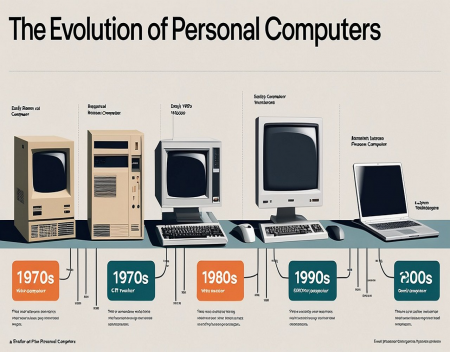
The Evolution of Personal
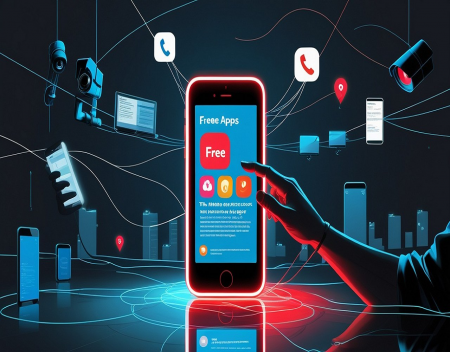
The Hidden Cost of Free A
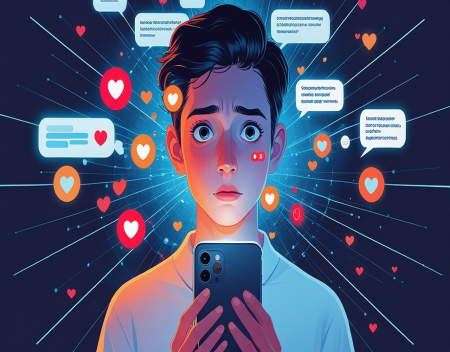
The Psychology of Notific