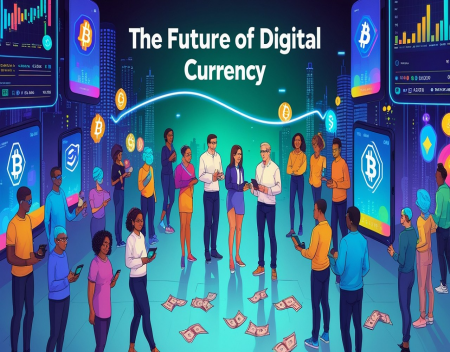
For centuries, physical money has been at the center of human civilization. Coins forged in metal, banknotes printed with national symbols, and the tangible exchange of value shaped economies, cultures, and social norms. Yet in the twenty-first century, a transformation is accelerating so rapidly that the very idea of cash may soon feel like an artifact from another era. As digital currencies—both government-issued and decentralized—become more dominant, the world is facing a fundamental question. Will physical cash disappear entirely, and if so, what does that mean for freedom, privacy, and economic stability.
The rise of digital payments is no longer a technological novelty. In many countries, paying with a smartphone, wearable device, or biometric signature has become routine. The convenience is undeniable. Digital systems allow instantaneous transactions, automated accounting, seamless international transfers, and integration with financial tools that optimize spending and saving. Businesses benefit from lower handling costs, reduced risk of theft, and improved efficiency. For consumers, digital money offers speed and accessibility that cash simply cannot match.
At the same time, governments and central banks are now exploring or launching Central Bank Digital Currencies, often called CBDCs. These official digital currencies could fundamentally shift how money is created, distributed, and controlled. Proponents argue that CBDCs would make economies safer and more resilient. They would reduce fraud, simplify tax collection, enhance financial inclusion, and modernize payment systems. In theory, a digital dollar or digital euro could function as secure, transparent, and government-backed currency for the future.
But the path to a cashless society is not without serious ethical and social considerations. One of the most significant concerns is privacy. Cash provides anonymity. When you hand someone a physical bill, no corporate database or government ledger logs that transaction. In contrast, most digital systems create an indelible trail. A fully cashless world could allow unprecedented financial surveillance. Every purchase, donation, or movement of funds could be tracked. This raises fears of misuse, targeted policing, and the erosion of personal freedom.
Another concern is accessibility. Not everyone has equal access to digital tools. Millions of people worldwide still rely on cash because they lack smartphones, stable internet, or bank accounts. A purely digital economy risks leaving those individuals behind. Without careful planning, the shift could deepen the global economic divide, making participation in society dependent on technology ownership and digital literacy.
Then there is the issue of resilience. Digital systems are powerful, but they are not invincible. Power outages, cyberattacks, system failures, or geopolitical conflicts could disrupt access to money in ways that physical cash never could. Cash serves as a backup, a failsafe that continues functioning even when technology falters. Eliminating it entirely could expose nations to new vulnerabilities.
Despite these challenges, the momentum toward digital currency continues to grow. Younger generations are increasingly comfortable with virtual wallets and online banking. Cryptocurrencies, though volatile, have shown the public appetite for decentralized alternatives to traditional finance. Major corporations now accept digital payments as a standard practice. In many urban areas, paying with cash is not only rare but sometimes discouraged or refused.
So, will physical cash become a myth. In many parts of the world, it is already fading into the background. The future may not eliminate cash completely, but it may redefine its role. Cash could become an emergency tool rather than a daily necessity. It might evolve into a niche option used primarily by those who prioritize privacy or lack digital access. Meanwhile, digital currency—convenient, fast, and programmable—could dominate the global economy.
Ultimately, the transition will depend on how societies balance innovation with ethics. If digital money is designed with strong privacy protections, universal access, and robust safeguards, it could unlock unprecedented financial possibilities. But if the shift is rushed or poorly regulated, it could lead to new forms of inequality, surveillance, and economic fragility.
The world stands at a crossroads. The decline of physical cash is inevitable, but whether its disappearance becomes a symbol of progress or a warning sign of over-digitization will depend on the choices we make today.
Great experience with Computer Geek. They helped with my website needs and were professional, respon . . . [MORE].

Great, quick service when my laptop went into meltdown and also needed Windows 11 installed. Also ca . . . [MORE].
It was a great experience to working with you. thank you so much. . . . [MORE].
Thank you so much for great service and over all experience is good . highly recommended for all peo . . . [MORE].
We engaged The Computer Geeks in mid-2023 as they have a reputation for API integration within the T . . . [MORE].
The Hidden Cost of Free A

The Psychology of Notific
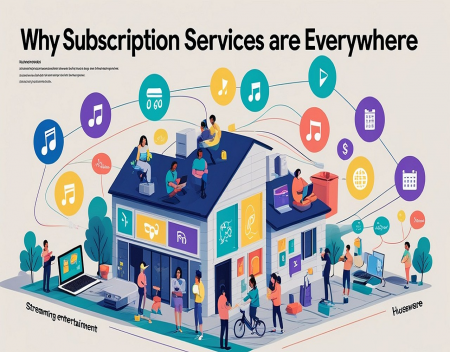
Why Subscription Services