
Orbital surveillance has transformed from a niche military capability into a defining feature of modern life on Earth. From weather forecasting and disaster response to national security and commercial analytics, satellites orbiting the planet now observe vast portions of human activity. As space becomes increasingly crowded with government and private spacecraft, an important question emerges: who is actually watching Earth from above, and what does that mean for privacy, sovereignty, and global power dynamics.
Historically, orbital surveillance began during the Cold War, when rival superpowers launched reconnaissance satellites to monitor troop movements, missile installations, and military infrastructure. These early systems were tightly controlled and shrouded in secrecy, offering strategic advantages to nations capable of building and maintaining space based observation networks. Over time, satellite technology became more advanced, smaller, and cheaper to launch, enabling a broader range of countries and organizations to participate in orbital monitoring. Today, dozens of nations operate Earth observation satellites, while private companies deploy constellations capable of capturing detailed imagery multiple times per day.
Government agencies remain among the most significant actors in orbital surveillance. Military and intelligence organizations use satellites to track geopolitical developments, enforce treaties, and monitor potential threats. Governments also rely on orbital sensors for environmental monitoring, climate research, border control, and disaster response. The ability to observe large areas quickly allows for rapid coordination during wildfires, hurricanes, and earthquakes, demonstrating that surveillance technology can serve humanitarian purposes alongside national defense.
However, the rise of private space companies has dramatically changed the landscape. Commercial satellite operators now offer high resolution imagery and analytics services to businesses, news organizations, and even individual consumers. Retail companies use satellite data to estimate crop yields or track shipping logistics. Financial firms analyze parking lot activity to predict retail performance. Nonprofit groups monitor deforestation and human rights violations in regions that may otherwise be difficult to access. This commercialization of orbital surveillance has expanded access to information, but it has also raised concerns about who controls data and how it is used.
Privacy is one of the most pressing issues associated with surveillance from orbit. Although most satellites cannot identify individuals directly, the increasing resolution of imaging technology and the ability to combine satellite data with other digital information create new forms of indirect monitoring. Patterns of movement, infrastructure usage, and industrial activity can be tracked at an unprecedented scale. As machine learning tools become more sophisticated, even seemingly anonymous data sets can reveal detailed insights about communities, economic behavior, and social trends. The boundary between public observation and intrusive monitoring becomes increasingly blurred.
Another challenge lies in international law and regulation. Space is considered a global commons under existing treaties, but the rapid expansion of surveillance capabilities has outpaced legal frameworks designed decades ago. Questions about data ownership, sovereignty, and acceptable use remain unresolved. For example, should one nation be allowed to collect detailed imagery of another country’s infrastructure without consent. How should governments regulate private companies that sell high resolution data to the highest bidder. These debates are ongoing and highlight the need for updated global agreements that reflect the realities of modern technology.
The ethical dimension of orbital surveillance also extends to power imbalances. Wealthy nations and corporations possess far greater resources to deploy and analyze satellite networks, potentially giving them disproportionate influence over global narratives and decision making. Countries without space programs may find themselves subject to observation without having equal access to information. This asymmetry raises concerns about digital colonialism and the concentration of knowledge in the hands of a few dominant actors.
Despite these risks, orbital surveillance offers significant benefits when used responsibly. It enhances scientific understanding of climate change, enables more efficient agriculture, improves urban planning, and supports global communication systems. Transparency initiatives that make satellite data publicly available can empower journalists, researchers, and citizens to hold governments and corporations accountable. The technology itself is neither inherently oppressive nor inherently liberating. Its impact depends largely on governance, ethical standards, and public awareness.
As humanity continues to expand its presence in space, the question of who watches Earth from above becomes more complex. Governments, private companies, international organizations, and even academic institutions all play roles in shaping the orbital surveillance ecosystem. The challenge moving forward is not simply technological but philosophical: how to balance the desire for information and security with the preservation of privacy, autonomy, and trust. The sky above is no longer empty, and the decisions made today will determine whether orbital surveillance becomes a tool for collective progress or a source of persistent unease in an increasingly monitored world.
Great experience with Computer Geek. They helped with my website needs and were professional, respon . . . [MORE].

Great, quick service when my laptop went into meltdown and also needed Windows 11 installed. Also ca . . . [MORE].
It was a great experience to working with you. thank you so much. . . . [MORE].
Thank you so much for great service and over all experience is good . highly recommended for all peo . . . [MORE].
We engaged The Computer Geeks in mid-2023 as they have a reputation for API integration within the T . . . [MORE].
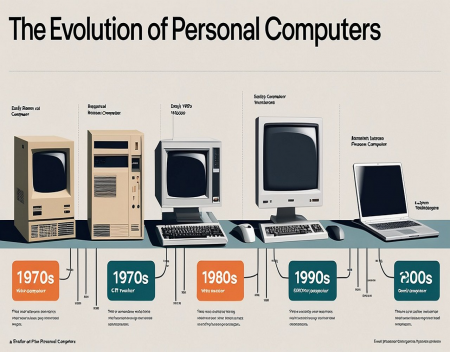
The Evolution of Personal

The Hidden Cost of Free A

The Psychology of Notific