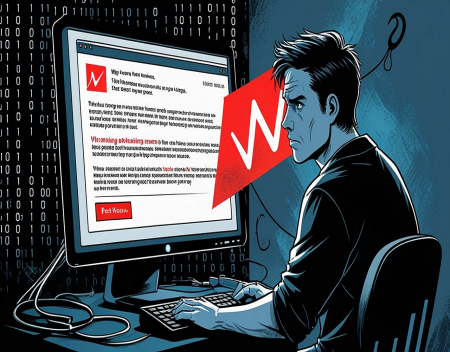
Despite decades of cybersecurity awareness campaigns, improved email filtering, and increasingly sophisticated security software, phishing remains one of the most successful forms of cybercrime. Every year, millions of people and thousands of businesses fall victim to phishing attacks, resulting in stolen passwords, financial losses, identity theft, ransomware infections, and data breaches. This raises an obvious question: if everyone knows about phishing, why does it continue to work so well?
The answer is surprisingly simple. Phishing attacks do not primarily target computers—they target people. Cybercriminals understand human psychology exceptionally well. Instead of trying to break through advanced security systems, they often convince someone to willingly hand over the information they need. As long as people remain susceptible to manipulation, phishing will continue to be one of the most effective weapons in a cybercriminal's arsenal.
Phishing typically begins with an email, text message, social media message, or fake website that appears to come from a trusted source. The attacker may impersonate a bank, shipping company, online retailer, software provider, government agency, employer, or even a friend or family member. Their goal is to convince the victim to click a malicious link, download an infected attachment, reveal login credentials, or provide sensitive financial information.
One reason phishing continues to succeed is that attackers have become remarkably skilled at making fraudulent communications appear legitimate. Years ago, phishing emails often contained poor grammar, obvious spelling mistakes, and unrealistic claims. Today, many phishing messages are professionally written, visually identical to genuine emails, and carefully personalized using publicly available information.
Cybercriminals frequently research their targets before launching an attack. They may examine company websites, LinkedIn profiles, Facebook accounts, or other social media platforms to learn employee names, job titles, suppliers, and ongoing business activities. This information allows them to create highly believable messages tailored to specific individuals.
For example, an employee may receive what appears to be an email from their company's CEO requesting an urgent wire transfer or asking them to review an attached invoice. Because the email references actual company projects or recent events, it appears authentic, increasing the likelihood that the employee will comply.
Urgency is another powerful psychological tool used in phishing attacks. Messages often warn that an account will be suspended, a payment has failed, suspicious activity has been detected, or immediate action is required to avoid penalties. Faced with apparent urgency, many people react quickly without taking the time to verify whether the request is genuine.
Fear also plays an important role. Criminals frequently exploit concerns about financial loss, legal action, tax issues, or account security. An email claiming that your bank account has been compromised naturally creates anxiety, making it more likely that someone will click a link or provide information without carefully examining the message.
Curiosity is equally effective. Phishing emails may promise unexpected refunds, confidential documents, package deliveries, prize winnings, or employment opportunities. Even experienced computer users can sometimes be tempted to investigate unexpected messages, especially if they appear relevant.
Artificial intelligence has made phishing attacks even more convincing. AI tools can generate professionally written emails with excellent grammar and natural language. Criminals no longer need strong writing skills to create believable messages. AI can also personalize emails for thousands of recipients simultaneously, making large-scale phishing campaigns much more effective.
Voice cloning technology has introduced another dangerous dimension. Attackers can now generate realistic recordings that sound remarkably similar to company executives or family members. In some documented cases, criminals have successfully used cloned voices to authorize fraudulent financial transfers or convince employees to disclose sensitive information.
Deepfake video technology may eventually make phishing even more sophisticated. As AI-generated video continues improving, it may become increasingly difficult to distinguish authentic video calls from fabricated ones.
Another reason phishing remains successful is password reuse. Many people use the same password across multiple websites. If attackers obtain login credentials through a phishing website, they often test those credentials on email accounts, cloud services, banking websites, shopping sites, and workplace systems using automated software.
This technique, known as credential stuffing, allows a single successful phishing attack to compromise multiple accounts belonging to the same victim.
Businesses face particularly serious risks from phishing because employees often have access to valuable company resources. A single compromised email account may provide attackers with access to customer databases, financial records, confidential contracts, internal communications, or cloud infrastructure.
Once inside a network, attackers frequently install ransomware, steal sensitive information, or move laterally through connected systems while remaining undetected.
Remote work has also increased phishing opportunities. Employees working from home may have fewer opportunities to verify suspicious requests with coworkers or IT staff. They may also rely more heavily on email and messaging platforms, making fraudulent communications blend more naturally into daily workflows.
Mobile devices present additional challenges. Smartphones display limited information about email senders and website addresses, making it harder to spot subtle warning signs. Small screens also make users less likely to carefully inspect URLs before clicking links.
Fortunately, there are effective ways to reduce phishing risks. Employee education remains one of the most valuable defenses. Regular cybersecurity awareness training helps users recognize suspicious messages, verify unexpected requests, and understand common social engineering techniques.
Multi-Factor Authentication (MFA) provides another critical layer of protection. Even if attackers successfully steal a password through phishing, MFA requires an additional verification step, making unauthorized account access much more difficult.
Organizations should also implement advanced email filtering systems capable of detecting malicious attachments, suspicious links, and spoofed email addresses before messages reach employees.
Businesses should establish verification procedures for financial transactions and sensitive requests. Employees should confirm wire transfer instructions, password reset requests, or confidential information requests using independent communication methods rather than relying solely on email.
Individuals can protect themselves by carefully examining email addresses, avoiding unexpected attachments, hovering over links before clicking them, and visiting websites directly instead of following email links whenever possible. Taking a few extra seconds to verify a message can prevent significant financial and personal consequences.
Strong password management also plays a vital role. Using unique passwords for every account, combined with a password manager, prevents a single compromised password from exposing multiple services.
Looking ahead, phishing attacks will almost certainly continue evolving alongside technology. Artificial intelligence, deepfakes, voice cloning, and increasingly personalized social engineering techniques will make fraudulent communications even more convincing. At the same time, cybersecurity technologies will continue improving, creating an ongoing contest between attackers and defenders.
The most important lesson is that phishing succeeds not because people are unintelligent, but because attackers deliberately exploit normal human emotions such as trust, curiosity, urgency, and fear. Even highly trained professionals occasionally fall victim to well-crafted phishing campaigns.
Cybersecurity is ultimately about more than installing antivirus software or firewalls. It requires awareness, healthy skepticism, and good security habits from every individual who uses a computer or smartphone. As technology continues advancing, the ability to recognize and resist phishing attempts will remain one of the most valuable cybersecurity skills anyone can develop.
Great experience with Computer Geek. They helped with my website needs and were professional, respon . . . [MORE].

Great, quick service when my laptop went into meltdown and also needed Windows 11 installed. Also ca . . . [MORE].
It was a great experience to working with you. thank you so much. . . . [MORE].
Thank you so much for great service and over all experience is good . highly recommended for all peo . . . [MORE].
We engaged The Computer Geeks in mid-2023 as they have a reputation for API integration within the T . . . [MORE].
The Rise of Automation in
Why Every Business Needs
ERP Systems for Small Bus