Advances in artificial intelligence and wearable technology have transformed healthcare from a reactive system into a predictive one. Smartwatches track heart rhythms. Apps monitor sleep, stress, and activity levels. Genetic testing estimates disease risk years in advance. Predictive health monitoring promises earlier intervention, personalized treatment, and longer lives. Yet alongside these benefits lies a troubling question. When health is predicted before symptoms appear, does care turn into preemptive discrimination.
Predictive health systems work by analyzing large volumes of biological and behavioral data. Algorithms search for patterns associated with disease, decline, or risk. A slight change in heart rate variability may signal stress. A genetic marker may suggest susceptibility to certain conditions. Combined with lifestyle data, these signals can create detailed risk profiles. For clinicians, this information can be invaluable. Catching disease early often saves lives.
However, prediction is not diagnosis. A high risk score does not mean illness is inevitable. Many people with elevated risk never develop the predicted condition. Yet when predictions are treated as certainties, individuals can be judged not by their current health, but by what an algorithm thinks might happen. This shift has ethical consequences.
One of the greatest risks is how predictive data is used outside clinical care. Insurance companies, employers, and financial institutions have strong incentives to assess health risk. If predictive monitoring data influences premiums, hiring decisions, or coverage eligibility, individuals may be penalized for conditions they do not have. Health becomes a liability rather than a shared responsibility.
Even within healthcare, predictive monitoring can alter relationships between patients and providers. Patients may feel labeled or surveilled rather than supported. Constant monitoring can increase anxiety, turning everyday fluctuations into sources of worry. When alerts are frequent or unclear, people may feel perpetually unwell, even when they are functionally healthy.
Privacy is another central concern. Health data is among the most sensitive information a person possesses. Predictive systems require continuous data collection, often through devices that operate around the clock. This data is stored, processed, and sometimes shared across platforms. Breaches or misuse can expose intimate details about bodies, habits, and vulnerabilities. Once leaked, health predictions cannot be taken back.
Bias in predictive models further complicates the picture. Many health algorithms are trained on datasets that underrepresent certain populations. This can lead to inaccurate predictions for marginalized groups, either underestimating risk or exaggerating it. When these predictions inform care decisions, disparities widen. Predictive monitoring intended to improve outcomes may instead reinforce inequality.
There is also the question of consent and autonomy. Many users adopt health monitoring tools casually, drawn by wellness features rather than medical scrutiny. They may not fully understand how their data is analyzed or who can access it. Meaningful consent requires more than a checkbox. It requires understanding potential consequences, including how predictions might be interpreted by others.
Supporters argue that predictive health monitoring empowers individuals. Knowing risk allows people to make informed lifestyle choices and seek preventive care. This is true when predictions are framed as guidance rather than destiny. The ethical line is crossed when prediction becomes judgment.
The future of predictive health depends on governance and values. Strong protections against non medical use of predictive data are essential. Clear separation between healthcare and commercial interests must be enforced. Algorithms should be transparent, regularly audited, and designed to communicate uncertainty rather than false certainty.
Predictive health monitoring holds enormous promise. It can shift medicine from crisis response to prevention. But without careful limits, it risks creating a world where people are treated not as patients, but as probabilities. The challenge is ensuring that prediction serves compassion, not discrimination, and that early insight does not become early exclusion.
Great experience with Computer Geek. They helped with my website needs and were professional, respon . . . [MORE].

Great, quick service when my laptop went into meltdown and also needed Windows 11 installed. Also ca . . . [MORE].
It was a great experience to working with you. thank you so much. . . . [MORE].
Thank you so much for great service and over all experience is good . highly recommended for all peo . . . [MORE].
We engaged The Computer Geeks in mid-2023 as they have a reputation for API integration within the T . . . [MORE].
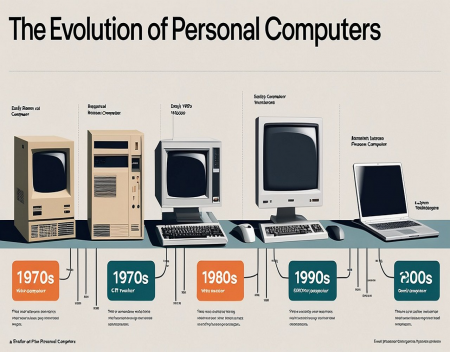
The Evolution of Personal
The Hidden Cost of Free A
The Psychology of Notific