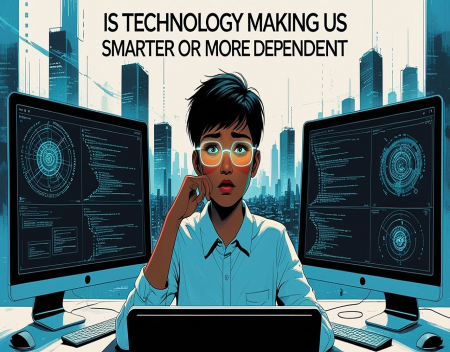
Technology has transformed nearly every aspect of modern life. Smartphones provide instant access to information, search engines answer questions within seconds, navigation systems guide us to unfamiliar destinations, and artificial intelligence can assist with everything from writing emails to solving complex problems. Never before in human history has so much knowledge been available to so many people. Yet this remarkable convenience has sparked an ongoing debate: is technology making us smarter, or is it making us more dependent?
The answer is not as simple as choosing one side or the other. Technology has undoubtedly expanded human capabilities, but it has also created new forms of dependence that previous generations never experienced.
One of the strongest arguments in favor of technology making us smarter is access to information. In the past, finding answers often required visits to libraries, consulting experts, or spending hours researching books and documents. Today, a smartphone can provide access to vast amounts of knowledge almost instantly.
Students can watch educational videos, professionals can learn new skills online, and individuals can explore subjects that once would have been difficult to study independently. Online learning platforms, digital textbooks, and artificial intelligence tools have made education more accessible than ever before.
Technology has also enhanced productivity and problem-solving. Complex calculations that once required significant time can now be completed instantly. Software tools help engineers design buildings, scientists analyze data, doctors diagnose illnesses, and businesses manage operations more efficiently. By automating repetitive tasks, technology allows people to focus on higher-level thinking and creativity.
Communication has benefited as well. Information can be shared globally within seconds. Researchers collaborate across continents, businesses operate internationally, and individuals can connect with experts and communities regardless of geographic location. This unprecedented exchange of ideas can accelerate learning and innovation.
Artificial intelligence may further amplify these advantages. Modern AI systems can summarize information, generate content, assist with research, and help users understand complex topics. Used effectively, these tools can act as powerful educational assistants that expand human capabilities rather than replace them.
However, critics argue that while technology provides access to knowledge, it does not necessarily increase understanding. Knowing where to find information is not the same as truly learning it. Some researchers suggest that easy access to information may reduce the incentive to memorize facts or develop deep expertise.
Consider how many phone numbers people memorized before smartphones became common. Today, many individuals know only a handful because contact lists store the information automatically. Similarly, GPS navigation systems have reduced the need for people to memorize routes or develop strong navigational skills.
Search engines have created a similar effect. Rather than remembering facts, people often remember how to find them. Psychologists sometimes refer to this as the "Google Effect" or digital memory dependence. The brain adapts by storing less information directly when it knows the information can be easily retrieved later.
Social media presents another concern. While these platforms provide access to information and communication, they can also encourage shallow engagement with content. Endless streams of short videos, headlines, and posts may reduce the amount of time people spend reading deeply or thinking critically about complex subjects.
Attention spans have become a frequent topic of discussion in the digital age. Notifications, messages, and constant streams of new content compete for attention throughout the day. Some experts worry that this environment may make it more difficult for people to focus on lengthy tasks that require sustained concentration.
Artificial intelligence introduces additional questions about dependence. AI-powered tools can draft documents, answer questions, generate code, and perform many cognitive tasks that once required significant human effort. While these tools can increase productivity, there is concern that overreliance may weaken certain skills if users stop practicing them independently.
For example, a calculator is an extremely useful tool, but someone who relies on it exclusively may lose proficiency in mental arithmetic. Similarly, AI can assist with writing and research, but users still need critical thinking skills to evaluate information, verify accuracy, and make informed decisions.
The relationship between technology and intelligence may ultimately be similar to the relationship between tools and physical strength. Machines have reduced the need for manual labor in many industries, but they have also enabled humans to accomplish tasks that would otherwise be impossible. Technology does not necessarily make people weaker; it changes how strength is applied.
The same principle may apply to mental capabilities. Technology can reduce the need for certain types of memorization or routine problem-solving while increasing opportunities for creativity, analysis, and innovation. The key question is whether people continue exercising their critical thinking skills rather than allowing technology to think entirely on their behalf.
Education systems are increasingly adapting to this reality. Rather than focusing solely on memorization, many educators emphasize information evaluation, problem-solving, digital literacy, and critical thinking. These skills may become even more important as technology continues advancing.
Ultimately, technology is neither inherently making humanity smarter nor more dependent. It is doing both simultaneously. It expands access to information, enhances productivity, and enables extraordinary achievements, while also creating new forms of reliance on digital tools and systems.
The outcome depends largely on how technology is used. When treated as a tool that complements human intelligence, it can help people learn, create, and innovate at unprecedented levels. When relied upon without understanding or critical thinking, it can encourage dependence and reduce engagement with deeper forms of learning.
As artificial intelligence, automation, and digital services become increasingly integrated into everyday life, maintaining a balance between convenience and capability will be one of the defining challenges of the technological age. The goal should not be to reject technology, but to ensure that it strengthens human intelligence rather than replacing it.
Great experience with Computer Geek. They helped with my website needs and were professional, respon . . . [MORE].

Great, quick service when my laptop went into meltdown and also needed Windows 11 installed. Also ca . . . [MORE].
It was a great experience to working with you. thank you so much. . . . [MORE].
Thank you so much for great service and over all experience is good . highly recommended for all peo . . . [MORE].
We engaged The Computer Geeks in mid-2023 as they have a reputation for API integration within the T . . . [MORE].
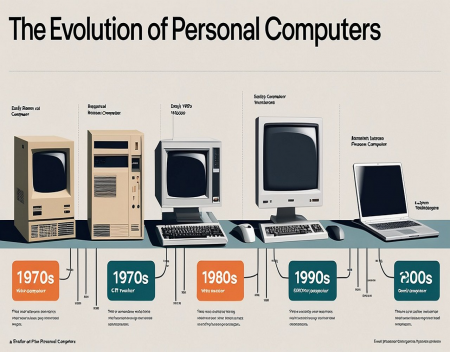
The Evolution of Personal
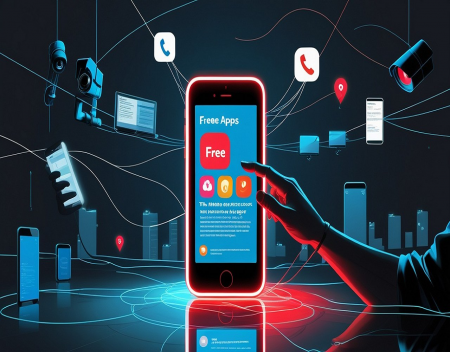
The Hidden Cost of Free A
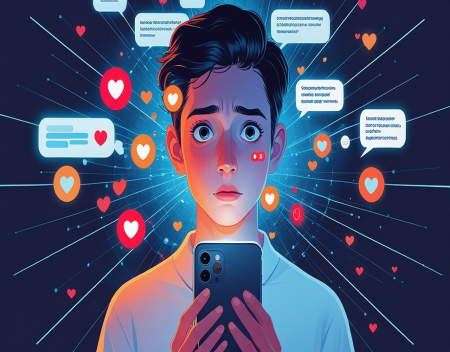
The Psychology of Notific