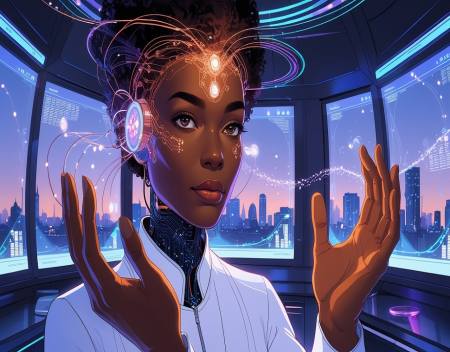
For centuries, human knowledge has been passed down through teaching, culture, and written records. Skills are learned slowly, through repetition, mentorship, and experience. But what if that process could be radically accelerated? What if future generations could inherit not just physical traits like eye color or height, but memories, abilities, or learned skills encoded directly into their biology? The idea of genetic memory transfer sits at the crossroads of neuroscience, genetics, and ethics, raising questions that challenge our understanding of identity, learning, and what it means to be human.
The concept is not entirely fictional. Scientists already know that genetics influences behavior more deeply than once believed. Certain fears, stress responses, and behavioral tendencies appear to be inherited. Experiments with animals have shown that trauma experienced by one generation can affect the behavior of the next. For example, mice conditioned to fear specific stimuli have produced offspring that display similar anxieties, even without direct exposure. This phenomenon, often linked to epigenetics, suggests that life experiences can leave chemical markers on DNA that influence how genes are expressed in descendants.
However, transferring complex skills—such as language fluency, musical ability, or technical expertise—is an entirely different challenge. Memories are stored through neural connections in the brain, not directly in DNA. Encoding a skill genetically would require translating patterns of neural activity into biological instructions that could be reconstructed in a developing brain. While current science is far from achieving this, advances in brain mapping, neural interfaces, and gene editing have made the question less speculative than it once was.
If genetic memory transfer became possible, the benefits could be profound. Education could be transformed. Children might be born with foundational knowledge in mathematics, engineering, or medicine. Societies could preserve critical expertise across generations without relying on fragile institutions or incomplete records. Dangerous or highly specialized skills—such as piloting spacecraft, performing complex surgeries, or operating nuclear systems—could be passed down with unprecedented reliability. In theory, humanity could progress faster than ever before.
Yet this acceleration comes with serious risks. One immediate concern is inequality. If genetic memory transfer were expensive or tightly controlled, it could create a biologically enhanced elite. Families with access to skill inheritance would gain overwhelming advantages, while others would fall further behind. Education, once a shared social process, could become a genetic privilege. The divide would no longer be economic alone—it would be biological.
There is also the issue of consent. Future generations cannot choose which memories or skills they inherit. Is it ethical to impose abilities, beliefs, or even trauma onto a child before they are born? A skill is never neutral; it carries values, assumptions, and perspectives. Passing down combat training or ideological frameworks could limit a person’s freedom to define themselves. Genetic memory transfer risks turning children into curated products rather than autonomous individuals.
Identity itself becomes unstable under this model. Much of who we are is shaped by struggle, failure, and discovery. Learning a skill involves mistakes that build resilience and creativity. If abilities are inherited fully formed, does personal growth lose its meaning? Would individuals feel ownership over talents they never earned? The line between self and ancestor could blur, raising psychological challenges unlike anything humanity has faced.
There are also darker implications. Governments or corporations could weaponize genetic memory transfer. Soldiers could be born pre-trained for warfare. Workers could be engineered with optimized productivity skills. Cultural diversity might erode as standardized knowledge packages replace organic learning traditions. In the worst case, genetic memory could become a tool of control, shaping populations to fit predefined roles.
Defenders of the idea argue that humanity has always used technology to extend itself. Writing, printing, and digital storage are all forms of external memory transfer. Genetic memory would simply internalize that process. They argue that safeguards, regulation, and ethical oversight could prevent abuse while preserving the benefits. But history suggests that powerful technologies rarely remain confined to their original intent.
Ultimately, genetic memory transfer forces us to confront a fundamental question. Is knowledge valuable because of its utility, or because of the journey required to acquire it? If skills become inherited artifacts rather than earned achievements, the human experience itself may change in ways we cannot fully predict.
The possibility of passing skills to future generations is both thrilling and unsettling. It promises efficiency and continuity, but threatens individuality and freedom. Whether genetic memory transfer remains a distant dream or becomes a defining technology of the future, the ethical debate surrounding it may matter more than the science itself. Humanity must decide not just whether it can pass knowledge through genes—but whether it should.
Great experience with Computer Geek. They helped with my website needs and were professional, respon . . . [MORE].

Great, quick service when my laptop went into meltdown and also needed Windows 11 installed. Also ca . . . [MORE].
It was a great experience to working with you. thank you so much. . . . [MORE].
Thank you so much for great service and over all experience is good . highly recommended for all peo . . . [MORE].
We engaged The Computer Geeks in mid-2023 as they have a reputation for API integration within the T . . . [MORE].
The Browser Wars Revisite
The Rise and Fall of Flas
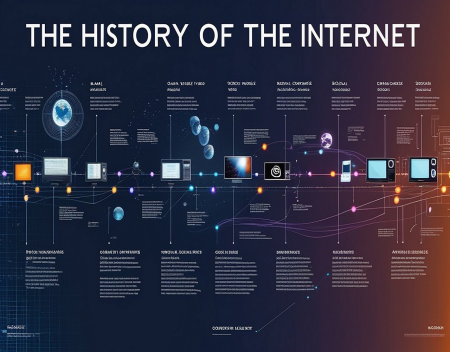
The History of the Intern