
Automation colonialism describes a growing pattern in which the economic disruptions caused by advanced technology are disproportionately exported to the developing world. While automation promises efficiency and productivity gains for wealthy nations and corporations, its global impact often mirrors older colonial dynamics, shifting risk, instability, and job loss onto regions with the least capacity to absorb them. This process raises difficult questions about fairness, responsibility, and the true cost of technological progress.
Historically, industrialized nations built their wealth through labor intensive manufacturing, often relying on cheap labor abroad. In recent decades, globalization extended this model, outsourcing production and services to developing countries. Automation now threatens to reverse even these arrangements. As robots and artificial intelligence become cheaper and more capable, companies in wealthy nations are reshoring production or automating outsourced processes, leaving workers in developing economies without alternatives. The benefits of automation remain concentrated, while the losses are widely dispersed.
Many developing countries have structured their economic strategies around providing labor to global markets. Manufacturing hubs, call centers, and data processing facilities offered employment to millions. Automation undermines these pathways. Tasks once considered safe because they required human judgment or language skills are increasingly automated. When multinational firms deploy AI systems, they often do so without local investment or transition planning, effectively withdrawing opportunity rather than transforming it.
The impact on workers extends beyond income loss. Employment in export oriented industries has often supported urbanization, education, and social mobility. When these jobs disappear, communities face cascading effects, including increased poverty, migration pressures, and social unrest. Unlike wealthier nations, many developing countries lack robust social safety nets or retraining programs, making adaptation far more difficult.
There is also a data dimension to automation colonialism. AI systems are frequently trained on data labeled or curated by low paid workers in developing countries. Once trained, these systems can replace similar labor globally, including the very workers who helped build them. This dynamic echoes extractive practices, where resources are taken from one region to generate value elsewhere, with minimal local benefit.
Ethical concerns arise from the asymmetry of power. Decisions about automation are made by corporations and governments far removed from those most affected. Developing nations often have limited leverage to negotiate terms that protect workers or ensure technology transfer. The result is a global economy in which innovation accelerates inequality rather than reducing it.
Addressing automation colonialism requires more than technological optimism. It demands policies that recognize shared responsibility. Wealthy nations and corporations benefiting from automation could invest in global transition funds, support education and infrastructure in affected regions, and design technologies that augment rather than replace human labor where possible. International cooperation is essential to prevent a race to the bottom in which technological efficiency overrides human cost.
Ultimately, automation colonialism challenges the narrative that technological progress is universally beneficial. It reveals how power shapes who gains and who loses. If automation continues to export disruption without accountability, it risks reproducing the injustices of the past under a digital guise. A more equitable future depends on acknowledging these dynamics and ensuring that innovation serves global well being, not just the interests of those already ahead.
Great experience with Computer Geek. They helped with my website needs and were professional, respon . . . [MORE].

Great, quick service when my laptop went into meltdown and also needed Windows 11 installed. Also ca . . . [MORE].
It was a great experience to working with you. thank you so much. . . . [MORE].
Thank you so much for great service and over all experience is good . highly recommended for all peo . . . [MORE].
We engaged The Computer Geeks in mid-2023 as they have a reputation for API integration within the T . . . [MORE].
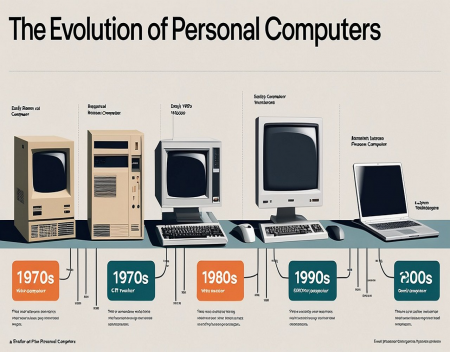
The Evolution of Personal

The Hidden Cost of Free A

The Psychology of Notific