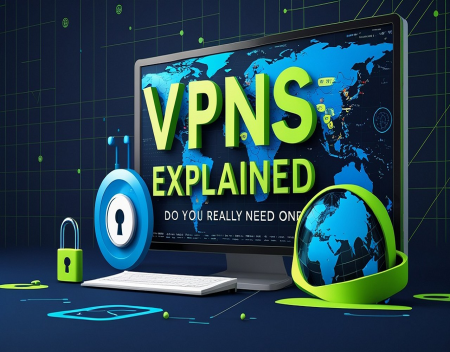
If you've spent any time browsing the internet, you've probably seen advertisements claiming that a Virtual Private Network (VPN) is essential for protecting your privacy online. Many VPN providers promise complete anonymity, military-grade encryption, protection from hackers, and unrestricted access to content from around the world. While VPNs are valuable tools, the marketing surrounding them often exaggerates what they can and cannot do. Understanding how VPNs actually work can help you decide whether one is worth using.
A Virtual Private Network creates an encrypted connection between your device and a VPN server operated by the provider. Instead of your internet traffic traveling directly from your computer to the websites you visit, it first passes through the VPN server. This encrypted tunnel helps protect your data while it is being transmitted across the internet.
Normally, when you visit a website, your internet service provider (ISP) can see which websites you connect to, although encrypted HTTPS connections prevent them from seeing the actual content of most pages you visit. When using a VPN, your ISP can see that you are connected to a VPN service, but it cannot easily determine which websites or online services you are accessing through that encrypted connection.
At the same time, the websites you visit see the IP address of the VPN server rather than the IP address assigned by your internet provider. This helps mask your approximate geographic location and makes it more difficult for websites to identify your specific internet connection.
One of the biggest advantages of using a VPN is improved security when connected to public Wi-Fi networks. Coffee shops, airports, hotels, libraries, and shopping malls often provide free wireless internet access. While these networks are convenient, they are not always secure. A VPN encrypts your internet traffic, making it much more difficult for someone on the same public network to intercept your data.
This can be especially important when accessing email, online banking, cloud storage, or business applications while traveling.
VPNs are also useful for remote work. Many businesses require employees to connect through a corporate VPN before accessing internal servers, confidential files, or company applications. This helps ensure sensitive business data remains encrypted while employees work from home or other remote locations.
Privacy-conscious users often choose VPNs because they reduce the amount of information their internet provider can observe about their browsing habits. While your ISP still knows you are using a VPN, it generally cannot see the specific websites you access through the encrypted tunnel.
However, this does not mean you become completely anonymous online.
One of the most common misconceptions about VPNs is that they make users invisible on the internet. In reality, websites can still identify you if you log into an account. For example, if you sign into Google, Facebook, Amazon, Microsoft, or your online banking account while using a VPN, those services still know who you are because you authenticated with your username and password.
Similarly, websites may continue tracking you through browser cookies, device fingerprinting, or account activity. A VPN hides your IP address, but it does not eliminate all forms of online tracking.
Another popular reason people use VPNs is to access content that may be restricted in certain regions. Since websites see the VPN server's location instead of your own, users can sometimes access services that are normally available only in other countries. However, many streaming platforms actively detect and block VPN traffic, so results vary depending on the provider and service being used.
VPNs can also help reduce certain types of targeted advertising by making it more difficult for advertisers to associate your browsing activity with your home internet connection. That said, advertising companies often rely on many other tracking techniques besides IP addresses.
Choosing a trustworthy VPN provider is extremely important. Since your internet traffic passes through the VPN company's servers, you are effectively placing trust in that provider. Reputable VPN companies maintain strict no-logs policies, use strong encryption standards, undergo independent security audits, and clearly explain how customer data is handled.
Free VPN services deserve extra caution. Operating secure VPN infrastructure is expensive, and companies offering completely free services often generate revenue through advertising, data collection, or bandwidth limitations. Some free VPNs have even been found to log user activity or sell customer information to third parties.
For users who value privacy, paying for a reputable VPN service is generally a better option than relying on unknown free providers.
Speed is another factor to consider. Because your internet traffic must travel through an additional server and be encrypted before reaching its destination, VPNs may reduce connection speeds. High-quality VPN providers minimize this impact with fast servers and optimized networks, but some slowdown is normal.
Fortunately, modern internet connections are often fast enough that most users notice little difference during everyday browsing, streaming, or video conferencing.
It is also important to understand what a VPN cannot do. A VPN does not protect you from phishing emails, malware, ransomware, weak passwords, or unsafe downloads. If you click a malicious link or install infected software, using a VPN will not prevent your computer from becoming compromised.
Likewise, a VPN does not replace antivirus software, firewalls, security updates, or Multi-Factor Authentication (MFA). Good cybersecurity requires multiple layers of protection working together.
Businesses increasingly use VPNs as part of broader cybersecurity strategies, but many organizations are also adopting newer technologies such as Zero Trust security models, secure access service edge (SASE), and cloud-based identity management systems. These approaches provide more granular security controls while supporting remote work and cloud applications.
For the average home user, whether you need a VPN depends on how you use the internet. If you frequently connect to public Wi-Fi, travel often, work remotely, or simply want to add an extra layer of privacy between your internet provider and your online activity, a VPN can be a worthwhile investment.
On the other hand, if you primarily browse from your secure home network, keep your devices updated, use HTTPS websites, enable Multi-Factor Authentication, and practice good cybersecurity habits, a VPN may offer only modest additional benefits.
The best approach is to view a VPN as one tool within a broader online security strategy rather than a complete privacy solution. Combining a VPN with strong passwords, a password manager, Multi-Factor Authentication, reputable antivirus software, regular software updates, secure backups, and cautious online behavior provides far greater protection than relying on any single technology.
As concerns about digital privacy continue to grow, VPNs will remain valuable tools for many users. However, understanding both their strengths and limitations is essential. They are excellent for encrypting internet traffic, protecting data on public networks, and improving privacy, but they are not a magic shield that guarantees complete anonymity or protection from every cyber threat.
Used correctly and combined with sensible cybersecurity practices, a VPN can be an important part of staying safe in today's increasingly connected digital world.
Great experience with Computer Geek. They helped with my website needs and were professional, respon . . . [MORE].

Great, quick service when my laptop went into meltdown and also needed Windows 11 installed. Also ca . . . [MORE].
It was a great experience to working with you. thank you so much. . . . [MORE].
Thank you so much for great service and over all experience is good . highly recommended for all peo . . . [MORE].
We engaged The Computer Geeks in mid-2023 as they have a reputation for API integration within the T . . . [MORE].

The Rise of Automation in
Why Every Business Needs
ERP Systems for Small Bus