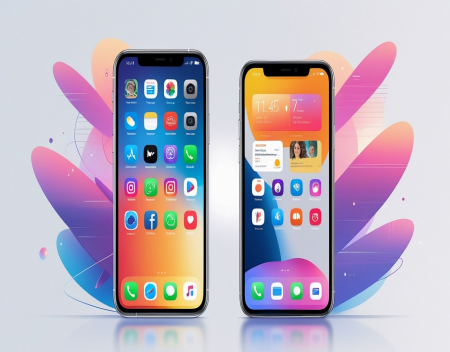
For more than a decade, the smartphone industry has largely revolved around two dominant operating systems: Android and iOS. Together, they power billions of devices around the world and have become the foundation of modern mobile computing. While the rivalry between the two platforms remains strong, their evolution over the years has revealed an interesting trend. Instead of moving in completely different directions, Android and iOS have gradually adopted many of each other's strengths while continuing to pursue unique goals.
In the early days of smartphones, the distinction between the two platforms was relatively clear. Android focused heavily on flexibility, customization, and support across a wide variety of devices. iOS emphasized simplicity, consistency, and tight integration between hardware and software. These differences helped shape user preferences and influenced the development of mobile technology for years.
Today, however, both operating systems have matured significantly. Basic smartphone features that once differentiated the platforms have largely become standard. Users on either system can access powerful apps, advanced cameras, cloud services, digital payments, and robust security features. As a result, the focus of innovation has shifted toward deeper integration, artificial intelligence, privacy, and ecosystem experiences.
One of the most important trends shaping both Android and iOS is the growing role of Artificial Intelligence. AI is increasingly becoming a core part of the smartphone experience rather than simply an optional feature. Modern devices can automatically organize photos, transcribe voice recordings, translate conversations in real time, and provide intelligent recommendations based on user behavior.
On Android devices, manufacturers are integrating AI directly into system functions to improve battery life, camera performance, and personalization. Smartphones can learn usage patterns and optimize resources accordingly. Features such as real-time language translation, advanced image editing, and predictive assistance are becoming common.
Apple has also invested heavily in AI-powered functionality while maintaining its emphasis on privacy. Many intelligent features are designed to run directly on the device rather than relying entirely on cloud processing. This approach helps protect user data while still providing advanced capabilities. As AI technology continues to improve, both platforms are likely to place even greater emphasis on personalized experiences.
Privacy and security have become major areas of competition as well. Consumers are increasingly aware of how their personal information is collected and used. Both Android and iOS have responded by introducing more transparent privacy controls. Users now have greater visibility into which applications access their location, microphone, camera, and personal data.
Apple has built much of its recent messaging around privacy protection, positioning it as a key feature of the iPhone experience. Android has responded with its own set of enhanced security tools, permission controls, and privacy dashboards. While their approaches differ, both platforms are recognizing that trust has become a critical factor in technology adoption.
Another major area of evolution is ecosystem integration. Smartphones are no longer standalone devices. They are increasingly connected to smartwatches, tablets, laptops, televisions, vehicles, and smart home products. Both Android and iOS are expanding their ecosystems to create seamless experiences across multiple devices.
For example, users can begin a task on one device and continue it on another with minimal interruption. Notifications, files, messages, and settings can synchronize automatically across connected products. This interconnected approach encourages users to remain within a particular ecosystem, making convenience a powerful competitive advantage.
Hardware advancements are also influencing software development. Foldable smartphones have introduced new design challenges and opportunities, particularly for Android manufacturers. Software must adapt dynamically as screens change size and orientation. This has encouraged innovations in multitasking, window management, and application design.
At the same time, improvements in processors are enabling more complex tasks to be performed directly on mobile devices. Smartphones now possess computing power that rivals many traditional computers. As hardware capabilities continue to grow, operating systems are evolving to take advantage of these resources through enhanced productivity tools and more sophisticated applications.
The future may also bring significant changes to how users interact with their devices. Voice interfaces, augmented reality, and AI assistants are all expected to play larger roles in coming years. Rather than tapping through menus and applications, users may increasingly rely on conversational interactions and intelligent automation.
Both Android and iOS are preparing for this shift. Augmented reality capabilities continue to improve, while AI-driven assistants are becoming more capable and context-aware. These technologies could eventually redefine what a smartphone is and how people use it.
Despite their similarities, Android and iOS still maintain distinct philosophies. Android continues to prioritize flexibility, hardware diversity, and customization. iOS remains focused on integration, consistency, and controlled user experiences. These differences ensure that users still have meaningful choices based on their preferences and needs.
In the end, the evolution of Android and iOS reflects broader changes in the technology industry. Smartphones have moved beyond being simple communication devices and have become central hubs for work, entertainment, health monitoring, navigation, and daily life. As artificial intelligence, privacy technologies, and connected ecosystems continue to advance, both platforms will keep evolving to meet new challenges and opportunities. While the competition between Android and iOS remains fierce, their shared goal is clear: creating smarter, more capable, and more seamless experiences for the billions of people who rely on them every day.
Great experience with Computer Geek. They helped with my website needs and were professional, respon . . . [MORE].

Great, quick service when my laptop went into meltdown and also needed Windows 11 installed. Also ca . . . [MORE].
It was a great experience to working with you. thank you so much. . . . [MORE].
Thank you so much for great service and over all experience is good . highly recommended for all peo . . . [MORE].
We engaged The Computer Geeks in mid-2023 as they have a reputation for API integration within the T . . . [MORE].
The History of the Intern
The Evolution of Personal
The Hidden Cost of Free A