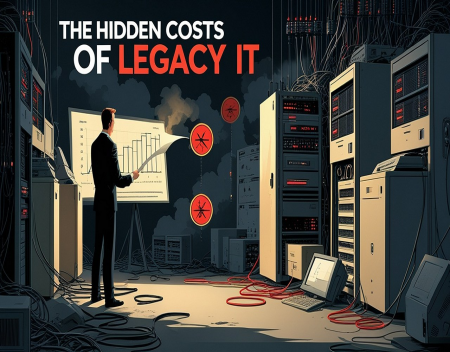
Many businesses depend on computer systems that have been in place for years, sometimes even decades. These systems may include outdated servers, aging computers, old accounting software, unsupported operating systems, and custom applications that were developed for a company's specific needs.
Because these systems still appear to work, management may see little reason to replace them. After all, if the software continues to process orders, manage customer information, and support daily operations, why spend money replacing it?
The problem is that legacy IT systems often cost businesses far more than their maintenance bills suggest.
While older technology may seem less expensive in the short term, it can create hidden costs through lost productivity, security vulnerabilities, compatibility problems, and missed business opportunities. Understanding these costs can help organizations decide when maintaining older technology is no longer the most economical choice.
What Is Legacy IT?Legacy IT refers to older computer systems, software, hardware, and technology infrastructure that a business continues to use.
Not every older system is necessarily a problem. Some established applications remain reliable, secure, and perfectly capable of performing their intended tasks.
The concern arises when technology becomes difficult to maintain, no longer receives security updates, cannot integrate with newer systems, or depends on outdated hardware that is increasingly likely to fail.
Examples include businesses running unsupported operating systems, maintaining aging physical servers, using outdated database software, or relying on custom applications that only one former employee understands.
These systems can become increasingly expensive to operate as the rest of the technology environment evolves.
The Rising Cost of MaintenanceOne of the most obvious expenses associated with legacy IT is maintenance.
Older computers and servers may require more frequent repairs, replacement components, and specialized technical support. Finding compatible hardware can become difficult when manufacturers discontinue older products.
Software can present similar challenges. A business may need to pay for specialized support or retain developers who understand an outdated programming language.
In some cases, only a small number of technicians have the knowledge required to maintain a particular system.
This creates a situation where maintenance costs rise even though the technology itself is becoming less valuable.
Businesses should consider not only the price of keeping an older system running, but also the time employees and IT professionals spend dealing with its limitations.
Security Risks Can Become ExpensiveCybersecurity is one of the most serious hidden costs of outdated technology.
Software vendors regularly release security updates to address vulnerabilities. When a product reaches the end of its support period, those updates may stop.
This leaves businesses exposed to security weaknesses that attackers may be able to exploit.
An unsupported operating system connected to the internet, for example, can become a significant risk if newly discovered vulnerabilities remain unpatched.
Older systems may also lack modern security features, making it harder to implement strong authentication, encryption, monitoring, and access controls.
A successful cyberattack can result in lost data, business interruption, recovery expenses, legal obligations, reputational damage, and potential regulatory penalties.
Not every legacy system is automatically insecure, but unsupported technology requires careful risk assessment. In some situations, replacing or isolating an old system may be more economical than trying to protect it indefinitely.
Lost Employee ProductivityAnother hidden cost is the amount of time employees lose when working with outdated systems.
Older software may run slowly, require repetitive manual tasks, or force employees to enter the same information into multiple applications.
For example, a business might use an old inventory system that cannot communicate with its accounting software. Employees may need to update both systems separately, increasing administrative work and creating opportunities for errors.
An outdated application may also lack features that employees now expect, such as automated reporting, online collaboration, or remote access.
Even small inefficiencies can become expensive when repeated across an entire workforce.
If dozens of employees lose a few minutes every day because of an outdated system, the combined productivity loss can be substantial over a year.
Compatibility Problems With Modern TechnologyBusiness technology rarely operates in isolation.
Companies increasingly rely on integrated applications for accounting, customer relationship management, inventory, payroll, online sales, and reporting.
Legacy systems may struggle to communicate with these newer platforms.
They might lack modern application programming interfaces, use unsupported data formats, or depend on obsolete communication methods.
As a result, businesses may need custom software, manual data transfers, or complicated workarounds to keep everything functioning.
These arrangements can become expensive to maintain and difficult to troubleshoot.
They can also limit future technology choices because the business must continue supporting the old system even when better alternatives become available.
The Risk of Hardware FailureOlder hardware eventually becomes more likely to fail.
A server that has operated reliably for many years may still be functioning today, but replacement components can become harder to obtain as the equipment ages.
If a critical server fails unexpectedly, the business may face significant downtime while technicians attempt repairs or arrange replacement hardware.
The situation becomes more complicated if the old system runs specialized software that cannot easily be transferred to a modern computer.
A company might discover that restoring its operations requires finding obsolete hardware, recovering old installation files, or locating someone with the knowledge to configure the system.
Regular backups and disaster recovery planning are essential, but they do not eliminate the risks associated with aging infrastructure.
Dependence on Outdated ExpertiseLegacy systems often depend on specialized knowledge held by a small number of employees or external contractors.
The original developer may have left the company. The IT technician who understands the server configuration may be approaching retirement. Documentation may be incomplete or missing entirely.
When these individuals become unavailable, maintaining the system can become much more difficult.
This creates a form of operational risk known as knowledge dependency.
Businesses can reduce this risk by documenting systems, transferring knowledge, and gradually replacing technology that depends on scarce expertise.
The longer an organization waits, the harder it may become to find qualified people who can support its older systems.
Missed Business OpportunitiesThe cost of legacy IT is not limited to money already being spent. It can also include opportunities the business cannot pursue.
An outdated ecommerce platform might make it difficult to introduce new payment methods. An older customer database may prevent effective marketing automation. A slow reporting system may delay decisions about pricing, inventory, or sales.
Meanwhile, competitors using modern technology may be able to respond to customers faster, introduce new services more easily, and operate more efficiently.
Legacy systems can therefore affect a company's ability to grow, even when they continue performing their original functions.
Why Replacing Legacy Systems Can Be DifficultIf older technology creates so many problems, why do businesses continue using it?
The answer is often the cost and complexity of replacement.
Migrating to a new system may require software purchases, consulting services, data conversion, employee training, and changes to existing business processes.
There may also be concerns about losing historical information or interrupting operations during the transition.
For highly specialized applications, a suitable replacement may not be readily available.
These are legitimate concerns. Replacing every older system immediately is rarely practical.
However, postponing upgrades indefinitely can allow maintenance expenses and operational risks to grow. Businesses should evaluate the total cost of ownership rather than comparing only the purchase price of new technology with the current maintenance bill.
How Businesses Can Reduce Legacy IT CostsA practical first step is to create an inventory of existing technology.
Businesses should identify their hardware, software, operating systems, support arrangements, dependencies, and replacement timelines.
Next, prioritize systems according to business importance, security exposure, maintenance costs, and the consequences of failure.
Some systems may need immediate replacement because they are unsupported or present unacceptable risks. Others may be suitable for continued use with appropriate safeguards.
Where replacement is necessary, businesses can consider moving applications to supported platforms, adopting cloud services, modernizing software, or consolidating multiple systems into a more integrated solution.
A phased approach can help spread costs and reduce disruption.
It is also important to budget for employee training, data migration, testing, and ongoing support. A successful upgrade involves more than purchasing new hardware or software.
Final ThoughtsLegacy IT systems can appear inexpensive because their original purchase costs have already been paid. However, rising maintenance expenses, security vulnerabilities, lost productivity, compatibility problems, and missed business opportunities can make outdated technology increasingly costly.
The solution is not to replace every older system simply because it is old. Some systems remain reliable and appropriate for their purpose.
Instead, businesses should regularly assess the risks and total cost of maintaining their technology.
By identifying expensive or vulnerable systems early and planning upgrades carefully, organizations can reduce unexpected expenses, improve security, and create a more reliable foundation for future growth.
The real cost of legacy IT is not just what a business pays to keep old technology running. It is also what that technology prevents the business from achieving.
Great experience with Computer Geek. They helped with my website needs and were professional, respon . . . [MORE].

Great, quick service when my laptop went into meltdown and also needed Windows 11 installed. Also ca . . . [MORE].
It was a great experience to working with you. thank you so much. . . . [MORE].
Thank you so much for great service and over all experience is good . highly recommended for all peo . . . [MORE].
We engaged The Computer Geeks in mid-2023 as they have a reputation for API integration within the T . . . [MORE].
The Hidden Costs of Legac
Why Customer Experience D
Digital Transformation Ex