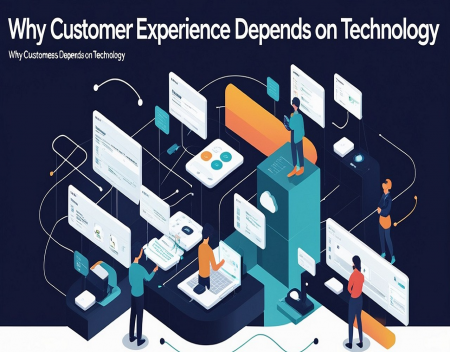
Customer experience has become one of the most important factors determining whether a business succeeds or fails. Customers expect companies to provide convenient service, respond quickly to questions, offer accurate information, and make transactions as easy as possible. When a business fails to meet these expectations, customers can quickly take their business elsewhere.
Technology plays a major role in meeting these demands. From websites and mobile apps to customer relationship management software and artificial intelligence, modern technology helps businesses communicate with customers, solve problems, and deliver better service.
However, technology is not simply about making business processes faster. When used properly, it can create a more convenient, personalized, and reliable experience for customers.
What Is Customer Experience?Customer experience, often called CX, refers to the overall impression a customer develops through interactions with a business.
These interactions may include visiting a website, making a purchase, contacting customer support, receiving a product, or requesting a refund.
Every interaction contributes to how customers perceive a company.
For example, a customer might appreciate a company's products but become frustrated if its website is difficult to navigate or its support team takes several days to respond. Another business offering similar products might win that customer simply by providing a smoother experience.
Technology can help businesses improve these interactions by removing unnecessary obstacles and making information easier to access.
Websites Are Often the First Point of ContactFor many businesses, the customer experience begins online.
A company's website may be the first place a potential customer learns about its products, services, pricing, and reputation. If the website loads slowly, contains outdated information, or is difficult to navigate, visitors may leave before contacting the business.
A well-designed website should make it easy for visitors to find what they need.
Clear navigation, readable content, fast loading times, mobile compatibility, and straightforward contact information can all contribute to a better experience.
Businesses can also use online forms, appointment scheduling, product catalogs, and customer portals to make interactions more convenient.
For ecommerce businesses, a simple checkout process is especially important. Unnecessary steps, confusing shipping costs, and limited payment options can discourage customers from completing purchases.
Customer Relationship Management SoftwareCustomer relationship management software, commonly known as CRM, helps businesses organize customer information and communication history.
Instead of storing customer details across disconnected spreadsheets, email accounts, and paper files, a CRM system can bring important information together.
Employees may be able to see previous purchases, support requests, preferences, and other relevant details in one place.
This can improve customer service because employees do not have to repeatedly ask customers for information they have already provided.
CRM software can also help businesses follow up on inquiries, manage sales opportunities, and make sure customer requests are not forgotten.
When employees have access to accurate information, they can provide more consistent and informed service.
Faster Customer Support Through TechnologyCustomers generally want their questions answered quickly. Waiting on hold, repeating information to different employees, or sending multiple emails without receiving a response can create frustration.
Technology offers several ways to improve support.
Help desk software can organize incoming requests, assign them to the appropriate employees, and track their progress. Automated notifications can keep customers informed about the status of their requests.
Live chat can provide immediate assistance to website visitors, while knowledge bases can help customers find answers to common questions without contacting support.
Some businesses also use chatbots to handle basic inquiries, such as checking order status or explaining return policies.
Automation works best when it handles straightforward requests and allows customers to reach a human employee when a problem becomes complicated.
Artificial Intelligence and Personalized ServiceArtificial intelligence is creating new opportunities to personalize customer experiences.
AI-powered systems can analyze customer interactions, identify common questions, recommend relevant products, and help businesses understand customer preferences.
For example, an online store might recommend products based on a customer's previous purchases or browsing activity. A customer service system might help an employee summarize a customer's history before responding to an inquiry.
AI can also help businesses identify patterns in customer feedback and discover recurring problems.
However, personalization must be handled responsibly. Customers may become uncomfortable if a company collects excessive information or uses their data in unexpected ways.
Businesses should be transparent about data collection, protect customer information, and give customers appropriate choices about how their information is used.
Mobile Technology Makes Businesses More AccessibleCustomers increasingly interact with businesses through smartphones and tablets.
They may search for a nearby service provider, compare prices, book appointments, check delivery information, or make purchases while away from a computer.
Businesses that provide mobile-friendly experiences can make these activities easier.
A mobile website should display properly on smaller screens, offer readable text, and provide buttons that are easy to use. Depending on the business, mobile apps, digital payment options, and appointment reminders may also improve convenience.
Mobile accessibility is particularly important for businesses whose customers need information or services while travelling or working away from home.
Automation Improves ConsistencyTechnology can help businesses deliver a more consistent customer experience.
Automated systems can send appointment confirmations, provide shipping updates, issue payment reminders, and follow up after purchases.
These tasks might seem minor, but they can make a meaningful difference to customers.
For example, a customer waiting for a delivery may appreciate receiving an automatic notification explaining when the package is expected to arrive.
Automation also reduces the chance that employees will forget routine communications during busy periods.
The important point is to use automation where it adds value. Too many generic emails, repetitive notifications, or irrelevant messages can damage the customer experience rather than improve it.
Technology Helps Businesses Understand Customer FeedbackBusinesses cannot improve customer experience if they do not understand what customers like and dislike.
Technology makes it easier to collect and analyze feedback through surveys, online reviews, support tickets, website analytics, and customer satisfaction ratings.
These sources can reveal problems that might otherwise go unnoticed.
For example, website analytics may show that visitors frequently abandon a particular page. Customer support records might reveal that many people are confused by the same product feature.
By identifying these patterns, businesses can make targeted improvements.
Customer feedback should not simply be collected and ignored. Companies need to review the information, address recurring issues, and evaluate whether their changes are producing better results.
The Risks of Relying Too Much on TechnologyAlthough technology can improve customer experience, it can also create new frustrations when poorly implemented.
An automated phone system that makes it difficult to reach a real person may irritate customers. A chatbot that repeatedly misunderstands questions can waste time. A website that requires customers to create an account before completing a simple purchase may discourage sales.
Technical failures can also interrupt service. If a company's website, payment system, or customer database becomes unavailable, customers may be unable to complete important tasks.
Businesses should therefore maintain reliable systems, protect customer data, and provide alternative ways to obtain assistance when technology fails.
Most importantly, technology should support human service rather than eliminate it wherever personal attention is needed.
Measuring the Customer ExperienceBusinesses can use several measurements to determine whether their technology investments are improving customer experience.
These may include customer satisfaction scores, response times, complaint rates, repeat purchases, customer retention, and website conversion rates.
For example, a company that introduces live chat might measure whether customers receive faster answers and whether fewer visitors abandon the website.
A business implementing CRM software might track whether customer inquiries are resolved more quickly or fewer follow-ups are missed.
Measuring results helps companies distinguish between technology that genuinely improves service and technology that simply adds another layer of complexity.
Final ThoughtsCustomer experience depends increasingly on technology because customers expect businesses to be accessible, responsive, convenient, and reliable.
Websites, CRM systems, mobile services, automation, artificial intelligence, and analytics can all help businesses meet these expectations.
However, successful customer experience is not about using the most advanced technology available. It is about choosing the right tools to solve real customer problems.
Businesses that combine effective technology with knowledgeable employees, clear communication, and genuine attention to customer needs can build stronger relationships and encourage long-term loyalty.
In a competitive marketplace, providing a better customer experience can become one of a company's most valuable advantages.
Add practical examples for small businessesStrengthen the opening with a clear thesis
Great experience with Computer Geek. They helped with my website needs and were professional, respon . . . [MORE].

Great, quick service when my laptop went into meltdown and also needed Windows 11 installed. Also ca . . . [MORE].
It was a great experience to working with you. thank you so much. . . . [MORE].
Thank you so much for great service and over all experience is good . highly recommended for all peo . . . [MORE].
We engaged The Computer Geeks in mid-2023 as they have a reputation for API integration within the T . . . [MORE].
Why Customer Experience D
Digital Transformation Ex
The Rise of Automation in