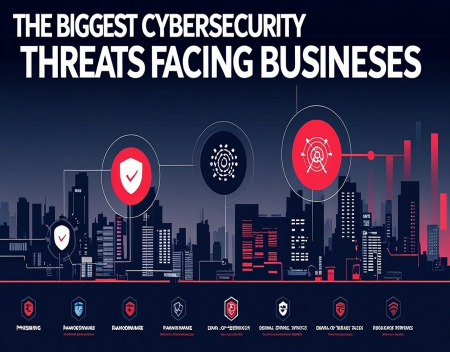
Cybersecurity has become one of the most important concerns for businesses of every size. A decade ago, many cyberattacks targeted large corporations because they offered the greatest financial rewards. Today, however, small and medium-sized businesses are increasingly becoming prime targets. Many cybercriminals recognize that smaller organizations often have fewer security resources, making them easier to compromise. Whether a company has five employees or five thousand, protecting sensitive information has become essential for maintaining customer trust, financial stability, and business continuity.
Modern businesses rely heavily on technology. Customer records, financial transactions, employee information, cloud services, websites, email systems, and online payment platforms all contain valuable data that cybercriminals seek to exploit. Understanding today's most significant cybersecurity threats is the first step toward building an effective defense.
One of the most common threats continues to be ransomware. Ransomware is malicious software that encrypts a company's files and demands payment in exchange for restoring access. In many cases, attackers also steal sensitive data before encrypting it, threatening to publish confidential information if the ransom is not paid.
Ransomware attacks can cripple an organization within hours. Employees may lose access to customer databases, accounting systems, production software, and critical business documents. Recovery can take days or even weeks, resulting in lost revenue, damaged reputations, and expensive recovery efforts.
Regular backups remain one of the most effective defenses against ransomware. Businesses should maintain multiple backup copies stored offline or in secure cloud environments that cannot be easily accessed by attackers.
Phishing remains another major cybersecurity threat. Phishing attacks typically involve fraudulent emails, text messages, or websites designed to trick employees into revealing passwords, financial information, or other sensitive data.
Modern phishing campaigns have become remarkably sophisticated. Attackers often impersonate banks, suppliers, shipping companies, government agencies, or senior executives within the target organization. Some messages appear nearly identical to legitimate communications, making them difficult to identify without careful attention.
Employee awareness training is one of the best defenses against phishing. Staff should be encouraged to verify unexpected requests, avoid clicking suspicious links, and report unusual emails to their IT department.
Business Email Compromise (BEC) has become particularly costly. In these attacks, cybercriminals gain access to or impersonate company email accounts and use them to request fraudulent wire transfers, invoice payments, or confidential information.
Unlike traditional phishing attacks, BEC scams often involve careful research. Criminals may study company websites, LinkedIn profiles, and social media accounts to understand organizational structures and communication styles before launching an attack.
Multi-factor authentication and verification procedures for financial transactions can significantly reduce the risk of successful BEC attacks.
Weak passwords continue to create security vulnerabilities despite years of warnings. Many data breaches occur because employees reuse passwords across multiple services or choose passwords that are easy to guess.
Businesses should require strong, unique passwords for every account while encouraging the use of password managers. Multi-factor authentication adds another important layer of protection by requiring additional verification beyond a password alone.
Cloud security has become increasingly important as organizations migrate data and applications to cloud-based services. While reputable cloud providers invest heavily in security, businesses remain responsible for configuring their cloud environments correctly.
Misconfigured cloud storage, excessive user permissions, weak access controls, and inadequate monitoring can expose sensitive information to unauthorized users. Regular security reviews and access audits help reduce these risks.
Insider threats represent another challenge. Not every security incident originates from external attackers. Employees, contractors, or former staff members may intentionally or accidentally expose confidential information.
Accidental insider threats often involve sending sensitive files to the wrong recipient, using unsecured personal devices, or falling victim to phishing attacks. Limiting user permissions to only the information required for each employee's role can reduce potential damage.
Supply chain attacks have gained increased attention in recent years. Rather than attacking a business directly, cybercriminals target software vendors, managed service providers, or third-party suppliers whose systems connect to multiple organizations.
By compromising a trusted vendor, attackers may gain access to numerous customers simultaneously. Businesses should carefully evaluate the security practices of third-party providers and monitor software updates from trusted sources.
Artificial intelligence is also changing the cybersecurity landscape. While AI is helping security professionals detect threats more quickly, cybercriminals are using the same technology to create more convincing phishing emails, clone voices, generate realistic deepfakes, automate attacks, and identify software vulnerabilities.
AI-generated phishing campaigns can produce personalized messages that are grammatically correct and highly convincing, making traditional warning signs more difficult to detect.
Zero-day vulnerabilities present another serious concern. These are previously unknown software flaws that attackers exploit before software developers have an opportunity to release security updates. Because no patch initially exists, organizations must rely on layered security measures, threat monitoring, and rapid incident response to reduce potential damage.
Internet-connected devices, commonly referred to as the Internet of Things (IoT), introduce additional security challenges. Smart security cameras, printers, thermostats, industrial equipment, and other connected devices often receive fewer security updates than traditional computers.
If left unsecured, these devices can provide attackers with entry points into business networks. Regular firmware updates and network segmentation help reduce IoT-related risks.
Data privacy regulations are becoming increasingly important as governments strengthen consumer protection laws. Businesses that experience data breaches may face regulatory penalties, legal action, and loss of customer confidence. Protecting personal information is no longer simply good practice—it has become both a legal and business requirement in many jurisdictions.
Remote work has also expanded the cybersecurity attack surface. Employees working from home may connect through unsecured Wi-Fi networks, use personal devices, or store sensitive information outside the company's protected environment. Secure virtual private networks (VPNs), endpoint protection software, and remote device management tools help improve security for distributed workforces.
Fortunately, businesses can significantly reduce cybersecurity risks through a combination of technology, policies, and employee education. Essential best practices include keeping software updated, using multi-factor authentication, maintaining secure backups, implementing endpoint protection, monitoring networks for unusual activity, limiting user permissions, encrypting sensitive data, and conducting regular security awareness training.
Developing an incident response plan is equally important. Even organizations with strong security measures may eventually experience a cyber incident. Having clear procedures for detecting attacks, containing damage, restoring systems, notifying affected parties, and communicating with customers can greatly reduce the impact of a security breach.
Cybersecurity is no longer solely the responsibility of an organization's IT department. Every employee plays a role in protecting business systems and customer information. A single careless click on a malicious email or weak password can sometimes lead to significant financial and operational consequences.
As technology continues to evolve, so will cyber threats. Artificial intelligence, cloud computing, connected devices, and increasingly sophisticated attack methods will continue challenging organizations around the world. Businesses that invest in cybersecurity today are not simply protecting their data—they are protecting their reputation, maintaining customer trust, ensuring business continuity, and positioning themselves for long-term success in an increasingly digital world.
Great experience with Computer Geek. They helped with my website needs and were professional, respon . . . [MORE].

Great, quick service when my laptop went into meltdown and also needed Windows 11 installed. Also ca . . . [MORE].
It was a great experience to working with you. thank you so much. . . . [MORE].
Thank you so much for great service and over all experience is good . highly recommended for all peo . . . [MORE].
We engaged The Computer Geeks in mid-2023 as they have a reputation for API integration within the T . . . [MORE].

The Rise of Automation in
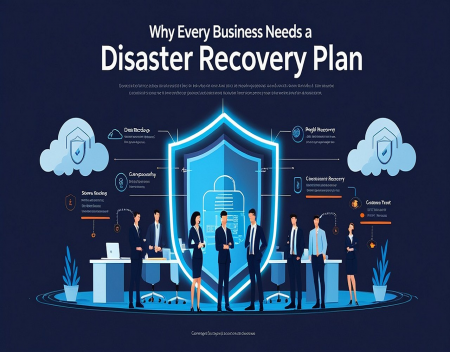
Why Every Business Needs
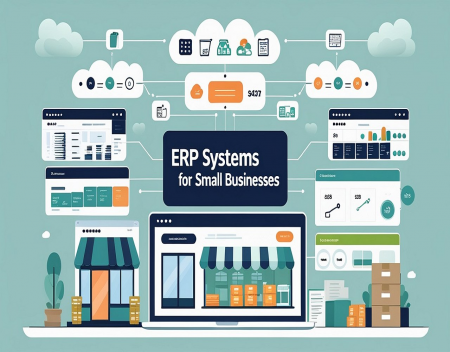
ERP Systems for Small Bus