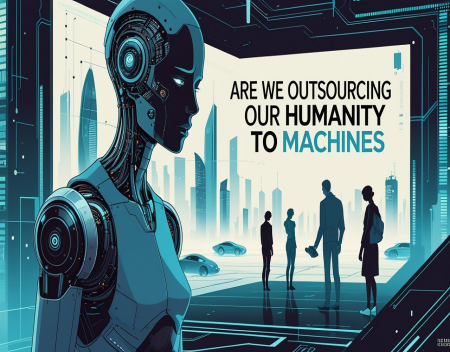
The question of whether humanity is being outsourced to machines is no longer a matter of speculative fiction. It has become a practical concern woven into everyday life. Tasks once defined by judgment, empathy, creativity, and memory are increasingly delegated to algorithms, automation systems, and artificial intelligence. While these technologies promise efficiency and convenience, they also challenge long held assumptions about what it means to be human and which aspects of life should remain uniquely ours.
At first glance, outsourcing appears harmless. Machines calculate faster, store more information, and perform repetitive tasks without fatigue. Navigation systems remember routes, recommendation engines suggest what to read or watch, and digital assistants manage schedules. Each handoff seems small, even beneficial. Yet taken together, these delegations represent a quiet shift in agency. Skills that once required attention and effort now operate in the background, reducing the need for conscious engagement. Over time, the line between assistance and replacement becomes harder to distinguish.
One of the most profound areas of outsourcing involves decision making. Algorithms increasingly influence choices about employment, credit, medical care, and even relationships. While these systems are designed to optimize outcomes based on data, they also narrow the space for human judgment. Decisions shaped by statistical patterns may overlook context, moral nuance, or individual growth. When responsibility is shifted to machines, accountability becomes diffuse. Humans may follow algorithmic guidance not because it is unquestionably correct, but because it appears objective and authoritative.
Emotional labor is another domain undergoing transformation. Machines now simulate empathy through chatbots, virtual companions, and therapeutic tools. These systems can provide comfort, consistency, and availability, qualities that are often scarce in human relationships. While such technologies can be supportive, especially in contexts where access to care is limited, they also risk redefining emotional connection as a service rather than a shared experience. If emotional support can be outsourced, the incentive to cultivate patience, listening, and vulnerability with other people may weaken.
Creativity, long considered a defining human trait, is also being reexamined. Generative systems produce art, music, writing, and design at scale, often with impressive results. These outputs raise questions about authorship and originality. When creative work is generated through prompts and parameters, the role of the human shifts from creator to curator. While this can expand access to creative expression, it may also distance individuals from the slow, uncertain process through which meaning often emerges.
Memory and knowledge are increasingly externalized as well. Search engines, cloud storage, and digital archives reduce the need to remember information internally. This shift is not inherently negative; writing itself was once seen as a threat to memory. However, reliance on external systems can change how people relate to knowledge. Understanding may give way to retrieval, and depth may уступ to convenience. When memory is outsourced, the personal narratives and associations that give facts emotional significance can fade.
There is also a social dimension to outsourcing humanity. As machines mediate communication, social norms evolve. Automated moderation, algorithmic amplification, and AI generated content shape public discourse in ways that are not always transparent. Human voices compete with synthetic ones, and authenticity becomes harder to verify. In such environments, trust must be redefined. People may grow more cautious, or conversely, more passive, allowing systems to filter reality on their behalf.
Yet outsourcing does not inevitably lead to loss. Technology can extend human capacity when used deliberately. The risk arises when delegation becomes default rather than choice. Humanity is not defined by performing every task manually, but by retaining agency, responsibility, and connection. Machines can assist without replacing the human role, but only if boundaries are consciously maintained.
The deeper concern is not that machines will become more human, but that humans will become more machine like. When efficiency, optimization, and constant output become primary values, qualities such as reflection, compassion, and moral struggle may be devalued. Outsourcing humanity is less about what machines do and more about what humans stop doing.
Ultimately, the question is not whether we will use machines to augment life, but whether we will allow them to define it. Humanity is not a fixed set of skills to be optimized away. It is an ongoing practice shaped by choice, effort, and relationship. Preserving it in an age of intelligent machines requires not rejection of technology, but a renewed commitment to what cannot be automated.
Great experience with Computer Geek. They helped with my website needs and were professional, respon . . . [MORE].

Great, quick service when my laptop went into meltdown and also needed Windows 11 installed. Also ca . . . [MORE].
It was a great experience to working with you. thank you so much. . . . [MORE].
Thank you so much for great service and over all experience is good . highly recommended for all peo . . . [MORE].
We engaged The Computer Geeks in mid-2023 as they have a reputation for API integration within the T . . . [MORE].

The Rise and Fall of Flas
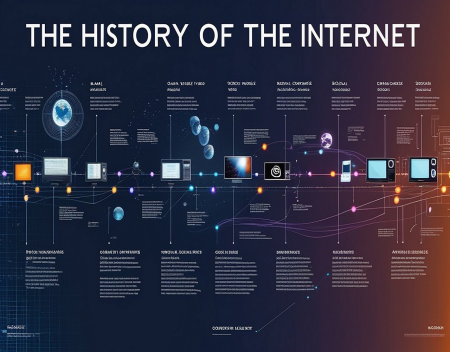
The History of the Intern
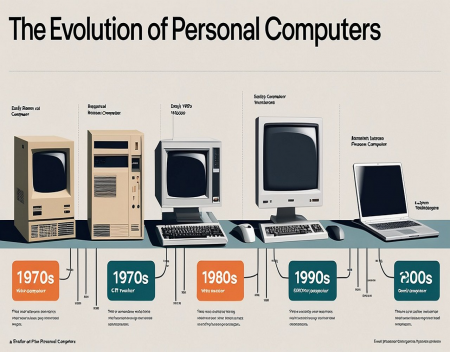
The Evolution of Personal