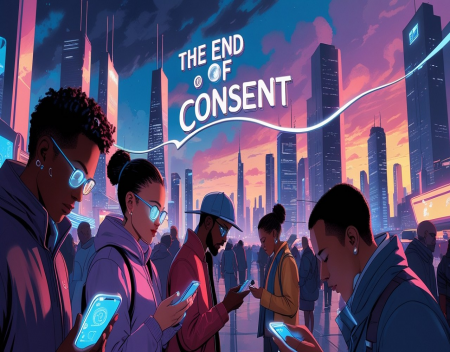
Consent has long been treated as a foundational principle of ethical interaction. Whether in medicine, law, or technology, the idea is simple in theory. Individuals should understand what is happening to them and agree to it freely. In an always-on digital world, however, this principle is quietly breaking down. Constant connectivity, ambient data collection, and automated systems are reshaping consent into something symbolic rather than meaningful. The result is a world where participation is assumed, refusal is impractical, and consent becomes a checkbox rather than a choice.
Modern technology operates continuously. Smartphones track location by default. Apps collect behavioral data even when idle. Smart devices listen, watch, and respond in the background. Online platforms log interactions invisibly. Unlike earlier technologies that required deliberate engagement, always-on systems extract data passively. This changes the nature of consent from an active decision to a passive condition of existence. Simply living in society generates data.
The traditional model of consent assumes clear boundaries. A person is informed, presented with options, and given the freedom to accept or decline without penalty. In digital environments, those conditions rarely exist. Privacy policies are long, complex, and frequently updated. Understanding them requires time, legal knowledge, and technical literacy. Even when users do read them, refusal often means losing access to essential services, social connection, or economic opportunity. Consent under these conditions is coerced by necessity.
The always-on world also fragments consent across countless interactions. A single day may involve dozens of implicit agreements, each tied to different platforms, devices, and services. No individual can realistically track how data flows between systems, how long it is stored, or how it is repurposed. Consent becomes cumulative and opaque. What was agreed to yesterday may be used in unexpected ways tomorrow.
Automation further erodes consent by removing human decision points. Algorithms collect, analyze, and act on data in real time. Facial recognition identifies people in public spaces without notification. Predictive systems assess risk, health, or behavior without direct interaction. These processes do not pause to ask permission. They operate on the assumption that data access is already justified. Individuals are acted upon rather than consulted.
Another critical issue is the expansion of secondary use. Data collected for one purpose is often reused for another. Location data gathered for navigation may be used for advertising. Health data collected for wellness may influence insurance models. Behavioral data used to improve services may shape pricing or access. Initial consent does not account for these downstream effects, yet users bear the consequences.
The social cost of refusing consent is rising. Choosing privacy can mean reduced functionality, exclusion from platforms, or suspicion from institutions. Opting out of monitoring may be interpreted as having something to hide. Over time, refusal itself becomes stigmatized. Consent shifts from a right to a signal of compliance.
This transformation has psychological consequences. When people feel they have no meaningful control over data collection, resignation replaces agency. Surveillance becomes normalized. Privacy is reframed as outdated or unrealistic. The idea of consent loses its moral weight and becomes a procedural formality.
The erosion of consent also weakens accountability. When harm occurs, responsibility is diffused. Companies point to user agreements. Governments cite legal authority. Developers reference system design. Individuals are told they consented, even when no realistic alternative existed. This undermines trust and makes redress difficult.
Restoring meaningful consent in an always-on world requires more than better policies. It requires structural change. Data collection should be minimized by default. Consent should be ongoing, specific, and reversible. Refusal must be a viable option without disproportionate consequences. Transparency must be practical, not performative.
The always-on world is not inherently unethical. Connectivity and automation can improve lives. But without genuine consent, convenience becomes compulsion. The danger is not that consent disappears suddenly, but that it fades quietly until it no longer protects anyone. In a world that never turns off, consent must be reimagined or it risks becoming obsolete.
Great experience with Computer Geek. They helped with my website needs and were professional, respon . . . [MORE].

Great, quick service when my laptop went into meltdown and also needed Windows 11 installed. Also ca . . . [MORE].
It was a great experience to working with you. thank you so much. . . . [MORE].
Thank you so much for great service and over all experience is good . highly recommended for all peo . . . [MORE].
We engaged The Computer Geeks in mid-2023 as they have a reputation for API integration within the T . . . [MORE].

ERP Systems for Small Bus
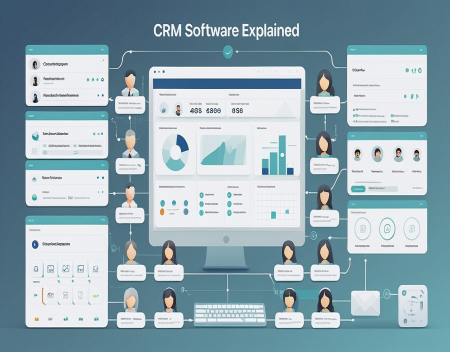
CRM Software Explained

The Future of Digital Pay