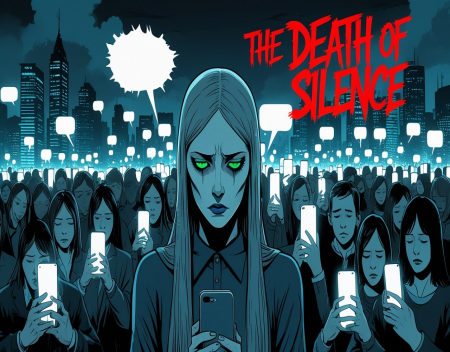
For most of human history, silence was an unavoidable part of daily life. Long stretches of quiet accompanied travel, manual labor, and evenings after sunset. Reflection often occurred without interruption, shaped by the rhythms of nature rather than the buzz of devices. Today, silence has become increasingly rare. In a hyperconnected world of smartphones, streaming platforms, instant messaging, and constant notifications, moments of uninterrupted quiet are often filled automatically. The death of silence is not literal, but cultural. It reflects a shift in how we experience solitude, attention, and inner life.
Connectivity has brought undeniable benefits. Communication across continents happens instantly. Information is accessible at any hour. Entertainment, news, and conversation are available on demand. Yet this constant availability has transformed expectations. Waiting in line, sitting on public transport, or walking alone no longer means simply being present. These moments are frequently occupied by scrolling, listening, watching, or responding. Silence, once a default state, now requires deliberate effort.
One consequence of this shift is the erosion of boredom. Historically, boredom often preceded creativity. When external stimulation was absent, the mind wandered, generated ideas, and processed experiences. In contrast, constant input leaves little space for mental drift. Notifications fragment attention, while algorithmic feeds deliver endless streams of curated content. The mind rarely settles into the deeper states of reflection that silence once nurtured.
The disappearance of silence also affects relationships. In conversations, pauses can signal thoughtfulness, empathy, or shared understanding. However, digital communication favors speed. Instant replies are expected, and long delays can be interpreted as disinterest. Online platforms reward immediacy, encouraging rapid reactions rather than careful consideration. Even in physical gatherings, phones can intrude, interrupting moments that might otherwise unfold in quiet connection.
At a societal level, the death of silence reshapes public discourse. News cycles operate continuously, leaving little time for reflection before the next controversy emerges. Opinions are formed and shared rapidly, sometimes before facts are fully verified. The pressure to respond instantly can reduce nuance and deepen polarization. Silence, which once allowed space for contemplation and measured judgment, is often perceived as absence or irrelevance.
Psychologically, constant stimulation can influence stress levels and cognitive fatigue. The brain evolved in environments with fluctuating sensory input. Today, it confronts continuous streams of alerts, sounds, and visual signals. Even when notifications are silenced, the anticipation of them can linger. Many people report difficulty disconnecting, feeling compelled to check devices repeatedly. The boundary between work and rest blurs when communication tools remain active around the clock.
Yet silence is not merely the absence of sound. It is a condition that supports self awareness. In quiet moments, individuals process emotions, reflect on experiences, and consider long term goals. Without such space, introspection may diminish. External voices, amplified through social media and digital commentary, can crowd out internal dialogue. Identity formation, once shaped by family, community, and personal reflection, now unfolds under constant observation and feedback.
The decline of silence also has implications for cultural production. Artists, writers, and thinkers have often emphasized the importance of solitude in their creative processes. Continuous connectivity can disrupt sustained focus required for deep work. Multitasking and rapid switching between tasks may reduce the cognitive depth necessary for innovation. Reclaiming silence, therefore, may not be nostalgic but practical.
Despite these challenges, silence has not vanished entirely. It has become a choice rather than a default. Practices such as digital detoxes, mindfulness meditation, and device free spaces reflect a growing awareness of the need for intentional quiet. Some organizations experiment with notification free hours or offline retreats. Individuals set boundaries by disabling alerts or designating technology free times. These efforts suggest that while silence may be threatened, it is not irretrievable.
The connected world is unlikely to become less connected. Technological progress continues to integrate devices into daily routines, from wearable sensors to smart home assistants. The question is not whether connectivity should disappear, but how it can coexist with protected spaces of quiet. Designing technologies that respect human attention rather than dominate it may be one step. Cultivating cultural norms that value pause and reflection is another.
Silence once shaped the cadence of human experience. In losing it, we risk diminishing our capacity for depth, creativity, and self understanding. Preserving silence in a connected world requires conscious effort, but its rewards remain profound. In moments of quiet, individuals rediscover clarity, resilience, and the simple presence that constant noise can obscure.
Great experience with Computer Geek. They helped with my website needs and were professional, respon . . . [MORE].

Great, quick service when my laptop went into meltdown and also needed Windows 11 installed. Also ca . . . [MORE].
It was a great experience to working with you. thank you so much. . . . [MORE].
Thank you so much for great service and over all experience is good . highly recommended for all peo . . . [MORE].
We engaged The Computer Geeks in mid-2023 as they have a reputation for API integration within the T . . . [MORE].
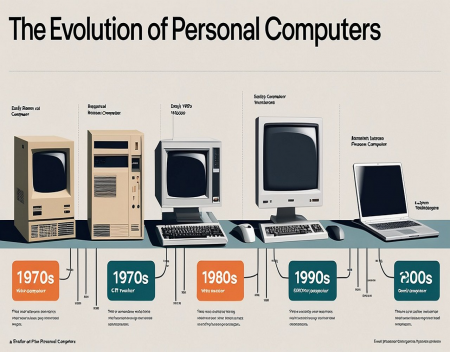
The Evolution of Personal
The Hidden Cost of Free A
The Psychology of Notific