
In an era increasingly shaped by artificial intelligence, virtual influencers, and algorithmically generated personas, the concept of human authenticity is undergoing a quiet but profound transformation. Synthetic personalities now populate social media feeds, customer service platforms, entertainment spaces, and even emotional support systems. These entities speak with carefully tuned empathy, maintain consistent “values,” and adapt in real time to user preferences. As they become more convincing, the question is no longer whether people can tell the difference between human and artificial personalities, but whether that distinction still matters—and what is lost when authenticity becomes optional.
Human authenticity has traditionally been tied to imperfection. Real people contradict themselves, change their minds, display emotional inconsistency, and sometimes fail to communicate clearly. These traits, once seen as flaws, are increasingly recognized as markers of genuine experience. Synthetic personalities, by contrast, are designed to be coherent, responsive, and optimized. They rarely hesitate, seldom offend unintentionally, and almost never display raw uncertainty unless it has been intentionally programmed. This contrast creates a subtle pressure on humans to perform in similar ways, smoothing out their rough edges to compete with artificial counterparts that never tire, forget, or emotionally misfire.
The rise of synthetic personalities also reshapes how identity is constructed and perceived. Online, many individuals already curate versions of themselves through filters, captions, and carefully chosen moments. AI-driven avatars and digital assistants take this a step further by allowing identity itself to be delegated. A synthetic persona can post, respond, negotiate, and even comfort others on a person’s behalf. While this delegation offers convenience and emotional distance, it raises questions about presence. If interactions are mediated by artificial stand-ins, where does the self actually reside? Authenticity becomes fragmented, distributed across systems that act in one’s name without fully embodying one’s lived experience.
This shift has psychological implications. Humans learn who they are through feedback, friction, and misunderstanding. Conversations that go wrong, moments of embarrassment, and emotional vulnerability all contribute to self-knowledge. Synthetic personalities remove much of this friction by design. They are engineered to be agreeable and adaptive, creating interactions that feel safe but often lack depth. Over time, people may grow accustomed to relationships that demand little emotional risk, making authentic human interaction—messy, unpredictable, and sometimes uncomfortable—feel more burdensome by comparison.
The economic dimension of synthetic personalities further complicates the picture. Brands increasingly deploy AI spokespeople and virtual influencers who never age, never deviate from messaging, and never generate scandals unless intentionally scripted. These entities can simulate relatability while remaining entirely controlled. As audiences form parasocial attachments to synthetic figures, authenticity becomes a performance rather than a shared human condition. The trust once placed in real individuals shifts toward systems optimized for engagement, subtly redefining credibility as consistency rather than sincerity.
Yet, human authenticity does not disappear in the presence of synthetic personalities; instead, it becomes more visible by contrast. Moments of genuine emotion, unscripted reactions, and moral ambiguity stand out precisely because they cannot be perfectly replicated. While AI can simulate empathy, it does not experience consequence. It does not carry memory in the same way humans do, nor does it bear responsibility for its words beyond its design constraints. This absence of lived accountability marks a fundamental difference that many people intuitively sense, even if they cannot articulate it.
The challenge moving forward is not to reject synthetic personalities outright, but to renegotiate their role in human life. Authenticity may need to be reclaimed not as constant transparency or emotional exposure, but as intentional presence. Choosing when to speak directly rather than delegate, when to accept imperfection rather than optimization, and when to engage in relationships that demand effort becomes an act of self-definition. In this sense, authenticity transforms from an assumed condition into a conscious practice.
Ultimately, the age of synthetic personalities forces a deeper examination of what it means to be human. If identity can be simulated, curated, and automated, then authenticity lies not in flawless expression but in the willingness to remain unfinished. Human beings are shaped by contradiction, uncertainty, and growth over time. Preserving authenticity in this landscape does not require resisting technology, but remembering that being real has never meant being perfect. It has always meant being accountable to one’s experiences, emotions, and choices—qualities that cannot be fully outsourced without losing something essential.
Great experience with Computer Geek. They helped with my website needs and were professional, respon . . . [MORE].

Great, quick service when my laptop went into meltdown and also needed Windows 11 installed. Also ca . . . [MORE].
It was a great experience to working with you. thank you so much. . . . [MORE].
Thank you so much for great service and over all experience is good . highly recommended for all peo . . . [MORE].
We engaged The Computer Geeks in mid-2023 as they have a reputation for API integration within the T . . . [MORE].
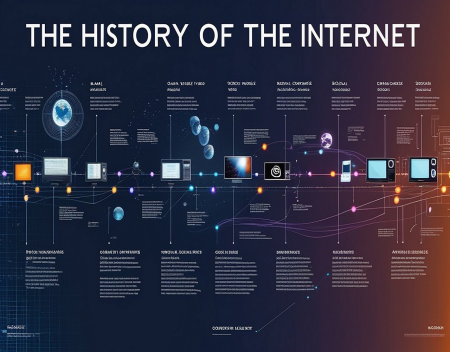
The History of the Intern
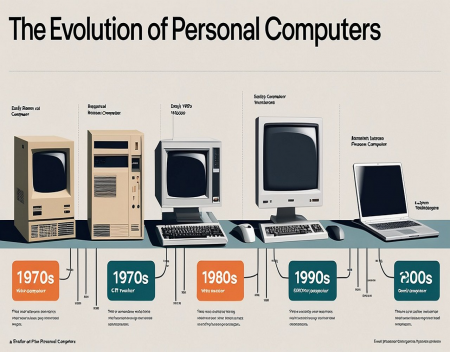
The Evolution of Personal
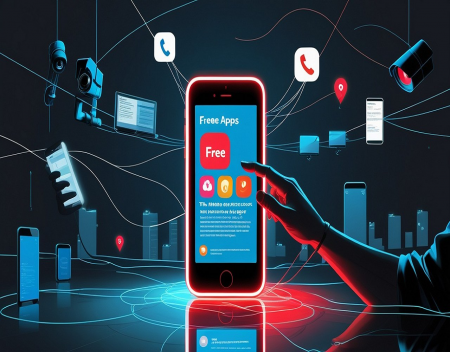
The Hidden Cost of Free A