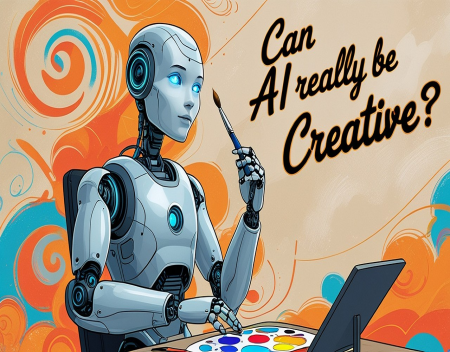
Artificial intelligence has reached a point where it can generate paintings, compose music, write stories, create videos, produce software code, and even design products. These impressive capabilities have sparked an ongoing debate: Can AI truly be creative, or is it simply imitating human creativity? The answer depends largely on how creativity is defined. While AI has demonstrated remarkable abilities to generate original-looking content, many experts argue that human creativity and machine-generated output are fundamentally different.
Traditionally, creativity has been associated with imagination, innovation, emotional expression, and the ability to produce something both original and meaningful. Humans create art not only because they possess technical skill but also because they draw upon personal experiences, emotions, cultural influences, and individual perspectives. Whether writing a novel, composing a symphony, or designing a building, human creativity is deeply connected to consciousness and lived experience.
Artificial intelligence approaches creative tasks in a very different way. Modern AI systems learn by analyzing enormous collections of existing data. For example, an image-generation model may study millions of photographs, paintings, and illustrations to learn patterns involving color, lighting, composition, and artistic style. Likewise, language models analyze vast amounts of written text to understand grammar, vocabulary, storytelling techniques, and factual relationships.
When asked to create something new, AI does not search for an existing work to copy. Instead, it generates new content by predicting combinations of patterns it has learned during training. The result can appear highly original even though it is based on statistical relationships rather than conscious inspiration.
One area where AI has made a significant impact is digital art. Artists can now use AI tools to generate concept art, character designs, landscapes, logos, and illustrations within minutes. Instead of replacing artists, many professionals use AI as a creative assistant that accelerates brainstorming and experimentation.
For example, a graphic designer may generate dozens of logo concepts using AI before selecting one to refine manually. An architect might explore multiple building layouts before developing a final design. In these situations, AI serves as a productivity tool rather than the sole creator.
Music is another field experiencing rapid AI development. Artificial intelligence can compose melodies, generate background music, imitate various musical styles, and even produce orchestral arrangements. These tools are proving valuable for content creators, filmmakers, and game developers who require affordable custom music.
However, many musicians argue that AI-generated compositions lack the emotional depth and personal storytelling found in human-created works. While AI may successfully imitate musical structures, listeners often value the human experiences and emotions behind artistic expression.
Writing presents another interesting example. AI systems can produce articles, poems, marketing copy, technical documentation, and fictional stories with impressive fluency. Writers increasingly use AI to generate outlines, brainstorm ideas, overcome writer's block, or edit drafts.
Yet experienced authors recognize that compelling storytelling often involves subtle emotional understanding, character development, symbolic meaning, and life experiences that extend beyond statistical language prediction. AI can assist with writing, but the author's unique perspective often remains what gives a story its lasting impact.
Artificial intelligence is also changing software development. AI coding assistants can generate code, explain programming concepts, identify bugs, and suggest improvements. Many developers view these systems as collaborative tools that handle repetitive coding tasks while allowing programmers to focus on architecture, design, and problem-solving.
This collaborative relationship illustrates an important point about AI creativity. In many industries, the question is no longer whether AI or humans create better work independently, but how effectively they can work together.
Some researchers argue that creativity should be judged by results rather than by the process used to achieve them. If an AI produces a beautiful painting, a memorable melody, or an innovative product design, they argue that the output itself demonstrates creativity regardless of whether the machine possesses emotions or self-awareness.
Others disagree. They maintain that genuine creativity requires intention, understanding, and conscious decision-making. From this perspective, AI is generating sophisticated combinations of learned patterns rather than expressing ideas or emotions in the way humans do.
The distinction becomes even more complicated when considering collaborative works. If a human provides detailed instructions, refines AI-generated output, and makes artistic decisions throughout the creative process, determining authorship becomes less straightforward. Many modern creative works are already the result of partnerships between humans and AI rather than one or the other acting alone.
Another important consideration involves originality. Critics sometimes claim that AI merely copies existing work. In reality, modern generative AI systems typically do not reproduce exact copies of their training data. Instead, they generate new combinations based on learned patterns. However, concerns remain regarding copyright, intellectual property, and the ethical use of training data, especially when copyrighted works are involved.
Artificial intelligence also excels at exploring possibilities rapidly. A product designer might spend days sketching dozens of concepts, while AI can generate hundreds of variations within minutes. This speed allows creators to evaluate many more ideas before selecting the strongest direction.
Despite these advantages, AI has limitations. It lacks personal experiences, emotions, cultural identity, intuition, and self-awareness. It does not experience joy, sadness, curiosity, or inspiration. Instead, it produces content based on mathematical models and probability calculations.
Human creativity often emerges from solving personal challenges, expressing emotions, responding to historical events, or communicating unique viewpoints. These qualities remain difficult, if not impossible, to replicate through computation alone.
Looking ahead, AI will almost certainly become an increasingly important creative tool across art, music, writing, filmmaking, design, architecture, engineering, and software development. Rather than replacing human creativity, it is more likely to expand creative possibilities by helping people experiment more quickly, automate repetitive tasks, and explore ideas that might otherwise have been overlooked.
Ultimately, whether AI can truly be considered creative depends on one's definition of creativity. If creativity means producing original and useful results, AI has already demonstrated impressive capabilities. If creativity requires conscious intention, emotional understanding, and lived experience, then human creativity remains fundamentally unique.
Perhaps the most accurate conclusion is that artificial intelligence represents a new kind of creative technology rather than a replacement for human imagination. As AI continues to evolve, the future of creativity will likely involve collaboration between human insight and machine capability, combining the strengths of both to produce innovations that neither could achieve alone.
Great experience with Computer Geek. They helped with my website needs and were professional, respon . . . [MORE].

Great, quick service when my laptop went into meltdown and also needed Windows 11 installed. Also ca . . . [MORE].
It was a great experience to working with you. thank you so much. . . . [MORE].
Thank you so much for great service and over all experience is good . highly recommended for all peo . . . [MORE].
We engaged The Computer Geeks in mid-2023 as they have a reputation for API integration within the T . . . [MORE].

ERP Systems for Small Bus
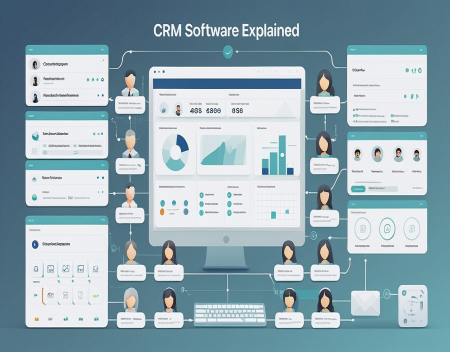
CRM Software Explained
The Future of Digital Pay