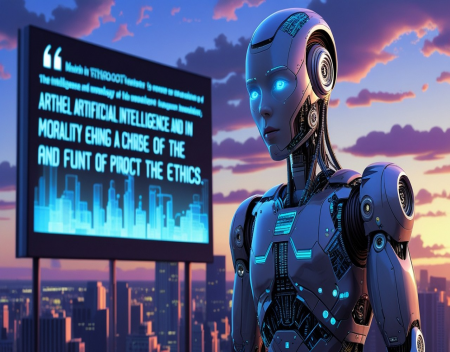
As artificial intelligence systems become more autonomous and influential, society is increasingly forced to confront a question once reserved for philosophy seminars and science fiction: can a machine be a moral actor? When AI systems make decisions that affect human lives—approving loans, diagnosing patients, targeting enemies, or moderating speech—responsibility becomes blurred. If an AI causes harm, who is ethically accountable? The programmer, the company, the user, or the machine itself? The growing complexity of AI challenges long-standing assumptions about agency, intent, and moral responsibility.
Moral responsibility has traditionally rested on two key pillars: intent and understanding. Humans are held accountable because they can comprehend the consequences of their actions and choose between alternatives. Machines, by contrast, operate through algorithms, optimization functions, and statistical inference. They do not experience guilt, empathy, or moral reflection. Even the most advanced AI systems do not “understand” right and wrong in a human sense; they calculate probabilities and follow objectives defined by humans. This has led many scholars to argue that AI cannot be a moral actor, because it lacks consciousness and free will.
Yet this argument becomes less satisfying as AI systems grow more autonomous. Modern AI can learn, adapt, and make decisions in ways that are unpredictable even to their creators. In complex environments, no single human can fully anticipate or control every outcome. When an AI-driven system denies healthcare, causes a fatal accident, or escalates conflict, pointing solely to human intent feels insufficient. The harm is real, even if no individual intended it. This gap between control and consequence has reignited debate over whether moral responsibility must evolve to account for non-human actors.
Some ethicists propose viewing AI as a form of “quasi-moral agent.” In this framework, machines are not moral beings in their own right, but they function as actors within moral systems. Just as corporations can be held legally responsible despite lacking consciousness, AI systems could be treated as accountable entities for practical purposes. This would not mean that machines feel guilt or deserve punishment, but that responsibility could be formally assigned to them in order to enforce standards, encourage safer design, and provide remedies for harm.
Opponents of this view warn that assigning responsibility to machines risks obscuring human accountability. If an AI is blamed, developers and institutions may evade scrutiny. Ethical responsibility could be offloaded onto software, creating a moral smokescreen that protects those who profit from AI systems. From this perspective, insisting that only humans can be moral actors is not a philosophical stance but a safeguard against accountability erosion. Machines do not make themselves; humans choose how they are designed, deployed, and governed.
There is also the question of moral learning. Some AI systems are trained on human behavior, absorbing patterns that include bias, prejudice, and ethical inconsistency. When an AI behaves unfairly, it often reflects the values embedded in its data. Holding the machine morally responsible in such cases may feel misguided, akin to blaming a mirror for what it reflects. Ethical failures in AI often reveal deeper failures in human institutions, priorities, and oversight.
However, as AI systems begin interacting with each other—negotiating, trading, coordinating, or even engaging in conflict—the moral landscape becomes even more complex. Decisions may emerge from interactions no single human directly controls. In such scenarios, traditional models of responsibility may struggle to assign blame or accountability in meaningful ways. This has led some thinkers to suggest that moral responsibility might need to be distributed, shared across networks of humans and machines rather than localized to a single actor.
The question of AI moral agency also intersects with public trust. People tend to anthropomorphize machines, attributing intention and blame even when none exists. If an autonomous vehicle causes an accident, victims may feel wronged by the machine itself, not just its manufacturer. Ethical frameworks that ignore this psychological reality risk losing legitimacy. Recognizing AI as a moral actor in some limited sense may align better with how humans experience harm and seek justice.
Ultimately, whether a machine can be held ethically responsible depends on how responsibility is defined. If responsibility requires consciousness, intent, and moral awareness, then AI clearly falls short. But if responsibility is about accountability, prevention of harm, and fair distribution of risk, then excluding AI entirely may no longer be practical. The debate is less about granting machines moral status and more about adapting ethical systems to a world where decisions are increasingly made by non-human agents.
AI forces humanity to confront uncomfortable truths about its own values. Machines do not introduce moral ambiguity so much as expose it. They reflect the priorities we encode, the trade-offs we accept, and the harms we tolerate. Whether or not AI is ever considered a moral actor, the responsibility for its actions ultimately circles back to human choice. The challenge is ensuring that as machines grow more powerful, moral responsibility does not become more diffuse, but more deliberate, transparent, and just.
Great experience with Computer Geek. They helped with my website needs and were professional, respon . . . [MORE].

Great, quick service when my laptop went into meltdown and also needed Windows 11 installed. Also ca . . . [MORE].
It was a great experience to working with you. thank you so much. . . . [MORE].
Thank you so much for great service and over all experience is good . highly recommended for all peo . . . [MORE].
We engaged The Computer Geeks in mid-2023 as they have a reputation for API integration within the T . . . [MORE].
The Hidden Cost of Free A
The Psychology of Notific
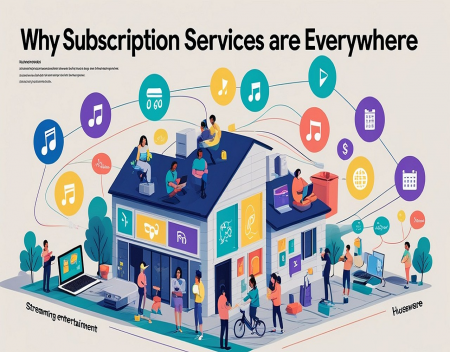
Why Subscription Services