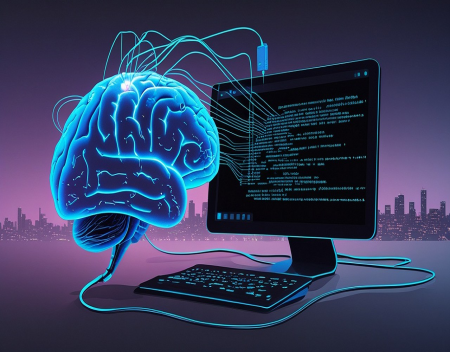
For decades, the idea of connecting the human brain directly to a computer has been a staple of science fiction. Movies, television shows, and novels have imagined people controlling machines with their thoughts, downloading knowledge instantly, or even communicating silently from one mind to another. Today, brain-computer interfaces, commonly known as BCIs, have moved beyond fiction and into real scientific research. But while remarkable progress has been made, many of the futuristic claims surrounding this technology remain far from reality.
A brain-computer interface is a system that allows communication between the brain and an external device. Instead of using a keyboard, mouse, touchscreen, or voice command, a BCI interprets electrical activity generated by the brain and converts it into commands that a computer or machine can understand.
The human brain contains billions of neurons that communicate using tiny electrical signals. Brain-computer interfaces attempt to measure these signals, interpret them, and translate them into meaningful actions. Depending on the type of interface, this may allow a person to move a cursor, control a robotic arm, type text, or operate other electronic devices using thought alone.
Perhaps the most significant real-world application of BCIs today is in medicine. Researchers have developed systems that help individuals with paralysis communicate and regain some independence. People who have lost the ability to move due to spinal cord injuries, strokes, or neurological diseases may use brain-computer interfaces to operate computers or assistive devices.
In recent years, researchers have demonstrated individuals using BCIs to type messages, control robotic limbs, and even interact with digital environments through thought alone. While these accomplishments are extraordinary, they typically occur under carefully controlled research conditions and often require highly specialized equipment.
There are two primary types of brain-computer interfaces: non-invasive and invasive systems.
Non-invasive BCIs use sensors placed on the outside of the head to measure brain activity. Electroencephalography, or EEG, is one of the most common methods. EEG systems detect electrical signals through electrodes positioned on the scalp.
The advantage of non-invasive systems is that they do not require surgery. They are generally safer, less expensive, and more accessible for research and consumer applications. However, because the signals must pass through the skull and surrounding tissue, they are often weaker and less precise.
Invasive BCIs involve surgically implanting electrodes directly into or onto the brain. Because these devices measure neural activity much closer to its source, they can produce significantly more detailed and accurate signals.
The tradeoff is that invasive systems involve brain surgery, which carries medical risks and raises important ethical and safety considerations. Long-term reliability, durability, and compatibility with human tissue continue to be active areas of research.
One of the biggest misconceptions about brain-computer interfaces is that they can read people's thoughts. In reality, current BCIs are far more limited. They do not understand complex ideas, private memories, emotions, or internal conversations in the way many science fiction stories portray.
Instead, today's systems typically recognize specific patterns of brain activity associated with relatively simple intentions. For example, a user may learn to imagine moving their left or right hand, allowing the computer to distinguish between those two signals. The system is interpreting trained patterns rather than reading unrestricted thoughts.
Another common misconception is that BCIs allow instant learning or memory downloads. Despite popular fictional portrayals, there is currently no scientific method for uploading knowledge directly into the human brain. Learning remains a biological process involving experience, repetition, and neural adaptation.
Artificial intelligence is playing an increasingly important role in BCI research. AI algorithms help identify subtle patterns in complex neural data that would be difficult for traditional software to recognize. As machine learning techniques improve, brain-computer interfaces may become more accurate, responsive, and adaptable to individual users.
Researchers are also exploring BCIs for applications beyond medicine. Potential future uses include controlling smart homes, interacting with virtual reality environments, operating industrial equipment, and assisting individuals with disabilities in new ways.
Gaming companies have experimented with basic consumer brain-sensing devices, although these products generally offer limited functionality compared to medical or research systems. Most consumer devices rely on simple EEG measurements and are primarily used for relaxation monitoring, meditation, or experimental forms of interaction.
Despite the excitement surrounding BCIs, significant technical challenges remain. The brain is extraordinarily complex, and interpreting its signals accurately is far more difficult than decoding simple electronic communications. Neural activity varies between individuals and even changes within the same person over time, making consistent performance difficult to achieve.
Signal quality presents another challenge. Brain signals are extremely weak and can be affected by muscle movement, electrical interference, and environmental noise. Improving signal reliability remains one of the major goals of ongoing research.
Ethical considerations are equally important. As brain-computer interfaces become more capable, questions surrounding privacy, consent, security, and data ownership will become increasingly significant. Neural data could eventually become among the most sensitive forms of personal information, requiring robust legal and technical protections.
Cybersecurity will also play a critical role. Any technology capable of communicating directly with the nervous system would require exceptionally strong security measures to prevent unauthorized access or malicious interference.
So, are brain-computer interfaces hype or reality? The answer is both. They are unquestionably real technologies that have already demonstrated impressive capabilities, particularly in medical research and assistive technology. Individuals with severe physical disabilities have regained meaningful forms of communication and control through carefully developed BCI systems.
However, many of the sensational claims often seen in headlines remain speculative. Instant telepathy, thought reading, memory downloads, and widespread consumer brain implants are not technologies that currently exist. While research continues to advance, these concepts face enormous scientific, engineering, and ethical challenges.
The future of brain-computer interfaces is likely to be one of steady progress rather than overnight revolution. Medical applications will probably continue leading development, improving quality of life for individuals with neurological conditions. Consumer applications may eventually emerge as technology becomes safer, smaller, more affordable, and more reliable.
Brain-computer interfaces represent one of the most fascinating frontiers in modern technology. Although they have not yet fulfilled every promise imagined by science fiction, they have already demonstrated that direct communication between the human brain and computers is possible. The coming decades will determine just how far this remarkable technology can go, and whether today's research will ultimately reshape the relationship between humans and machines.
Great experience with Computer Geek. They helped with my website needs and were professional, respon . . . [MORE].

Great, quick service when my laptop went into meltdown and also needed Windows 11 installed. Also ca . . . [MORE].
It was a great experience to working with you. thank you so much. . . . [MORE].
Thank you so much for great service and over all experience is good . highly recommended for all peo . . . [MORE].
We engaged The Computer Geeks in mid-2023 as they have a reputation for API integration within the T . . . [MORE].
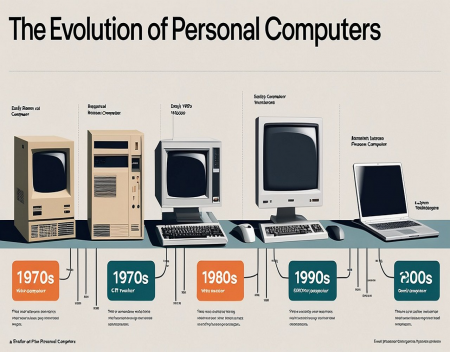
The Evolution of Personal
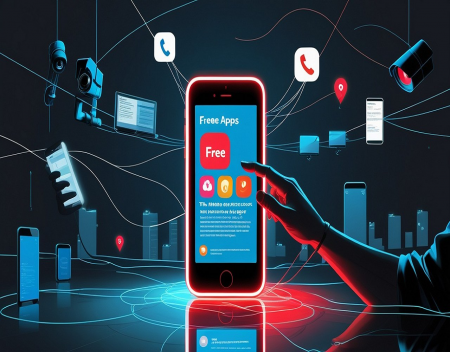
The Hidden Cost of Free A
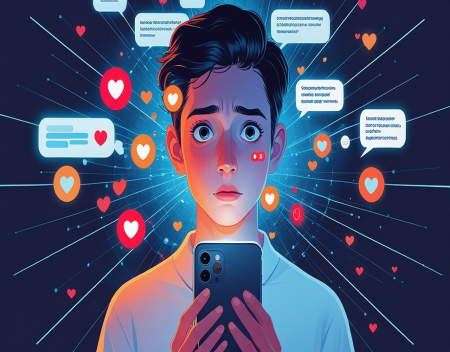
The Psychology of Notific