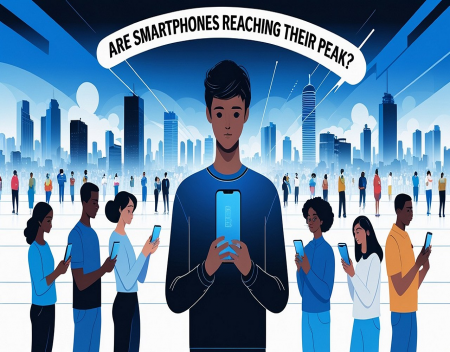
For more than fifteen years, smartphones have been one of the most transformative technologies in modern history. They have replaced cameras, GPS units, MP3 players, alarm clocks, calculators, portable gaming systems, and even personal computers for many users. Every year brought faster processors, better cameras, sharper displays, and new features that made upgrading seem worthwhile. Today, however, many consumers are beginning to ask an interesting question: are smartphones reaching their peak?
The question is understandable. Compared to the dramatic advancements seen during the first decade of smartphone development, recent improvements often seem incremental rather than revolutionary. New models may offer slightly better cameras, somewhat faster processors, or longer battery life, but the fundamental experience remains largely unchanged. For many users, a smartphone purchased three or four years ago still performs most tasks extremely well.
One sign that the market may be maturing is the increasing lifespan of devices. In the early smartphone era, consumers frequently upgraded every one or two years because new models offered significant improvements. Today, many people keep their phones for four, five, or even six years. Modern devices are simply more capable and durable than their predecessors, reducing the urgency to upgrade.
Processing power is one area where smartphones have made enormous gains. Modern mobile processors are remarkably powerful, capable of handling complex applications, high-definition video editing, advanced gaming, and artificial intelligence tasks. For the average user, current flagship devices provide far more computing power than is required for everyday activities such as web browsing, messaging, social media, and streaming video.
Displays have also reached an impressive level of maturity. High-resolution OLED screens, fast refresh rates, vibrant colors, and excellent brightness levels have become common across many devices. While manufacturers continue to improve display technology, the differences are becoming less noticeable to average users. There is only so much improvement the human eye can easily perceive during normal use.
Cameras may be the area where innovation remains most visible. Smartphone photography has improved dramatically over the past decade. Computational photography, advanced sensors, image stabilization, and artificial intelligence enhancements allow modern phones to produce images that would have been impossible for mobile devices just a few years ago.
However, even camera improvements are beginning to face diminishing returns. While newer models often produce technically better photos, many users find the differences between recent generations relatively minor. For casual photography, current smartphones already deliver excellent results in most situations.
Battery technology illustrates another challenge. While processors and software have become more efficient, battery chemistry has advanced more slowly. Manufacturers can optimize power consumption and increase battery size, but major breakthroughs in battery technology have been relatively rare. As a result, battery life improvements often occur gradually rather than dramatically.
The rise of artificial intelligence is now becoming the next major driver of smartphone evolution. AI-powered features are increasingly being integrated directly into mobile operating systems. Real-time language translation, image generation, intelligent search, voice assistance, content summarization, and personalized recommendations are becoming common features.
Unlike previous hardware-focused upgrades, many future improvements may come from software and AI capabilities rather than physical components. Smartphones may become more intelligent and proactive, helping users accomplish tasks with less effort and fewer interactions.
Another area attracting attention is foldable and flexible displays. Foldable phones attempt to create new form factors that bridge the gap between smartphones and tablets. While these devices remain relatively expensive and niche, they represent one of the few major hardware innovations currently reshaping the market.
Augmented reality could also play a significant role in the future. Smartphones already contain cameras, sensors, and processing power capable of supporting AR experiences. As software improves and hardware becomes more advanced, smartphones may increasingly serve as gateways to immersive digital environments.
Despite these developments, some industry observers believe smartphones are approaching a plateau. This does not mean innovation will stop. Rather, it means that future improvements may become less visible and more specialized. The transition is similar to what happened with automobiles and personal computers. Once the fundamental technology matured, progress continued but often focused on refinement rather than transformation.
There is also the possibility that entirely new technologies could eventually replace or supplement smartphones. Smart glasses, wearable devices, brain-computer interfaces, and advanced AI assistants are frequently discussed as potential successors. However, none of these technologies currently offer the versatility, convenience, and widespread adoption of the smartphone.
For the foreseeable future, smartphones remain the central hub of digital life. They provide communication, entertainment, navigation, productivity, photography, commerce, and countless other functions within a single device that fits in a pocket. Replacing such a versatile tool will not be easy.
So, are smartphones reaching their peak? In many ways, yes. The era of dramatic year-over-year hardware improvements appears to be slowing. Modern smartphones are already incredibly capable devices that satisfy most users' needs. However, reaching a peak does not mean reaching an endpoint. Future innovation is likely to focus less on raw hardware performance and more on intelligence, connectivity, software capabilities, and entirely new ways of interacting with technology.
The smartphone may be maturing, but its evolution is far from over. The next chapter may simply look very different from the one that brought us here.
Great experience with Computer Geek. They helped with my website needs and were professional, respon . . . [MORE].

Great, quick service when my laptop went into meltdown and also needed Windows 11 installed. Also ca . . . [MORE].
It was a great experience to working with you. thank you so much. . . . [MORE].
Thank you so much for great service and over all experience is good . highly recommended for all peo . . . [MORE].
We engaged The Computer Geeks in mid-2023 as they have a reputation for API integration within the T . . . [MORE].
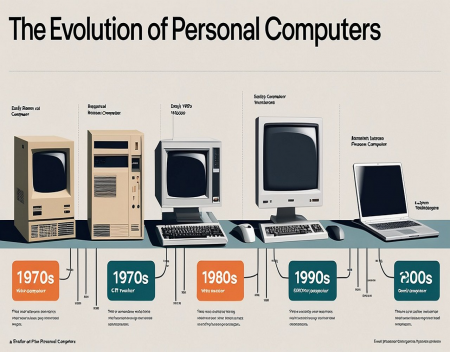
The Evolution of Personal
The Hidden Cost of Free A
The Psychology of Notific