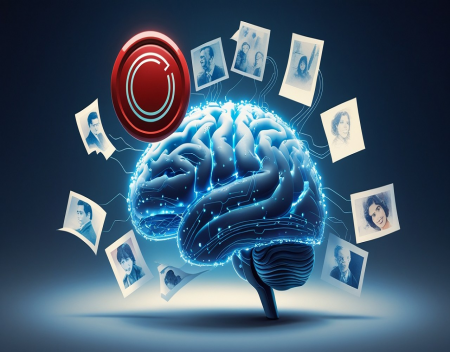
In the digital age, memory has become both permanent and pervasive. Every search, click, post, and transaction leaves a trace, quietly stored, copied, and analyzed. Artificial intelligence has magnified this reality by turning data into long-term memory systems capable of learning, predicting, and remembering at scale. Against this backdrop, the concept of the “right to be forgotten” has emerged as a powerful ethical and legal idea: the belief that individuals should be able to erase aspects of their digital past. But as AI systems grow more complex and interconnected, a troubling question arises. Can memory ever truly be deleted in a world where machines learn from everything?
The right to be forgotten is rooted in human dignity. People change over time, and past mistakes, outdated beliefs, or irrelevant information should not permanently define who they are. In human societies, forgetting is a natural process that allows growth, forgiveness, and reinvention. Digital systems, however, do not forget naturally. AI models are trained on massive datasets, absorbing patterns that persist long after the original data is removed. Once knowledge is encoded into a model, deleting the source does not necessarily erase its influence.
This creates a fundamental tension between human rights and machine learning. Traditional data deletion assumes that information exists in discrete, removable records. AI systems operate differently. They transform data into statistical representations distributed across millions or billions of parameters. Even if a specific record is deleted, the model may still “remember” it indirectly through learned correlations. This raises a profound ethical dilemma: if AI cannot fully forget, can the right to be forgotten be meaningfully enforced?
Supporters of strong data erasure rights argue that technological difficulty does not absolve ethical responsibility. If AI systems are incompatible with fundamental human rights, then those systems must change. Researchers are exploring techniques such as machine unlearning, which aims to remove the influence of specific data points from trained models. While promising, these methods are complex, computationally expensive, and far from perfect. Still, their development reflects a growing recognition that forgetting must become a design feature, not an afterthought.
Critics, however, warn that absolute deletion may be unrealistic or even undesirable. AI systems rely on historical data to function accurately. Removing too much information could degrade performance, introduce new biases, or undermine public safety applications. In some cases, forgetting may conflict with other values, such as transparency, accountability, or the public’s right to know. Erasing records of wrongdoing, for example, could enable powerful actors to escape scrutiny. The challenge lies in distinguishing between harmful permanence and necessary memory.
There is also a question of ownership. When AI systems learn from publicly available data, who controls that knowledge? An individual may delete a post, but if it has already been copied, shared, and learned from, its influence persists beyond personal control. AI blurs the line between personal data and collective knowledge. What begins as an individual’s digital footprint can become part of a broader informational ecosystem, raising difficult questions about consent and control.
The psychological dimension is equally significant. Living in a world that never forgets can shape behavior in subtle but profound ways. When people know their actions may be permanently recorded and analyzed, they may self-censor, avoid experimentation, or fear growth. The right to be forgotten is not just about erasing data; it is about preserving the freedom to evolve without being haunted by algorithmic memory. AI’s capacity for recall threatens this freedom by making the past inescapably present.
Some propose reframing the problem. Instead of trying to delete memory entirely, AI systems could be designed to contextualize it. Rather than treating old data as equally relevant, models could weigh information based on time, relevance, and change. This mirrors how human memory works: we remember, but we also reinterpret and deprioritize. Ethical AI may not require perfect forgetting, but responsible remembering.
Ultimately, the right to be forgotten challenges a core assumption of digital technology: that more data is always better. AI thrives on accumulation, but human dignity depends on restraint. Balancing these forces requires more than technical solutions; it demands ethical clarity and legal innovation. Societies must decide whether AI systems exist to preserve everything, or to serve human values that include mercy, growth, and second chances.
Can memory ever be deleted? In a technical sense, perhaps not entirely. But the deeper question is whether AI systems can be shaped to respect the spirit of forgetting, even if perfect erasure remains elusive. The future of AI will not be defined solely by what it remembers, but by what it learns to let go.
Great experience with Computer Geek. They helped with my website needs and were professional, respon . . . [MORE].

Great, quick service when my laptop went into meltdown and also needed Windows 11 installed. Also ca . . . [MORE].
It was a great experience to working with you. thank you so much. . . . [MORE].
Thank you so much for great service and over all experience is good . highly recommended for all peo . . . [MORE].
We engaged The Computer Geeks in mid-2023 as they have a reputation for API integration within the T . . . [MORE].

ERP Systems for Small Bus

CRM Software Explained

The Future of Digital Pay