
The internet is one of the few things in modern life that never truly shuts down. While people go to bed, businesses close their doors, and cities become quiet, the internet continues operating around the clock. Websites remain available, servers continue processing requests, data moves between continents, and millions of people remain connected.
But why doesn't the internet ever sleep? The answer is a combination of global time zones, automated systems, data centers, connected devices, and the enormous number of services that depend on constant connectivity.
The internet isn't one giant computer sitting somewhere in a building. It is a massive network of interconnected systems spread across virtually every part of the planet. As long as some of those systems are operating, the internet continues functioning.
The World Is Always Awake SomewhereOne of the simplest reasons the internet never sleeps is that the world operates across different time zones.
When it's nighttime in Canada, people are waking up in Europe. When Europe begins winding down for the evening, much of Asia is starting its day. Later, North America becomes active again.
This means there is almost always someone awake and using the internet.
A website that receives thousands of visitors during the day in one country may receive visitors from another part of the world during that country's nighttime. Global companies can therefore operate continuously without following a traditional nine-to-five schedule.
The internet has effectively eliminated the concept of a universal closing time.
Servers Don't Go to BedWebsites and online services depend on servers, and servers are designed to operate continuously.
A server is essentially a computer specifically configured to provide services to other computers. It might host a website, store files, process online payments, deliver email, stream video, or run a database.
Servers typically operate 24 hours a day, seven days a week.
Large companies don't rely on a single machine. They operate thousands of servers distributed across multiple data centers. If one machine fails, another can take over the workload.
This redundancy is one of the reasons major online services can remain available even when individual components fail.
Data Centers Are Always WorkingBehind almost everything you do online is a data center.
Data centers are enormous facilities filled with computer servers, networking equipment, storage systems, backup power supplies, cooling systems, and security infrastructure.
Some of the world's largest technology companies operate data centers across multiple continents.
These facilities consume enormous amounts of electricity because their servers and cooling systems must operate continuously.
They also require sophisticated monitoring systems that constantly check temperatures, network performance, power consumption, hardware health, and security.
When you upload a photograph, send an email, watch a video, or purchase something online, there is a good chance that data is being processed inside one or more data centers somewhere in the world.
Automation Keeps the Internet RunningPerhaps one of the most important reasons the internet never sleeps is automation.
Much of the activity happening online doesn't involve humans at all.
Computers constantly perform tasks such as:
These processes continue whether people are awake or asleep.
A website may appear quiet at 3:00 AM, but its servers could still be processing thousands of automated requests.
Bots Are EverywhereAutomated software programs, commonly known as bots, represent a huge amount of internet activity.
Search engine bots continuously crawl websites to discover new pages and update search indexes.
Security bots scan networks looking for vulnerabilities.
Social media systems use automated programs to identify spam and suspicious activity.
Businesses use bots to monitor prices, inventory, website performance, and market conditions.
Some bots are helpful, while others can be malicious.
Cybercriminals use automated programs to scan millions of internet-connected systems searching for vulnerable servers, outdated software, weak passwords, and other security weaknesses.
This means the internet isn't simply active around the clock—it is constantly being examined and interacted with by automated systems.
Cloud Computing Never StopsCloud computing has made continuous internet activity even more important.
Businesses increasingly rely on cloud services for email, file storage, accounting, customer databases, software development, artificial intelligence, communications, and backups.
Many of these services operate continuously.
A company in Toronto may upload files during the afternoon, while employees in London access them several hours later. Overnight, automated backup systems may copy the information to another data center.
The cloud makes this possible without requiring employees to manually transfer files between locations.
Online Shopping Doesn't CloseTraditional stores have opening and closing hours.
Online stores don't have to.
An e-commerce website can accept orders at 2:00 AM just as easily as it can at 2:00 PM. Customers can browse products, place orders, check shipping information, and contact automated support systems at virtually any time.
Behind the scenes, inventory systems, payment processors, shipping platforms, and databases continue communicating even when employees aren't physically working.
This has fundamentally changed consumer expectations.
People now expect businesses to provide online services at any hour.
Social Media Never StopsSocial media is another major contributor to the internet's constant activity.
At any given moment, millions of people are posting photographs, commenting, watching videos, sending messages, and sharing information.
When one region goes to sleep, another becomes active.
Even during the quietest hours, automated systems continue recommending content, delivering notifications, moderating posts, serving advertisements, and analyzing activity.
The result is a constantly moving stream of information that rarely pauses.
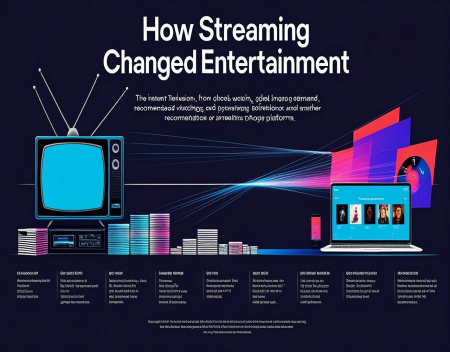
Streaming Services Operate Around the ClockStreaming platforms have also transformed internet traffic.
Movies, television shows, music, podcasts, and live broadcasts are available whenever users want them.
A popular program might be streamed by millions of people simultaneously after being released in one country. Several hours later, viewers in another part of the world may begin watching it.
Content delivery networks help make this possible by storing copies of popular content in servers located closer to users.
Instead of every viewer downloading a movie from one central location, content can be delivered from many different servers around the world.
Internet Infrastructure Requires Constant MonitoringThe internet's physical infrastructure also operates continuously.
Undersea cables carry enormous amounts of data between continents. Fiber optic networks connect cities and data centers. Internet exchange points route traffic between networks.
These systems require constant monitoring.
Network engineers and automated monitoring systems watch for outages, congestion, equipment failures, and security threats.
When something goes wrong, engineers may be alerted regardless of the time of day.
Large internet providers maintain teams working around the clock because a major outage can affect millions of customers.
Even When You Disconnect, the Internet ContinuesOne interesting aspect of the internet is that your personal connection doesn't determine whether the internet is active.
You can turn off your computer, shut down your smartphone, and go to sleep. While you're completely disconnected, billions of other devices continue communicating.
Your email inbox may receive messages.
Your cloud storage may synchronize files.
Your security cameras may upload recordings.
Your smart thermostat may communicate with a cloud service.
Your website may receive visitors.
Your backups may continue running.
In other words, the internet doesn't wait for you.
The Internet Is Becoming Even More ActiveThe number of connected devices continues growing.
Smart homes, connected vehicles, industrial sensors, security systems, wearable technology, medical equipment, and Internet of Things devices all generate data.
Artificial intelligence is adding another enormous source of internet traffic. AI applications communicate with cloud servers to process questions, analyze documents, generate images, translate languages, and perform countless other tasks.
As more devices become connected and more services become automated, the amount of activity happening online will continue increasing.
Final ThoughtsThe internet never sleeps because it isn't dependent on a single location, company, or group of people. It is a global network made up of millions of interconnected systems, data centers, servers, devices, cables, wireless networks, and automated processes.
People may sleep, but computers don't need to.
While you're in bed, servers are processing requests, search engines are crawling websites, security systems are scanning for threats, cloud services are synchronizing data, businesses are accepting orders, and people on the other side of the world are starting their day.
The internet's greatest strength is its ability to operate continuously across geographic and technological boundaries. There is no single switch that turns it on or off.
As the world becomes increasingly dependent on cloud computing, artificial intelligence, connected devices, and digital services, the internet's constant activity will become even more important.
So the next time you go to sleep, remember: the internet doesn't. Somewhere in the world, someone is watching a video, sending an email, buying something, uploading a photograph, running a server, or simply asking a computer a question.
The digital world keeps moving—even while the rest of us are asleep.
Great experience with Computer Geek. They helped with my website needs and were professional, respon . . . [MORE].

Great, quick service when my laptop went into meltdown and also needed Windows 11 installed. Also ca . . . [MORE].
It was a great experience to working with you. thank you so much. . . . [MORE].
Thank you so much for great service and over all experience is good . highly recommended for all peo . . . [MORE].
We engaged The Computer Geeks in mid-2023 as they have a reputation for API integration within the T . . . [MORE].
How Streaming Changed Ent

Digital Minimalism in a C

Are We Becoming Too Depen