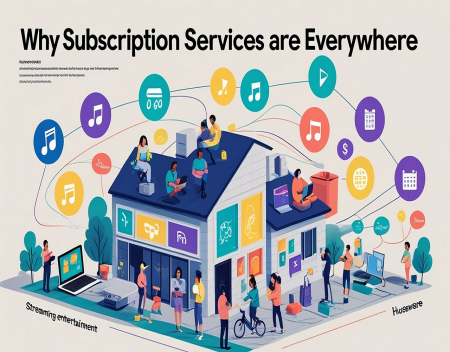
Subscription services have become one of the defining features of the modern economy. From streaming movies and listening to music to using software, ordering groceries, and maintaining connected devices, consumers are increasingly paying recurring fees instead of making one-time purchases.
What was once mainly associated with newspapers, magazines, and gym memberships has expanded into almost every corner of everyday life. Software companies charge monthly fees for applications that were once purchased outright. Automakers offer connected features through subscriptions. Online retailers encourage customers to sign up for recurring deliveries, while entertainment companies compete for monthly payments.
This shift is not accidental. Subscription models offer businesses predictable revenue and ongoing relationships with customers. For consumers, they can provide convenience, regular updates, and access to services without large upfront costs. However, the growing number of subscriptions also raises questions about affordability, ownership, and whether consumers are getting good value for their money.
Why Businesses Love Subscription ModelsThe biggest attraction of subscriptions for businesses is predictable revenue. Instead of depending entirely on individual sales, a company can build a recurring income stream from customers who pay monthly or annually.
This makes financial planning easier. Businesses can estimate future revenue, invest in product development, and plan staffing based on their subscriber base. When customers remain subscribed for years, the long-term value of each relationship can be considerably greater than a single purchase.
Subscriptions also provide opportunities for continued customer engagement. A company can introduce new features, improve its service, and encourage customers to upgrade to more expensive plans.
For software developers, this model can be particularly attractive. Rather than releasing a major software package every few years, a company can continuously update its product and charge customers for ongoing access. This approach helps fund maintenance, security improvements, and new functionality.
However, recurring revenue does not guarantee success. Companies must keep customers satisfied enough to continue paying. If the service becomes unreliable, prices rise too quickly, or a better alternative appears, subscribers can cancel.
The Shift from Ownership to AccessOne of the most significant changes created by subscriptions is the movement away from owning products toward paying for access.
In the past, someone purchasing a music album, movie, or software package generally received a physical copy or a licence that allowed continued use under its terms. Today, many consumers access music, movies, documents, and applications through online accounts.
Streaming services provide enormous libraries of entertainment for a monthly fee. Cloud software allows users to work with applications without purchasing a traditional perpetual licence. Cloud storage services provide space for photographs, documents, and backups.
This approach can be convenient, but access is not the same as ownership. A streaming service can remove a movie when its licensing agreement expires. A software provider may discontinue a product or change its subscription terms. If someone stops paying for a cloud service, access to certain features or stored information may be restricted, depending on the provider's policies.
Consumers should understand what happens when a subscription ends, particularly when important documents, photographs, or business information are involved.
Why Subscriptions Appeal to ConsumersSubscriptions can make expensive products and services more accessible. Instead of paying a large amount upfront, customers spread the cost over time.
For example, professional software may be costly to purchase outright, while a monthly plan can make it more affordable for a freelancer or small business. Streaming subscriptions provide access to extensive entertainment libraries without buying every movie or album individually.
Convenience is another major benefit. Automatic deliveries can keep household supplies available, cloud services can synchronize files across devices, and software subscriptions can provide automatic updates.
Some subscriptions also offer flexibility. Customers can try a service for a limited period and cancel if it no longer meets their needs. The actual flexibility depends on cancellation policies, minimum commitments, and any fees involved.
The challenge is that a small recurring payment can seem insignificant on its own. When several services are combined, however, the total monthly cost can become substantial.
Subscription Fatigue Is Becoming a ProblemAs subscriptions spread into more areas of life, consumers are experiencing what is often called subscription fatigue.
A household might pay for several video streaming platforms, music services, cloud storage, productivity software, online gaming, fitness applications, and premium memberships. Each service may seem reasonably priced, but the combined cost can rival a traditional cable package or exceed the price of products that consumers once purchased outright.
Another problem is that people often forget about subscriptions they no longer use. Free trials can automatically convert into paid plans, while annual renewals may occur long after the original purchase has been forgotten.
Businesses understand that recurring payments can become part of a customer's routine. Some customers continue paying simply because cancelling takes effort or because they are uncertain whether they will need the service again.
Consumers can reduce subscription fatigue by reviewing bank and credit card statements regularly, keeping a list of active subscriptions, and cancelling services that no longer provide enough value.
The Hidden Costs of Subscription ServicesThe advertised monthly price does not always tell the whole story.
Some subscriptions increase their prices over time. Others charge extra for premium features, additional storage, multiple users, or higher-quality content. A basic plan may be inexpensive, but accessing the features a customer actually needs can require a more expensive tier.
Annual billing can sometimes reduce the monthly equivalent cost, but it also requires paying for a longer period upfront. Consumers should consider whether they are likely to use the service for the entire year before committing.
Subscriptions can also create practical dependence. A business that relies on a particular online platform may face disruption if the provider changes its pricing, removes a feature, or closes the service. Moving to another platform can involve time, expense, and potential data migration problems.
Before subscribing to an important service, customers should investigate cancellation terms, data export options, renewal conditions, and the availability of alternatives.
Are All Subscriptions Bad?Not at all. The subscription model can work well when the service provides continuing value.
Software that receives frequent security updates, cloud backup services that protect important files, and professional tools that evolve over time can justify recurring fees. Subscriptions can also be useful when customers need temporary access to something they would not otherwise purchase.
The important question is whether the ongoing cost makes sense compared with the alternatives.
For example, someone who watches a particular streaming service every day may consider the subscription worthwhile. Someone who watches one movie every few months might be better off renting individual titles or using a free service.
The same principle applies to software. A subscription may be ideal for a business that needs ongoing updates and collaboration features, while a person who requires only basic functionality may prefer a free application or a one-time purchase.
The best choice depends on usage, cost, convenience, and the consequences of losing access.
How to Manage Your SubscriptionsConsumers can take several practical steps to maintain control over recurring expenses.
Review subscriptions regularly. Check bank statements and account settings to identify services that are no longer needed.
Calculate the annual cost. Multiply monthly fees by twelve to understand the full financial commitment.
Use reminders for free trials. Set a reminder before the trial ends so you can decide whether to continue.
Compare alternatives. Free software, one-time purchases, library services, and pay-per-use options may provide better value.
Avoid duplicate services. Multiple platforms may offer similar features or overlapping entertainment libraries.
Understand cancellation policies. Check whether cancellation takes effect immediately or at the end of the billing period.
Protect important data. Before ending a cloud or software subscription, make sure you can retrieve essential files and information.
These habits can help prevent recurring payments from quietly consuming a growing portion of a household or business budget.
Final ThoughtsSubscription services are everywhere because they offer businesses predictable revenue and give consumers convenient access to products and services. The model supports continuous software updates, extensive entertainment libraries, cloud storage, and many other useful tools.
However, the shift from ownership to access can make it harder to understand the true long-term cost of the products we use. Multiple subscriptions can accumulate quickly, prices can change, and access may depend on remaining a paying customer.
The solution is not to reject every subscription. Instead, consumers should evaluate each one based on its actual value, understand the conditions attached to it, and avoid paying indefinitely for services they rarely use.
In an economy increasingly built around recurring payments, the most important subscription decision may be knowing which services are worth keeping—and which ones are no longer worth paying for.
Great experience with Computer Geek. They helped with my website needs and were professional, respon . . . [MORE].

Great, quick service when my laptop went into meltdown and also needed Windows 11 installed. Also ca . . . [MORE].
It was a great experience to working with you. thank you so much. . . . [MORE].
Thank you so much for great service and over all experience is good . highly recommended for all peo . . . [MORE].
We engaged The Computer Geeks in mid-2023 as they have a reputation for API integration within the T . . . [MORE].
Why Subscription Services

The Future of Television
How Streaming Changed Ent