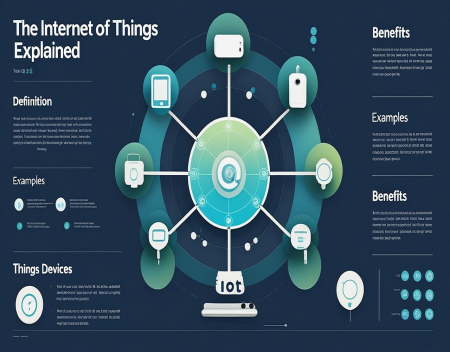
The internet has changed dramatically since it first became popular. In the early days, the internet was primarily a way for people to connect computers together and access information. Today, computers are everywhere, and many of the devices around us can connect to the internet without us even thinking about it.
Your television, thermostat, security camera, smartwatch, car, refrigerator, light bulbs, and even some appliances can communicate over the internet. This growing network of connected devices is known as the Internet of Things, or IoT.
The Internet of Things is becoming an important part of modern technology, and it is changing the way people live, work, and interact with the world around them.
What Is the Internet of Things?The Internet of Things refers to physical devices that are connected to the internet and capable of collecting, sending, receiving, or processing information.
These devices usually contain sensors, processors, software, and some type of network connection.
A traditional computer connects to the internet so that you can use websites, email, applications, and other online services. An IoT device does something similar, but the device may be performing a specific physical task.
For example, a smart thermostat can connect to the internet, monitor the temperature inside your home, and automatically adjust your heating or cooling system.
A smart doorbell can detect movement, record video, and send an alert to your smartphone.
These devices are all part of the Internet of Things.
How Does IoT Work?IoT systems generally involve several components working together.
First, a device collects information using sensors. A temperature sensor might measure the temperature of a room, while a motion sensor could detect movement.
The device then sends that information through a network. This could be Wi-Fi, Bluetooth, cellular networks, or specialized low-power wireless technology.
The information may then be processed locally or sent to a cloud-based service. Software can analyze the information and determine whether something needs to happen.
Finally, the system can take an action.
For example, a smart thermostat might detect that the temperature has dropped below the desired setting. It can send that information to its software, which then tells the heating system to turn on.
All of this can happen automatically.
Smart HomesOne of the most visible uses of IoT is the smart home.
Smart home devices include thermostats, light bulbs, security cameras, door locks, appliances, speakers, garage door openers, and security systems.
These devices can communicate with each other and can often be controlled through a smartphone or voice assistant.
Imagine leaving your home and having the doors automatically lock, the lights turn off, the thermostat adjust itself, and the security system activate.
You could also receive an alert if a camera detects movement or if a water sensor detects a possible leak.
The benefit is convenience, but smart home technology can also improve energy efficiency and security.
Wearable TechnologySmartwatches and fitness trackers are another common example of IoT technology.
These devices contain sensors that can monitor things such as movement, heart rate, activity, and sleep patterns. They can communicate with smartphones and online services to store and analyze the information.
Wearable technology demonstrates how IoT can connect the physical world with digital services.
Instead of simply using a computer to enter information, sensors can automatically collect information about what is happening around you.
IoT in TransportationVehicles are becoming increasingly connected as well.
Modern cars can contain dozens or even hundreds of electronic systems and sensors. Connected vehicles can communicate with manufacturers, navigation services, smartphone applications, and other systems.
A connected vehicle can provide information about its location, battery or fuel level, maintenance requirements, and other operating conditions.
Electric vehicles make particularly extensive use of connected technology. Owners can often check charging status, control certain vehicle functions remotely, and receive notifications through a smartphone.
In the future, connected vehicles could communicate with traffic lights, roads, and other vehicles, potentially improving traffic flow and safety.
IoT in BusinessBusinesses are using IoT technology to monitor equipment, track inventory, improve operations, and reduce costs.
A factory, for example, can install sensors on machinery to monitor temperature, vibration, and performance.
Instead of waiting for a machine to fail, software can identify warning signs that indicate a potential problem.
This is known as predictive maintenance.
A company can schedule repairs before equipment breaks down, reducing downtime and potentially saving significant amounts of money.
Warehouses can also use connected sensors and tracking systems to monitor inventory and determine where products are located.
IoT in AgricultureAgriculture is another industry where IoT technology can make a significant difference.
Farmers can use connected sensors to monitor soil moisture, temperature, weather conditions, and crop health.
A smart irrigation system can use this information to determine when crops need water.
Instead of watering an entire field according to a fixed schedule, the system can potentially deliver water based on actual conditions.
This can reduce water consumption while helping crops receive the resources they need.
Smart CitiesIoT technology is also helping create smarter cities.
Cities can install sensors throughout roads, buildings, public transportation systems, parking areas, and other infrastructure.
Traffic sensors can monitor congestion. Smart parking systems can identify available spaces. Connected streetlights can adjust their brightness based on conditions.
Garbage containers can even contain sensors that tell collection services when they are getting full.
When thousands of connected devices are working together, cities can gather enormous amounts of information about how their infrastructure is being used.
Artificial intelligence can then analyze that information and help city officials make better decisions.
The Benefits of IoTThe biggest advantage of the Internet of Things is automation.
Devices can monitor conditions and perform tasks without requiring constant human involvement.
IoT can also improve efficiency. Businesses can monitor equipment and reduce wasted resources. Homes can automatically adjust energy usage. Cities can optimize transportation and public services.
Another benefit is access to information.
Instead of guessing whether something is working properly, connected devices can provide real-time information.
This can make it easier to identify problems and respond to them quickly.
The Security ProblemThe Internet of Things also creates new security risks.
Every connected device can potentially become a target for hackers. Unfortunately, some inexpensive IoT devices have historically been designed with weak security.
A compromised smart camera, router, appliance, or other device could potentially be used as an entry point into a larger network.
Consumers should therefore change default passwords, keep devices updated, use strong Wi-Fi security, and avoid purchasing unknown devices from questionable manufacturers.
Businesses face an even greater challenge because they may have thousands of connected devices operating across their networks.
Privacy ConcernsPrivacy is another important issue.
IoT devices can collect enormous amounts of information. A smart speaker may listen for commands. A security camera can record activity. A smartwatch can collect information about your daily activities.
The question is what happens to all that information.
Consumers should understand what information their devices collect, where that information is stored, and who has access to it.
Convenience should not come at the expense of privacy.
Where Is IoT Going?The Internet of Things is likely to become even more important as artificial intelligence, faster networks, and better sensors continue to develop.
Devices will become better at understanding their environments and making decisions.
Instead of simply reporting information, IoT devices could increasingly analyze that information themselves.
For example, a security camera may not simply record video. It could determine whether the activity it detects appears unusual and notify the homeowner.
A vehicle could detect a mechanical problem and automatically schedule service.
A building could continuously adjust heating, cooling, lighting, and ventilation based on occupancy.
The combination of IoT and artificial intelligence could make connected devices considerably more useful.
Final ThoughtsThe Internet of Things is essentially the connection of the physical world to the digital world.
Everyday objects can now contain sensors, processors, and internet connections that allow them to collect information and respond to changing conditions.
From smart homes and wearable technology to connected cars, factories, farms, and cities, IoT is already part of everyday life.
The technology offers enormous potential, but it also introduces challenges involving security, privacy, compatibility, and reliability.
As more devices become connected, the Internet of Things will become less noticeable because it will simply become part of the infrastructure around us.
The internet is no longer just something we access through a computer or smartphone. Increasingly, the internet is becoming part of the things themselves.
Great experience with Computer Geek. They helped with my website needs and were professional, respon . . . [MORE].

Great, quick service when my laptop went into meltdown and also needed Windows 11 installed. Also ca . . . [MORE].
It was a great experience to working with you. thank you so much. . . . [MORE].
Thank you so much for great service and over all experience is good . highly recommended for all peo . . . [MORE].
We engaged The Computer Geeks in mid-2023 as they have a reputation for API integration within the T . . . [MORE].
The Browser Wars Revisite

The Rise and Fall of Flas
The History of the Intern