
Privacy on the internet has changed dramatically since the early days of the web. When people first started going online, there was relatively little personal information being collected. Today, smartphones, websites, social media platforms, online stores, smart home devices, streaming services, and artificial intelligence systems can collect enormous amounts of information about how we live and what we do.
For many years, convenience was the priority. People willingly exchanged personal information for personalized recommendations, easier shopping, free applications, and customized online experiences. However, attitudes are changing. Consumers are becoming increasingly aware of how valuable their personal information is and are demanding greater control over it.
The future of online privacy will likely be shaped by a combination of new technology, stronger regulations, changing business models, and better consumer awareness.
The End of "Privacy by Accident"For years, online privacy was often something users had to think about only after something went wrong. Websites collected information automatically, applications requested extensive permissions, and advertising companies tracked users across the internet with little understanding from the average consumer.
That model is changing.
Privacy is increasingly becoming a design consideration rather than an afterthought. Technology companies are introducing privacy controls directly into browsers, smartphones, operating systems, and applications.
Instead of requiring users to understand complicated technical settings, future devices will increasingly make privacy protection automatic.
This could mean applications collecting less information by default, automatically blocking invasive trackers, or notifying users when an application attempts to access sensitive information.
The Decline of Third-Party TrackingOne of the most significant changes already underway is the decline of third-party tracking technologies.
For years, advertisers relied heavily on third-party cookies to monitor browsing behaviour across different websites. This allowed companies to build detailed profiles of users and deliver highly targeted advertisements.
Growing privacy concerns have led browsers and technology companies to restrict these tracking technologies.
The future is likely to involve less cross-site tracking and greater reliance on first-party relationships. Businesses will increasingly collect information directly from customers through accounts, purchases, subscriptions, loyalty programs, and other interactions.
This doesn't mean targeted advertising will disappear. Instead, the methods used to deliver it will continue changing.
Artificial Intelligence Creates New Privacy ChallengesArtificial intelligence will be one of the biggest challenges facing online privacy.
AI systems can analyze enormous amounts of information and identify patterns that humans might never notice. This makes AI incredibly useful for everything from medical research and fraud detection to customer service and cybersecurity.
However, the same capabilities create privacy concerns.
AI systems may process emails, documents, photographs, voice recordings, browsing behaviour, location information, and other personal data. The more information an AI system has access to, the more powerful its predictions can become.
This raises important questions.
Who owns the information used to train an AI model? How long is that information stored? Can personal information be extracted from an AI system? Should companies be allowed to use customer data to train artificial intelligence without explicit permission?
These questions will become increasingly important over the coming decade.
Privacy-Preserving AIFortunately, artificial intelligence can also help improve privacy.
Researchers and technology companies are developing privacy-preserving AI techniques that allow systems to analyze information while minimizing exposure of personal data.
One example is federated learning, where AI models can learn from data stored on individual devices without requiring all of that information to be transferred to a central server.
Other technologies use encryption, anonymization, and secure processing environments to reduce the risk of exposing sensitive information.
As AI becomes more widespread, these privacy-preserving techniques will likely become increasingly important.
Your Smartphone Knows a Lot About YouSmartphones may become one of the most important battlegrounds for privacy.
Modern phones can potentially know your location, contacts, photographs, browsing activity, communications, purchasing habits, health-related information, and daily routines.
Future smartphones will likely provide users with much greater control over this information.
Operating systems may increasingly restrict applications from accessing data unless it is genuinely necessary. Users may also receive more detailed explanations about why an application wants specific permissions.
Instead of simply asking whether an application can access your location, future systems could provide temporary permissions, such as allowing location access only while an application is actively being used.
Passwords Are ChangingOnline privacy and security are closely connected.
Traditional passwords have become increasingly difficult to manage. People reuse passwords, choose weak passwords, or fall victim to phishing attacks.
Passkeys and biometric authentication are becoming important alternatives.
Instead of remembering a password, users can authenticate using a fingerprint, facial recognition, or a secure device.
These technologies can improve security while also reducing the amount of information users need to share with websites.
The Growth of Privacy-Focused ServicesConsumers are increasingly seeking alternatives to services that rely heavily on advertising and data collection.
Privacy-focused search engines, browsers, email services, messaging applications, and cloud storage providers are gaining attention.
These companies often make privacy a central part of their business model rather than treating it as a secondary feature.
As demand grows, traditional technology companies may face increasing pressure to offer comparable privacy protections.
Competition could ultimately benefit consumers by making privacy features more common and easier to use.
Governments Are Getting InvolvedTechnology companies aren't the only organizations shaping the future of online privacy.
Governments around the world are introducing regulations designed to give consumers greater control over their personal information.
Privacy laws increasingly require businesses to explain what information they collect, why they collect it, how long they retain it, and who they share it with.
Future regulations are likely to address emerging technologies such as artificial intelligence, facial recognition, biometric identification, location tracking, and automated decision-making.
The challenge for lawmakers will be creating effective protections without preventing useful technological innovation.
Data Minimization Becomes More ImportantOne of the most important principles in future privacy protection may be data minimization.
The concept is simple: companies should collect only the information they actually need.
For example, a weather application doesn't necessarily need access to your contacts. A calculator doesn't need your location. A flashlight application shouldn't need access to your microphone or photographs.
Future operating systems and privacy regulations may increasingly encourage applications to follow this principle automatically.
The Rise of Decentralized TechnologyDecentralized technologies could also influence online privacy.
Traditional online services often store user information on centralized servers controlled by a single company. Decentralized systems distribute information across networks, potentially reducing dependence on centralized databases.
While decentralized technology has its own challenges, it could provide users with greater control over digital identities and personal information.
The concept of owning your digital identity rather than allowing multiple companies to control pieces of it could become increasingly important.
Privacy Will Never Be AutomaticDespite all these improvements, technology alone cannot guarantee privacy.
Users will still need to make informed decisions about what information they share. Strong passwords, multi-factor authentication, software updates, secure Wi-Fi networks, careful application permissions, and awareness of phishing attacks will remain important.
People will also need to understand that once information is posted publicly, it can be extremely difficult to completely remove.
The future of privacy will therefore involve both better technology and better digital habits.
What Will Online Privacy Look Like?The internet of the future will probably not be completely private.
There will always be businesses that need customer information to provide services, governments that require certain information for legitimate purposes, and applications that depend on personal data.
The goal will instead be greater transparency and control.
Users should know what information is being collected, why it is needed, how it is being used, and how long it will be retained. They should also have meaningful choices about whether they want to provide that information.
Technology should make these decisions easier rather than hiding them behind pages of complicated privacy policies.
Final ThoughtsThe future of online privacy is likely to be very different from the past. Third-party tracking is declining, privacy-focused services are becoming more popular, governments are introducing stronger regulations, and technology companies are building more privacy protections directly into their products.
At the same time, artificial intelligence is creating entirely new challenges by giving computers unprecedented abilities to analyze personal information.
The most important change may ultimately be a shift in attitude. Personal data is no longer something people are willing to give away automatically in exchange for convenience. Consumers increasingly recognize that their information has real value.
The future internet will need to find a balance between personalization and privacy, innovation and regulation, convenience and control.
If technology companies, governments, and consumers get that balance right, the internet of tomorrow could be not only more powerful and intelligent, but also more respectful of the people who use it.
Great experience with Computer Geek. They helped with my website needs and were professional, respon . . . [MORE].

Great, quick service when my laptop went into meltdown and also needed Windows 11 installed. Also ca . . . [MORE].
It was a great experience to working with you. thank you so much. . . . [MORE].
Thank you so much for great service and over all experience is good . highly recommended for all peo . . . [MORE].
We engaged The Computer Geeks in mid-2023 as they have a reputation for API integration within the T . . . [MORE].

The Browser Wars Revisite

The Rise and Fall of Flas
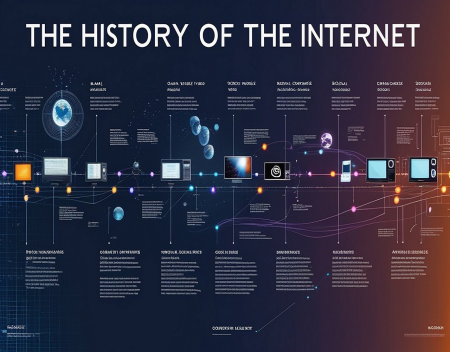
The History of the Intern