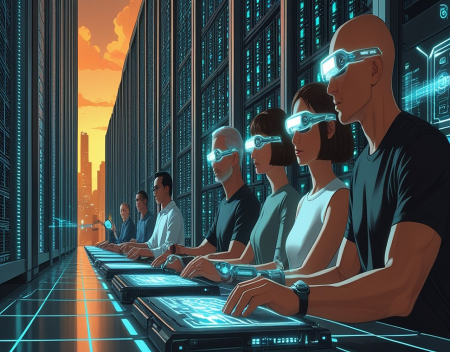
Computer storage has come a long way over the past few decades. Many people still remember floppy disks that held only a few megabytes of data, followed by CDs, DVDs, and the hard disk drives that became standard in nearly every personal computer. Today, Solid State Drives (SSDs) have largely replaced traditional hard drives in new computers, offering dramatically faster speeds and greater reliability. But storage technology continues to evolve, and the next generation of innovations promises to change not only how much data we can store, but also how quickly we can access it and how securely it can be preserved.
As our digital lives expand, so does our need for storage. High-resolution photos, 4K and 8K videos, artificial intelligence applications, cloud computing, virtual reality, and increasingly complex software all require significantly more space than they did just a few years ago. The challenge for manufacturers is not only increasing capacity but also improving speed, durability, energy efficiency, and affordability.
One of the biggest trends is the continued advancement of SSD technology. Unlike traditional Hard Disk Drives (HDDs), which rely on spinning magnetic platters and mechanical read/write heads, SSDs use flash memory with no moving parts. This allows them to access data almost instantly, making computers feel dramatically faster.
Future SSDs are expected to become even quicker thanks to improvements in interfaces such as PCI Express (PCIe). Modern PCIe 5.0 NVMe drives already deliver astonishing read and write speeds, and future generations will continue pushing these limits. This means operating systems will boot almost instantly, large applications will launch in seconds, and transferring enormous files may become nearly instantaneous.
Capacity is also increasing rapidly. Consumer SSDs with several terabytes of storage are already widely available, and manufacturers continue developing higher-density memory chips that allow even more data to fit into smaller physical devices. It is likely that computers with 8 TB, 16 TB, or even larger SSDs will become increasingly common over the next decade.
Artificial intelligence is creating entirely new storage demands. AI models often require massive datasets for training and operation, sometimes involving hundreds of gigabytes or even several terabytes of information. As AI becomes integrated into everyday software, computers will need storage systems capable of moving large amounts of data at incredible speeds while maintaining low latency.
Cloud computing will also continue influencing storage technology. Rather than storing every file locally, many users now save documents, photos, videos, and backups in cloud storage services. This provides convenient access from multiple devices while reducing the risk of data loss due to hardware failure.
However, local storage is unlikely to disappear. Many users still prefer keeping important files on their own computers for privacy, performance, or offline access. Large video editing projects, engineering applications, software development environments, and high-end games often perform much better when stored locally rather than streamed from the cloud.
As a result, the future is likely to involve a hybrid approach that combines fast local storage with intelligent cloud synchronization.
Researchers are also exploring entirely new forms of data storage. One promising technology is DNA data storage. Since DNA can store extraordinary amounts of information in an incredibly small space, scientists have successfully encoded digital data into synthetic DNA molecules. Although this technology remains experimental and is currently too expensive for everyday use, it has the potential to archive enormous quantities of information for hundreds or even thousands of years.
Another area of research involves holographic storage. Instead of recording information on the surface of a disk, holographic systems store data throughout the entire volume of a storage medium using lasers. This could dramatically increase storage capacity while allowing multiple pieces of data to be read simultaneously.
Magnetic storage technology is evolving as well. While traditional HDDs are gradually disappearing from consumer computers, manufacturers continue improving their capacity for enterprise applications and data centres. Technologies such as Heat-Assisted Magnetic Recording (HAMR) and Microwave-Assisted Magnetic Recording (MAMR) allow hard drives to store significantly more data than previous generations.
Because of their low cost per gigabyte, hard drives are expected to remain valuable for large-scale backups, cloud storage providers, and enterprise environments where maximum capacity is more important than maximum speed.
Reliability will continue improving across all forms of storage. Modern SSDs already include sophisticated error correction, wear leveling, and bad block management systems that extend their lifespan considerably. Future storage devices will likely include even smarter self-monitoring systems capable of predicting failures before they occur.
Artificial intelligence may play a significant role here as well. AI-powered diagnostics could continuously analyze storage performance, detect early signs of wear, automatically optimize file placement, and warn users long before data becomes at risk.
Security is becoming another major focus. As cyber threats increase, future storage devices may include built-in encryption enabled by default. Hardware-level encryption can protect sensitive files without affecting system performance, making it much harder for unauthorized users to access confidential information if a computer is lost or stolen.
Biometric authentication, secure hardware modules, and advanced encryption standards will likely become standard features in future storage systems, helping individuals and businesses better protect their data.
Energy efficiency is another important consideration. Data centres consume enormous amounts of electricity, much of it dedicated to storage systems. Manufacturers are working to develop storage devices that deliver greater performance while consuming less power. Even for home users, lower power consumption translates into quieter systems, reduced heat generation, and improved battery life for laptops.
Portable storage will also continue evolving. External SSDs have already replaced many portable hard drives because they are smaller, lighter, faster, and far more resistant to physical damage. As USB and Thunderbolt technologies continue advancing, external storage devices will become even faster, making them practical solutions for professional photographers, videographers, and businesses that frequently move large files.
One exciting possibility is computational storage. Instead of simply storing data, future storage devices may include their own processors capable of performing certain calculations directly on the drive itself. This could reduce the workload on the computer's main processor and significantly accelerate tasks involving large datasets, such as database searches, AI processing, or video analysis.
Consumers are also likely to see improvements in data management. Intelligent operating systems may automatically organize files, prioritize frequently used applications, archive older content, and optimize storage usage with minimal user intervention. This will make computers feel faster while reducing the need for manual maintenance.
Despite all these advances, one principle will remain unchanged: regular backups will always be essential. No storage technology is completely immune to hardware failure, accidental deletion, theft, ransomware, or natural disasters. Whether your files are stored on an SSD, in the cloud, or on future storage technologies, maintaining multiple backups remains the best defence against permanent data loss.
The future of computer storage is about much more than simply increasing capacity. It is about making storage faster, smarter, more secure, more reliable, and more seamlessly integrated into our digital lives. Technologies such as AI-assisted storage management, ultra-fast SSDs, cloud synchronization, computational storage, DNA archives, and advanced security features will reshape how we store and access information.
As our dependence on digital technology continues to grow, storage will remain one of the most important components of every computer. While today's SSDs already offer incredible performance compared to the hard drives of the past, tomorrow's storage solutions promise to deliver speeds, capacities, and capabilities that were once considered science fiction. The future of computer storage is not just about saving more data—it's about enabling the next generation of computing itself.
Great experience with Computer Geek. They helped with my website needs and were professional, respon . . . [MORE].

Great, quick service when my laptop went into meltdown and also needed Windows 11 installed. Also ca . . . [MORE].
It was a great experience to working with you. thank you so much. . . . [MORE].
Thank you so much for great service and over all experience is good . highly recommended for all peo . . . [MORE].
We engaged The Computer Geeks in mid-2023 as they have a reputation for API integration within the T . . . [MORE].

The Browser Wars Revisite
The Rise and Fall of Flas
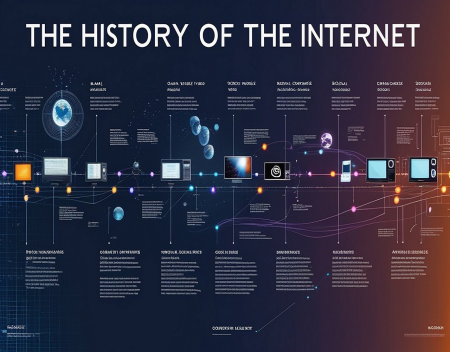
The History of the Intern