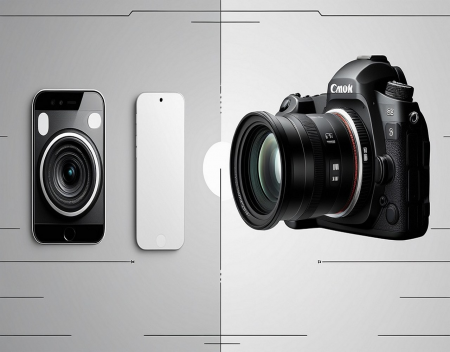
Smartphone cameras have changed photography more than almost any other technology in recent history. A camera that once required a dedicated device, interchangeable lenses, and considerable knowledge can now be found inside a phone that fits in your pocket.
Modern smartphones can take incredibly detailed photographs, record high-resolution video, automatically improve images, remove unwanted objects, and even produce impressive results in difficult lighting conditions.
This raises an interesting question: Can smartphone cameras really compete with professional cameras?
The answer depends on what you are trying to photograph.
For casual photography, smartphones can be remarkably capable. For professional photography, however, dedicated cameras still have important advantages.
Smartphone Cameras Have Come a Long WayEarly cell phone cameras were primarily designed for convenience rather than quality. Images were often blurry, noisy, and poorly exposed.
Today's smartphones are completely different.
High-end phones can include multiple cameras, optical image stabilization, advanced autofocus, high-resolution sensors, and sophisticated image-processing systems.
Many phones can automatically recognize scenes, faces, objects, and lighting conditions and adjust the image accordingly.
The result is a photograph that often looks excellent without the user needing to understand shutter speed, aperture, ISO, or white balance.
Computational PhotographyOne of the biggest advantages smartphones have is computational photography.
A smartphone doesn't necessarily capture a single image and simply save it.
Instead, the phone may take multiple exposures almost simultaneously and combine them using software.
This allows the camera to improve details in shadows, preserve highlights, reduce noise, and create a more balanced photograph.
Night modes are a good example.
A smartphone can take several images over a short period and combine them to produce a brighter, cleaner photograph than a single exposure might allow.
Professional cameras can use sophisticated techniques as well, but smartphones rely heavily on software because their physical camera hardware is so small.
The Sensor DifferenceProfessional cameras still have a major physical advantage: larger image sensors.
A full-frame professional camera has a sensor dramatically larger than the tiny sensors found in smartphones.
A larger sensor can capture more light and generally provide better image quality, particularly in challenging conditions.
This becomes especially noticeable when photographing at high ISO settings or when producing very large images.
Smartphones compensate for their smaller sensors through computational photography, but software cannot completely eliminate the physical advantages of a larger sensor.
Lens SelectionAnother major difference is the lens.
Professional cameras can use interchangeable lenses designed for specific purposes.
A photographer might use a wide-angle lens for landscapes, a telephoto lens for wildlife, a macro lens for close-up photography, or a fast prime lens for portraits.
A smartphone typically has several built-in cameras with fixed lenses.
These provide useful flexibility, but they don't offer the same range of optical options.
Some smartphones use digital cropping to simulate longer focal lengths, but optical zoom generally produces better results than simply enlarging part of an image.
Portrait PhotographySmartphones have become surprisingly good at portrait photography.
Portrait modes use software to identify the subject and artificially blur the background.
The effect can be convincing, particularly in good lighting.
Professional cameras, however, can create natural background separation using the physical characteristics of a large sensor and wide-aperture lens.
The resulting depth-of-field effect tends to look more natural.
Professional cameras also provide greater control over exactly how much of the image is in focus.
Low-Light PhotographyLow-light photography is another area where professional cameras retain an advantage.
Large sensors and high-quality lenses can capture considerably more light.
A professional photographer can also choose a slower shutter speed, higher ISO, wider aperture, or tripod depending on the situation.
Smartphones have become extremely impressive at night photography, but they achieve much of their performance through computational processing.
This can sometimes produce images that look bright but don't necessarily represent the scene naturally.
Video CapabilitiesSmartphones have also become serious video cameras.
Modern phones can record high-resolution video, provide image stabilization, automatically adjust exposure, and offer advanced slow-motion modes.
For social media, YouTube, family videos, travel, and everyday recording, a smartphone can be more than sufficient.
Professional cameras still offer greater control and flexibility.
They can use professional lenses, external microphones, specialized recording formats, larger sensors, and accessories such as external monitors and professional stabilization systems.
For filmmaking and professional production, these capabilities can make a major difference.
ConvenienceThis is where smartphones have an enormous advantage.
You almost always have your phone with you.
There is no need to carry a camera bag, multiple lenses, spare batteries, or memory cards.
When something interesting happens, you can take your phone out of your pocket and start recording within seconds.
The images can then be edited and shared immediately.
A professional camera requires considerably more preparation.
For everyday photography, convenience can be more important than ultimate image quality.
Ease of UseSmartphones are designed for almost anyone to use.
Point the camera at a subject, press the shutter button, and the phone handles most of the technical decisions.
Professional cameras give photographers far more control, but that control also creates a learning curve.
A photographer can manually adjust shutter speed, aperture, ISO, focus, white balance, and numerous other settings.
That flexibility is extremely valuable when the photographer knows how to use it.
Storage and EditingSmartphones also make the entire photography workflow easier.
Photos can automatically synchronize with cloud storage and be edited using mobile applications.
They can be posted to social media within seconds.
Professional photographers often work with much larger files and may use desktop software for detailed editing and color correction.
Professional RAW files can provide considerably more flexibility during post-processing than typical smartphone JPEG or HEIF images.
This becomes particularly important for commercial photography.
When a Smartphone Is the Better ChoiceFor many people, a smartphone is actually the better camera.
If you're taking photographs of family members, vacations, food, pets, landscapes, or everyday events, the latest smartphone can produce excellent results.
It is small, convenient, fast, and always available.
For social media and casual video, a smartphone may be all the camera equipment you need.
When a Professional Camera WinsA dedicated professional camera becomes more valuable when you need maximum image quality and control.
Professional cameras are particularly useful for:
In these situations, lens selection, sensor size, autofocus performance, dynamic range, and manual control can make a substantial difference.
The Gap Is Getting SmallerPerhaps the most interesting development is that the gap between smartphones and professional cameras continues to shrink.
Smartphone manufacturers are using larger sensors, better lenses, more advanced image stabilization, and increasingly sophisticated AI-based processing.
At the same time, professional cameras are becoming more intelligent and easier to use.
The two categories are moving toward each other from opposite directions.
However, there is still a fundamental difference.
A smartphone is a computer with a camera.
A professional camera is primarily a camera with increasingly sophisticated computing capabilities.
Final ThoughtsSmartphone cameras have reached a point where they can replace dedicated cameras for many people.
For everyday photography, the convenience and computational capabilities of a modern smartphone are difficult to beat. You can capture excellent photographs, edit them, store them, and share them without carrying anything other than the phone in your pocket.
Professional cameras, however, still have significant advantages.
Their larger sensors, interchangeable lenses, optical capabilities, superior low-light performance, advanced controls, and professional video features make them the better choice when maximum quality and creative control matter.
The choice isn't really about which technology is better.
It's about what you need.
For capturing everyday moments, your smartphone is probably the best camera because you already have it with you.
For demanding professional work where image quality, lens selection, and creative control are critical, a dedicated professional camera remains extremely difficult to beat.
The smartphone may have eliminated the need for a camera for millions of people, but it hasn't eliminated the need for cameras themselves.
Great experience with Computer Geek. They helped with my website needs and were professional, respon . . . [MORE].

Great, quick service when my laptop went into meltdown and also needed Windows 11 installed. Also ca . . . [MORE].
It was a great experience to working with you. thank you so much. . . . [MORE].
Thank you so much for great service and over all experience is good . highly recommended for all peo . . . [MORE].
We engaged The Computer Geeks in mid-2023 as they have a reputation for API integration within the T . . . [MORE].

The Browser Wars Revisite

The Rise and Fall of Flas
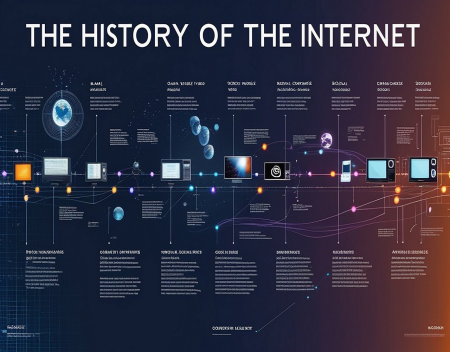
The History of the Intern