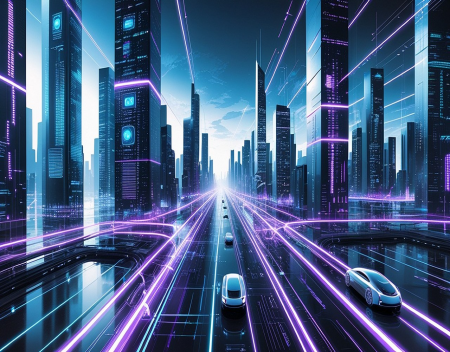
Cities have always evolved alongside technology. From electric streetlights and subway systems to highways and high-speed communication networks, technology has continually changed how people live and work in urban areas. Today, a new transformation is taking place as cities become increasingly connected, automated, and data-driven.
This concept is known as the smart city.
A smart city uses technologies such as artificial intelligence, sensors, Internet of Things devices, cloud computing, high-speed networks, and data analytics to improve the way a city operates. The goal is not simply to add more technology, but to use technology to make cities safer, more efficient, more sustainable, and easier to live in.
What Is a Smart City?A smart city is an urban area that uses connected technology and data to manage services and infrastructure more effectively.
Traditional cities often operate many systems independently. Traffic lights, public transportation, garbage collection, electricity, water systems, and emergency services may have their own separate equipment and databases.
Smart cities attempt to connect these systems so they can communicate and work together.
For example, sensors could monitor traffic throughout a city and provide information to a central system. Artificial intelligence could then analyze that information and adjust traffic signals to reduce congestion. Public transportation systems could use the same information to change routes or schedules when necessary.
The result is a city that can respond to changing conditions rather than simply following fixed schedules.
The Internet of Things Is at the CenterOne of the most important technologies behind smart cities is the Internet of Things, or IoT.
IoT devices are physical objects equipped with sensors, software, and network connections. In a smart city, these devices can be installed almost anywhere.
Streetlights can contain sensors that detect movement and automatically adjust their brightness. Parking spaces can have sensors that determine whether they are occupied. Garbage containers can report when they are full. Water systems can detect unusual usage that could indicate a leak.
All of this creates enormous amounts of information about how a city is operating.
Instead of city workers having to manually inspect everything, connected devices can provide information continuously.
Artificial Intelligence Makes the Data UsefulCollecting data is only part of the smart-city equation. Cities also need ways to understand that information.
This is where artificial intelligence and machine learning become increasingly important.
AI systems can analyze enormous amounts of information and identify patterns that humans might miss. For example, an AI system could examine traffic patterns and determine when congestion is likely to occur.
It could also analyze energy consumption, weather conditions, public transportation usage, and historical information to help city planners make better decisions.
Over time, these systems could become predictive rather than simply reactive.
Instead of discovering that a road is congested after the problem occurs, a smart system could predict the congestion and take action before it becomes severe.
Smarter TransportationTransportation is one of the most obvious areas where smart-city technology can make a difference.
Connected traffic signals can adjust their timing based on actual traffic conditions. Digital signs can provide drivers with real-time information about accidents, road closures, and congestion.
Public transportation can also become more intelligent.
Buses and trains equipped with GPS and connected sensors can provide accurate arrival information. Transit agencies can monitor vehicles in real time and identify maintenance problems before they cause major disruptions.
Smart parking systems can help drivers locate available parking spaces without driving around looking for one.
In the future, autonomous vehicles could become another major part of smart transportation networks. Vehicles could communicate with traffic infrastructure and potentially with one another, improving traffic flow and reducing accidents.
Smart Energy and UtilitiesSmart cities are also changing how electricity and other utilities are managed.
Smart electrical grids can monitor energy consumption and respond to changes in demand. This can help utilities distribute electricity more efficiently and identify problems more quickly.
Buildings can use sensors and automation to control heating, cooling, lighting, and other systems.
For example, an office building could automatically reduce heating or air conditioning in areas that are not being used. Lights could turn off when rooms are empty.
These relatively small improvements can produce significant energy savings when implemented across thousands of buildings.
Smart water systems can work in a similar way. Sensors can monitor water pressure and flow and identify unusual patterns that may indicate leaks or damaged infrastructure.
Better Waste ManagementEven garbage collection can benefit from technology.
Traditional garbage collection often operates on fixed schedules. A truck may visit a location whether containers are full or nearly empty.
Smart waste systems can use sensors to determine how full containers are. Collection routes can then be adjusted based on actual demand.
This can reduce unnecessary trips, lower fuel consumption, and make garbage collection more efficient.
The same technology can potentially be used for recycling programs and other municipal services.
Smart BuildingsBuildings are another major part of the smart-city environment.
Modern smart buildings can contain thousands of connected devices monitoring temperature, air quality, energy consumption, security, lighting, and occupancy.
A building management system can use this information to automatically adjust the environment.
For example, if sensors detect that a conference room is empty, the system could reduce heating, cooling, and lighting. If occupancy increases, the building can automatically respond.
Smart buildings can also improve security by integrating access control, cameras, alarms, and other systems.
Improving Public SafetyTechnology can also help cities respond to emergencies.
Connected cameras, sensors, emergency communication systems, and location information can give emergency services a better understanding of what is happening.
AI can potentially help identify unusual events or patterns that require attention.
Smart infrastructure can also provide early warnings. Sensors can monitor bridges, buildings, roads, and other infrastructure for signs of damage or unusual conditions.
This could allow maintenance crews to address problems before they become dangerous.
The Privacy ProblemSmart cities offer many benefits, but they also create serious privacy concerns.
A city filled with cameras, sensors, connected devices, and data collection systems can potentially gather enormous amounts of information about people's activities.
Questions immediately arise about who owns the data, who can access it, how long it is stored, and how it can be used.
There is a major difference between using technology to improve traffic flow and creating an environment where citizens feel that their every movement is being monitored.
Smart cities therefore need strong privacy protections, transparent policies, cybersecurity measures, and clear limits on how collected information can be used.
Cybersecurity Becomes CriticalThe more connected a city becomes, the more important cybersecurity becomes.
A cyberattack against a website is one thing. An attack against traffic signals, electrical systems, water infrastructure, transportation networks, or emergency services could have much more serious consequences.
Smart cities will therefore require extremely strong security.
Systems need to be designed with security from the beginning rather than having cybersecurity added later. Networks should be segmented, sensitive systems protected, software updated, and access carefully controlled.
The Future of Smart CitiesThe smart city of the future will likely be much more connected than today's cities.
Artificial intelligence could help manage traffic, energy, transportation, and public infrastructure automatically. Autonomous vehicles and delivery systems could become more common. Buildings could optimize their own energy use.
Digital twins could also become increasingly important. A digital twin is a computerized representation of a real-world environment. Cities could create detailed digital models that allow planners to simulate changes before making them in the real world.
For example, planners could test what would happen if a new highway, subway line, housing development, or public transit route were introduced.
This could make urban planning faster and more effective.
Final ThoughtsSmart cities represent one of the biggest ways technology could change everyday life. The technology involved may not always be obvious, but sensors, artificial intelligence, cloud computing, connected devices, and high-speed networks can work together behind the scenes to make urban systems more efficient.
The ultimate goal should not be to create cities filled with technology simply because the technology exists. The goal should be to use technology to solve real problems.
If smart-city systems are designed properly, they could reduce traffic, save energy, improve public transportation, make infrastructure safer, and provide better municipal services.
However, cities will also need to balance innovation with privacy, cybersecurity, affordability, and individual freedom.
The smartest city may ultimately be the one that uses technology effectively while remembering that the technology is there to serve the people who live in it.
Great experience with Computer Geek. They helped with my website needs and were professional, respon . . . [MORE].

Great, quick service when my laptop went into meltdown and also needed Windows 11 installed. Also ca . . . [MORE].
It was a great experience to working with you. thank you so much. . . . [MORE].
Thank you so much for great service and over all experience is good . highly recommended for all peo . . . [MORE].
We engaged The Computer Geeks in mid-2023 as they have a reputation for API integration within the T . . . [MORE].

The Browser Wars Revisite

The Rise and Fall of Flas
The History of the Intern