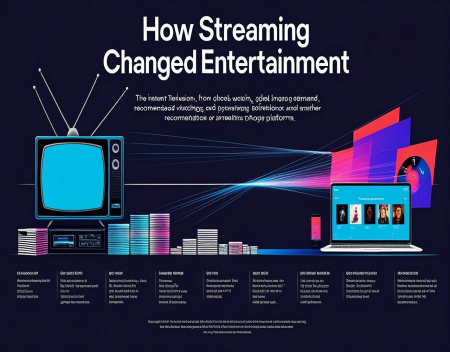
Over the past two decades, streaming has completely transformed how people watch movies, listen to music, follow television shows, and enjoy other forms of entertainment. What once required a trip to a video rental store, a visit to a record shop, or a television schedule is now available through internet-connected devices with just a few clicks.
Services such as Netflix, YouTube, Spotify, Disney+, and Amazon Prime Video have changed not only how entertainment is delivered but also how it is produced, distributed, marketed, and consumed. Streaming has given audiences more choices and greater control, while creating new challenges for traditional entertainment companies.
The shift from physical media and scheduled broadcasting to on-demand digital content is one of the most significant changes in modern media history.
The End of the Traditional Rental StoreBefore streaming became widespread, watching a movie at home often involved purchasing a DVD or renting one from a local video store. Customers had to travel to the store, select an available title, and return it by a specific deadline. Popular movies could be difficult to find, and late fees were a familiar frustration.
Streaming removed many of these inconveniences. Instead of travelling to a store, viewers could browse a digital library and begin watching almost immediately.
The same transformation occurred in music. CDs, cassette tapes, and vinyl records once dominated music distribution. Digital downloads later allowed consumers to purchase individual songs, but streaming services introduced another model: access to enormous music libraries through subscriptions or advertising-supported accounts.
This change shifted entertainment away from owning individual products and toward accessing large collections of content whenever needed.
Physical media still has an audience, particularly among collectors and people who value ownership, but streaming has become a central part of everyday entertainment.
Entertainment on DemandOne of streaming's greatest advantages is convenience. Traditional television programming required viewers to watch shows at scheduled times or record them for later viewing. Streaming allows audiences to choose what they want to watch and when they want to watch it.
This flexibility has changed viewing habits considerably.
Binge-watching, for example, became increasingly popular as streaming services began releasing entire seasons of television shows at once. Rather than waiting a week for the next episode, viewers could watch several episodes in a single evening.
Streaming has also made entertainment more portable. People can watch movies on smartphones during travel, listen to music while exercising, or catch up on television shows using tablets and laptops.
However, the freedom to watch anything at almost any time has also created new challenges. With so much available, some people spend considerable time browsing instead of actually watching something. The abundance of entertainment can make choosing a program surprisingly difficult.
How Streaming Changed Television and MoviesStreaming services have become major producers of original entertainment. Rather than relying exclusively on traditional television networks and movie studios, platforms now finance and distribute their own films, documentaries, and television series.
This has created opportunities for new stories, different formats, and performers who might previously have struggled to find a large audience.
Streaming platforms can also distribute productions internationally with fewer of the traditional limitations associated with television schedules and physical distribution. A series produced in one country can attract viewers around the world, helping international entertainment reach audiences that might never have encountered it through conventional broadcasting.
The business model has changed as well. Traditional television networks have often depended heavily on advertising and scheduled programming. Subscription streaming services generally earn revenue through recurring fees, while advertising-supported services generate income by showing commercials. Some platforms combine both approaches.
Yet streaming has not eliminated the financial risks of entertainment production. Expensive original productions can fail to attract enough viewers, and platforms must continually balance production costs against subscriber growth and retention.
The Rise of Personalized RecommendationsStreaming services collect information about viewing and listening habits to help recommend content. Their systems may consider what users watch, how long they listen, which titles they skip, and what similar audiences enjoy.
These recommendations can help people discover movies, music, and programs they might otherwise overlook.
For example, someone who regularly listens to classic rock may receive recommendations for related artists, while a viewer who enjoys science fiction may be shown similar films and television series.
However, personalization also has disadvantages. Recommendation systems can repeatedly promote familiar styles of content, potentially limiting exposure to unfamiliar ideas or genres. The choices presented to users may reflect the platform's commercial priorities as well as their personal interests.
Streaming has therefore made entertainment discovery easier, but it has also given algorithms a growing influence over what audiences see and hear.
What Happened to Traditional Media?The growth of streaming has placed considerable pressure on traditional entertainment businesses.
Cable and satellite television providers have faced competition from internet-based services as consumers reconsider expensive channel packages. Many households have reduced or cancelled traditional television subscriptions in favour of streaming platforms.
Movie theatres have also had to adapt. Streaming provides a convenient alternative to going out, particularly for viewers who prefer watching new releases at home. At the same time, theatres continue to offer an experience that home viewing cannot fully reproduce, including large screens, powerful sound systems, and the social atmosphere of watching a movie with an audience.
The music industry has experienced a similar transformation. Streaming has made it easier for listeners to discover artists without purchasing albums, but musicians and rights holders often receive relatively small payments per stream. Earnings depend on licensing agreements, subscription revenue, advertising, and how platforms distribute payments.
For independent artists, streaming can provide worldwide exposure. However, standing out in a crowded digital marketplace remains difficult.
The Problem of Subscription OverloadStreaming was initially promoted as a convenient alternative to expensive traditional media packages. Over time, however, the number of competing services has grown.
Movies and television shows are frequently divided among different platforms, encouraging consumers to subscribe to several services to access the content they want.
The combined cost can become significant, especially when subscription prices increase or exclusive programming moves between providers.
This has led some consumers to rotate subscriptions, keeping one service for a month or two before cancelling and switching to another. Others combine paid subscriptions with free, advertising-supported platforms.
Streaming has made entertainment more accessible in many ways, but it has not necessarily made all entertainment cheaper.
Content availability can also change as licensing agreements expire, meaning that a show or movie available today may disappear tomorrow. Unlike a purchased DVD, access through a subscription does not usually provide permanent ownership of a particular title.
The Future of StreamingStreaming technology continues to evolve. Faster internet connections, improved compression, connected televisions, and more capable mobile devices have made high-quality video and audio easier to deliver.
Artificial intelligence is likely to play a growing role in content recommendations, accessibility features, translation, and content creation. Interactive entertainment may also become more common, allowing audiences to influence stories or participate in experiences that combine traditional video with gaming.
Competition will continue to shape the industry. Some platforms may focus on exclusive productions, while others may offer bundles that combine video, music, live sports, and other services. Advertising-supported streaming could also expand as companies seek additional revenue sources.
At the same time, questions about privacy, subscription costs, content ownership, and fair compensation for creators will remain important.
Final ThoughtsStreaming has fundamentally changed entertainment by giving people greater control over what they watch and listen to. It has reduced the importance of physical media, challenged traditional television and music distribution, created new opportunities for content producers, and made international entertainment more accessible.
However, the transformation has not been entirely positive. Subscription costs can add up, recommendation systems influence what people discover, and creators continue to navigate a complicated digital marketplace.
Despite these challenges, streaming is now an established part of modern life. Its future will depend on how successfully entertainment companies balance convenience, affordability, quality, and fair compensation.
Ultimately, streaming has changed the central question of entertainment. Instead of asking what is available on television tonight or which movie is in stock at the rental store, audiences now ask a different question: With so much content available, what should I watch next?
Great experience with Computer Geek. They helped with my website needs and were professional, respon . . . [MORE].

Great, quick service when my laptop went into meltdown and also needed Windows 11 installed. Also ca . . . [MORE].
It was a great experience to working with you. thank you so much. . . . [MORE].
Thank you so much for great service and over all experience is good . highly recommended for all peo . . . [MORE].
We engaged The Computer Geeks in mid-2023 as they have a reputation for API integration within the T . . . [MORE].
How Streaming Changed Ent
Digital Minimalism in a C
Are We Becoming Too Depen