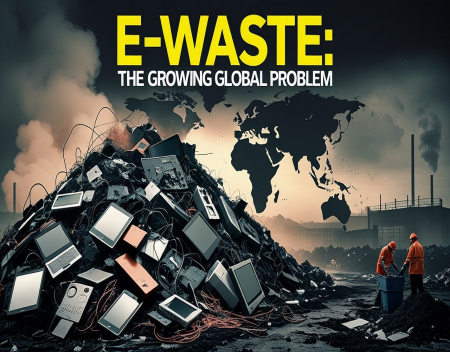
Technology has become an essential part of modern life. Smartphones, computers, televisions, tablets, household appliances, and countless other electronic devices help us communicate, work, learn, and entertain ourselves. However, as technology advances and consumers replace older equipment with newer models, an increasingly serious environmental problem continues to grow: electronic waste, commonly known as e-waste.
E-waste includes discarded electrical and electronic equipment, along with components and accessories that are no longer wanted or useful. While some electronics can be repaired, reused, or refurbished, many end up in storage, landfills, or recycling facilities that may not handle them properly.
The growing volume of electronic waste creates environmental, economic, and public health challenges. Understanding the problem is an important first step toward finding practical solutions.
What Is E-Waste?E-waste covers a wide range of discarded electronic products.
Common examples include:
Desktop computers, laptops, and computer monitors
Smartphones, tablets, and mobile phones
Televisions and entertainment systems
Printers, scanners, and networking equipment
Refrigerators, washing machines, and other electrical appliances
Digital cameras, gaming consoles, and audio equipment
Chargers, cables, circuit boards, and other electronic components
Many of these products contain valuable materials, including copper, aluminum, gold, silver, and other metals. They may also contain plastics, glass, batteries, and substances that require careful handling.
Because electronics contain a mixture of materials, recycling them is more complicated than recycling ordinary paper, cardboard, or glass. Different components often need to be separated using specialized equipment and processes.
Why Is E-Waste Increasing?Several factors contribute to the growing volume of electronic waste.
One major factor is the rapid pace of technological development. New smartphones, computers, televisions, and other devices frequently offer improved performance, additional features, and updated designs. Consumers may replace working equipment simply because newer products are available.
Another factor is the limited useful life of some electronics. Batteries lose capacity, components fail, and older devices may eventually stop receiving important software or security updates.
Repairing electronics can also be expensive. If replacement parts are difficult to find or a repair costs nearly as much as a new device, consumers may choose replacement instead.
Businesses contribute to the problem as well. Organizations regularly upgrade computers, servers, networking equipment, and other technology to maintain performance, improve security, and support modern applications.
As the global use of electronics expands, managing discarded equipment becomes an increasingly important challenge.
The Environmental Impact of Electronic WasteImproperly managed e-waste can harm the environment.
Some electronic products contain lead, mercury, cadmium, and other potentially hazardous substances. If discarded equipment is damaged, dismantled improperly, or processed under unsafe conditions, these materials may contaminate soil, water, or surrounding environments.
Burning electronic cables and components to recover metals can release dangerous pollutants into the air. Informal recycling operations may also expose workers and nearby communities to hazardous substances.
Batteries create additional concerns. Damaged or improperly handled batteries can leak harmful materials or cause fires when they are crushed, punctured, or mixed with unsuitable waste.
However, not every discarded electronic device is automatically hazardous. The risks depend on the product, its condition, and how it is handled.
Proper collection, transportation, dismantling, and recycling can significantly reduce these environmental risks.
The Loss of Valuable ResourcesElectronic waste is not just a disposal problem. It also represents a loss of valuable resources.
Manufacturing electronics requires raw materials, energy, water, and complex industrial processes. Metals used in circuit boards, wiring, batteries, and other components must be extracted, processed, and transported before they become part of a finished product.
When electronics are discarded without recovering reusable materials, much of that investment is lost.
Recovering metals and other materials from discarded equipment can reduce the need for some new mining and help conserve natural resources.
For example, circuit boards may contain small quantities of valuable metals. Recovering these materials requires specialized processing, but doing so can provide economic value while reducing the demand for newly extracted resources.
Improving electronic recycling is therefore an important part of building a more sustainable technology industry.
Why So Much E-Waste Is Not Properly RecycledAlthough electronic recycling programs exist in many countries, a significant amount of discarded equipment is still not collected and processed through appropriate recycling systems.
One problem is convenience. People may leave old phones in drawers, store unused computers in basements, or throw small electronic items into ordinary garbage because they do not know where to take them.
Another challenge is cost. Some electronic products are expensive or complicated to dismantle, and recovering certain materials may not be financially attractive without suitable facilities and processes.
In some regions, discarded electronics are handled by informal recycling operations that lack appropriate protective equipment or environmental controls.
International trade can complicate the situation further when used electronics are exported without clear information about their condition or whether they can realistically be reused.
Improving collection systems, enforcing appropriate environmental standards, and making recycling options easier to find can help address these challenges.
The Role of ManufacturersManufacturers have an important role to play in reducing electronic waste.
Product design can influence how long a device lasts and how easily it can be repaired. Products with replaceable batteries, accessible components, available replacement parts, and longer software support periods may remain useful for longer.
Manufacturers can also reduce waste by designing products that are easier to dismantle and recycle at the end of their useful lives.
Some companies operate take-back programs that allow customers to return old devices for refurbishment or recycling.
Other approaches include using recycled materials in new products and reducing unnecessary packaging.
Designing electronics for durability and repairability can help reduce the number of devices that need to be discarded prematurely.
What Consumers Can DoIndividuals can make a meaningful contribution to reducing e-waste.
Keep Electronics LongerAvoid replacing devices simply because a newer model is available. If a computer or smartphone still meets your needs and receives appropriate security support, continuing to use it may be the most economical and environmentally responsible choice.
Repair Before ReplacingA failing battery, damaged charging port, or broken screen does not always mean an entire device must be discarded. Compare repair costs with replacement costs before making a decision.
Donate or Sell Working EquipmentAn electronic device that no longer meets your needs may still be useful to someone else. Consider selling or donating working equipment, provided personal information can be securely removed.
Recycle Electronics ProperlyWhen a device can no longer be used, take it to an appropriate electronics recycling program. In Canada, provincial and territorial programs provide different collection options, so residents should check the rules and facilities available in their area.
Do not place batteries or electronic equipment in ordinary household recycling unless local instructions specifically permit it.
Protect Your Personal InformationBefore donating, selling, or recycling a computer, phone, or storage device, back up important files and securely erase personal information. Follow the device manufacturer's guidance for resetting the equipment and removing stored data.
Businesses should also have procedures for securely sanitizing or destroying storage media that contains confidential information.
The Circular Economy and the Future of ElectronicsOne promising approach to reducing e-waste is the circular economy.
Traditional manufacturing often follows a linear model: extract resources, manufacture a product, use it, and discard it.
A circular approach aims to keep products and materials in use for as long as possible through repair, refurbishment, reuse, remanufacturing, and recycling.
For electronics, this could mean designing smartphones that are easier to repair, refurbishing business computers for another user, recovering materials from old circuit boards, and using recycled components in new products.
Technology companies, governments, recycling organizations, and consumers all have a role in making this approach more practical.
Artificial intelligence and improved sorting technologies may also help recycling facilities identify materials and process electronic waste more efficiently. However, technology alone will not solve the problem without effective collection systems and responsible product design.
Final ThoughtsE-waste is a growing global problem driven by increasing technology use, rapid product development, difficult repairs, and the disposal of electronics that still contain valuable resources.
Improper handling can create environmental and health risks, while inadequate recycling wastes materials that could potentially be recovered and reused.
Addressing the problem requires cooperation among manufacturers, governments, businesses, recycling organizations, and individual consumers.
By making electronics last longer, repairing equipment when practical, donating usable devices, and recycling discarded products responsibly, we can reduce unnecessary waste and conserve valuable resources.
Technology will continue to advance, but progress should not be measured only by how quickly new devices are developed. It should also be measured by how responsibly we manufacture, use, reuse, and eventually dispose of them.
Great experience with Computer Geek. They helped with my website needs and were professional, respon . . . [MORE].

Great, quick service when my laptop went into meltdown and also needed Windows 11 installed. Also ca . . . [MORE].
It was a great experience to working with you. thank you so much. . . . [MORE].
Thank you so much for great service and over all experience is good . highly recommended for all peo . . . [MORE].
We engaged The Computer Geeks in mid-2023 as they have a reputation for API integration within the T . . . [MORE].
E-Waste: The Growing Glob
Why Electronics Have Shor

The Future of Smart Homes