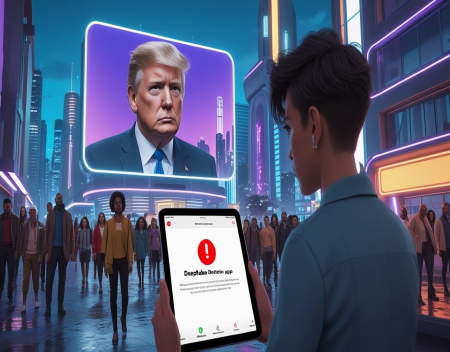
The phrase “seeing is believing” once carried unquestioned authority. A photograph was a moment frozen in truth. A video was proof. A recording captured reality as it was. But in the age of deepfakes—AI-generated images, audio, and video so realistic they can fool experts—those assumptions are dissolving. We are entering a world where fabricated realities are indistinguishable from authentic ones, and this shift raises profound questions about trust, identity, security, and the future of public discourse.
Deepfakes emerged quietly, beginning as experimental research into generative neural networks. Then they exploded into the mainstream through online communities that used the technology for novelty videos, satire, and—more disturbingly—non-consensual explicit content. Today, deepfake technology has grown so advanced that even brief audio samples or low-resolution images are enough to replicate a person’s voice or likeness almost perfectly. A few seconds of someone talking can become the seed for a speech they never gave. A blurred photograph can become a video of them committing a crime they never even witnessed. This new capability alters the fundamental nature of evidence.
Politically, deepfakes present a threat unlike anything modern democracies have faced. Imagine a candidate appearing in a video confessing to corruption days before an election. Even if the deepfake is later debunked, the damage may already be done. Trust, once shattered, rarely returns intact. Worse, deepfakes don’t just create false realities. They create plausible deniability. Real scandals can be dismissed as fabrications. Actual recordings can be brushed off as AI trickery. Leaders caught in wrongdoing may claim they’re victims of digital impersonation. When truth becomes negotiable, accountability erodes.
The legal system also faces unprecedented challenges. Courts have long relied on audio and video evidence as definitive proof. But how can a jury be certain a recording is genuine? How can a judge rely on footage that could have been algorithmically altered? Without new authentication technologies, the risk of wrongful convictions—or wrongful acquittals—grows. Law enforcement agencies are now racing to develop forensic tools capable of detecting AI manipulation, yet the arms race between deepfake generation and detection is accelerating, and the gap is narrowing.
On a personal level, deepfakes threaten individual identity and safety. Cybercriminals already use voice-cloned phone calls to deceive family members into sending money. Stalkers create explicit deepfakes to harass victims. Online reputations can be destroyed overnight with a single fabricated video. For public figures, the threat is constant. For private individuals, the risk is becoming universal. When anyone’s likeness can be stolen, altered, and distributed globally in minutes, traditional privacy protections feel obsolete.
Yet deepfakes aren’t solely dark. They have legitimate creative and beneficial uses. Filmmakers can resurrect historical figures or recreate actors’ younger selves. Accessibility tools can help people who have lost their voice speak again using AI-generated versions of their own vocal patterns. Educators can build immersive historical simulations. In these contexts, deepfakes offer innovation rather than deception. The challenge lies in creating ethical frameworks that encourage positive applications while preventing harmful misuse.
Ultimately, the rise of deepfakes forces society to rethink what authenticity means in a digital world. We must develop new norms, new protections, and new skepticism. Blind trust in visual and auditory evidence is no longer viable. Instead, we need systems of verification, widespread media literacy, and transparent AI regulation. If we fail to adapt, we risk living in a world where lies travel faster than truth, and where every person’s life can be rewritten by someone else’s algorithm.
Seeing is no longer believing. In a deepfake society, believing requires vigilance, critical thinking, and an understanding that the most convincing illusions may be the ones designed to look exactly like reality itself.
Great experience with Computer Geek. They helped with my website needs and were professional, respon . . . [MORE].

Great, quick service when my laptop went into meltdown and also needed Windows 11 installed. Also ca . . . [MORE].
It was a great experience to working with you. thank you so much. . . . [MORE].
Thank you so much for great service and over all experience is good . highly recommended for all peo . . . [MORE].
We engaged The Computer Geeks in mid-2023 as they have a reputation for API integration within the T . . . [MORE].
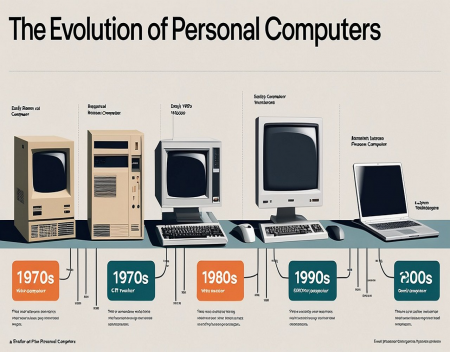
The Evolution of Personal
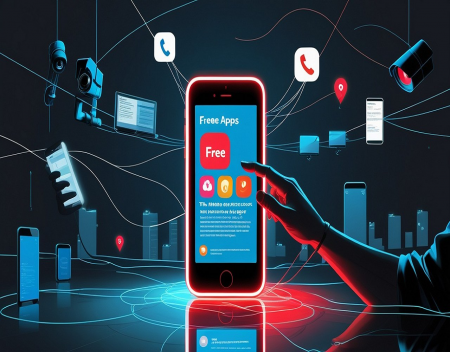
The Hidden Cost of Free A
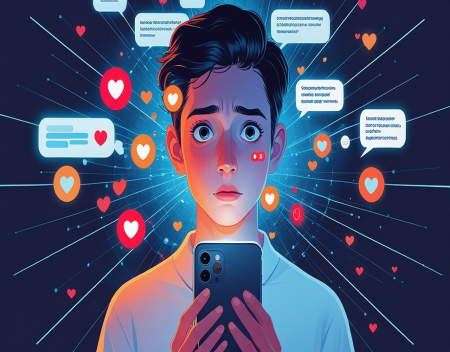
The Psychology of Notific