
For most of the internet’s history, finding information meant using a search engine. Users would type a query, receive a list of links, and navigate through multiple websites to find what they needed. This model, built around the World Wide Web, defined how people interacted with information for decades. Today, however, a major shift is underway. Instead of searching and clicking, users are increasingly asking questions and receiving direct answers generated by Artificial Intelligence.
This transition represents more than just a change in tools—it signals a fundamental transformation in how information is accessed and consumed. AI-driven systems can analyze vast amounts of data, synthesize it, and present it in a concise, conversational format. For users, this means less time spent navigating links and more time receiving immediate, tailored responses. The process becomes more efficient, intuitive, and aligned with natural language.
One of the main drivers of this shift is convenience. Traditional search requires effort. Users must evaluate sources, compare information, and piece together answers from multiple pages. AI answers streamline this process by doing much of the work upfront. A single query can produce a coherent response that pulls together relevant information from various sources. This is especially valuable for complex or multi-part questions, where traditional search results might require extensive filtering.
Another factor is the evolution of user expectations. As technology becomes more advanced, people expect faster and more personalized experiences. AI systems can adapt to user preferences, context, and history, delivering answers that feel more relevant. This level of personalization goes beyond what traditional search engines typically offer, creating a more engaging and efficient interaction.
However, this shift also introduces new challenges. One of the most significant is the issue of transparency. With search engines, users can see where information comes from by clicking on links and evaluating sources directly. AI-generated answers, on the other hand, often present information as a single, unified response. This can make it harder to trace the origin of specific claims or verify their accuracy. Trust becomes a central concern, as users must rely on the system’s ability to interpret and present information correctly.
Accuracy itself is another important consideration. While AI systems are highly capable, they are not perfect. They can misinterpret data, overlook nuances, or generate responses that sound convincing but contain errors. In traditional search, users have the opportunity to cross-check multiple sources. With AI answers, that responsibility may be less visible, increasing the risk of accepting incorrect information without question.
The shift also has significant implications for content creators and website owners. In a search-driven model, traffic is directed to individual sites, where users engage with content directly. AI answers can reduce the need for these visits, as information is delivered without requiring users to leave the interface. This could impact how websites generate revenue, particularly those that rely on advertising or page views. As a result, content strategies may need to evolve, focusing on authority, originality, and integration with AI systems.
From a broader perspective, this transition changes the structure of the internet itself. The web has traditionally been a network of interconnected pages, each contributing to a larger ecosystem of information. AI answers introduce a layer that sits on top of this network, interpreting and summarizing content rather than simply pointing to it. This creates a more centralized experience, where the interface becomes the primary point of interaction.
Despite these changes, search engines are not disappearing. Instead, they are evolving. Many are integrating AI features into their platforms, combining traditional search results with generated answers. This hybrid approach allows users to benefit from both models—quick summaries for immediate needs and access to detailed sources for deeper exploration. The goal is not to replace search entirely, but to enhance it.
There is also an opportunity for improved accessibility. AI answers can make information more approachable for users who may struggle with traditional search methods. Natural language interaction reduces barriers, allowing people to ask questions in their own words and receive clear responses. This can be particularly beneficial in educational contexts or for users with limited technical experience.
Looking ahead, the balance between search and AI answers will continue to evolve. As AI systems become more accurate and transparent, their role is likely to expand. At the same time, the need for reliable sources and independent verification will remain critical. The challenge will be to integrate these systems in a way that preserves trust, diversity of information, and user control.
Ultimately, the shift from search engines to AI answers reflects a broader trend in technology: moving from tools that require navigation to systems that provide guidance. It changes not just how we find information, but how we think about knowledge itself. Instead of exploring a landscape of sources, users are increasingly interacting with a layer that interprets that landscape for them.
In the end, the future of information access will likely be a combination of both approaches. Search will continue to provide depth and choice, while AI answers offer speed and simplicity. Together, they will shape a new way of engaging with the digital world—one that is faster, more intuitive, and increasingly driven by intelligent systems.
Great experience with Computer Geek. They helped with my website needs and were professional, respon . . . [MORE].

Great, quick service when my laptop went into meltdown and also needed Windows 11 installed. Also ca . . . [MORE].
It was a great experience to working with you. thank you so much. . . . [MORE].
Thank you so much for great service and over all experience is good . highly recommended for all peo . . . [MORE].
We engaged The Computer Geeks in mid-2023 as they have a reputation for API integration within the T . . . [MORE].
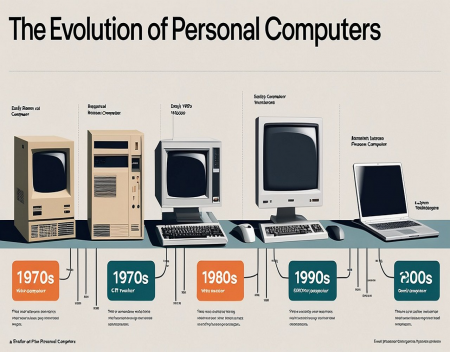
The Evolution of Personal

The Hidden Cost of Free A

The Psychology of Notific