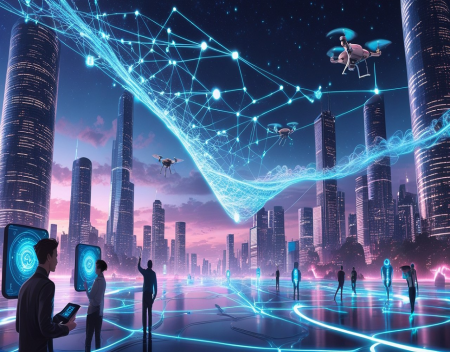
Since its creation, the World Wide Web has gone through several major transformations. What began as a decentralized network of static pages evolved into a dynamic, interactive ecosystem of platforms, services, and applications. Today, the web is entering another phase of change—one driven by the rapid advancement of Artificial Intelligence. This shift is not just about new tools or features. It is fundamentally altering how people access information, interact with content, and experience the internet as a whole.
One of the most noticeable changes is the way information is retrieved. Traditionally, users relied on search engines to find content, typing in queries and browsing through lists of links. In an AI-driven web, this model is being replaced—or at least supplemented—by systems that provide direct answers. Instead of navigating multiple websites, users can ask a question and receive a synthesized response. This changes the role of the web from a collection of destinations to a layer of knowledge that can be accessed conversationally.
This shift has significant implications for content creators and website owners. If users no longer need to visit individual pages to find information, traffic patterns could change dramatically. Websites that once depended on search engine visibility may need to adapt to new forms of discovery. Content may need to be structured in ways that are easily interpreted and summarized by AI systems. The emphasis may shift from attracting clicks to providing high-quality, authoritative information that can be integrated into broader responses.
At the same time, AI is transforming how content is created. Tools powered by machine learning can generate text, images, and even code, allowing for faster and more scalable production. This has the potential to democratize content creation, enabling individuals and small organizations to compete with larger entities. However, it also raises questions about authenticity and quality. As the volume of AI-generated content increases, distinguishing between original, human-created material and automated output may become more challenging.
Personalization is another key aspect of the AI-driven web. Algorithms can analyze user behavior, preferences, and context to deliver highly tailored experiences. This can make the web more relevant and efficient, as users are presented with content that aligns with their interests. However, it also introduces the risk of echo chambers, where individuals are primarily exposed to information that reinforces their existing views. Balancing personalization with exposure to diverse perspectives will be an ongoing challenge.
The structure of the web itself may also evolve. Decentralization has long been a core principle, but the rise of large platforms has concentrated power in a relatively small number of companies. AI could either reinforce this trend or help counter it. On one hand, developing and maintaining advanced AI systems requires significant resources, which may favor established players. On the other hand, open-source models and distributed technologies could enable more decentralized innovation, allowing a broader range of participants to contribute to the ecosystem.
Another important consideration is trust. As AI systems play a larger role in shaping what users see and how they interpret information, questions about accuracy and bias become more critical. AI-generated responses are only as reliable as the data and algorithms behind them. Ensuring transparency and accountability will be essential for maintaining confidence in the web as a source of information.
Privacy is also a major concern. AI-driven personalization relies on collecting and analyzing large amounts of data. This raises questions about how that data is stored, who has access to it, and how it is used. Users may need more control over their data and clearer insights into how it influences their online experience. Regulatory frameworks may also evolve to address these issues, shaping the future of the web in significant ways.
Despite these challenges, the AI-driven web offers substantial opportunities. It can make information more accessible, reduce barriers to entry, and enable new forms of interaction. For example, natural language interfaces can make the web more usable for people with limited technical skills. AI can also assist with tasks such as translation, accessibility, and content organization, making the web more inclusive.
Looking ahead, the future of the web will likely be a hybrid model. Traditional websites and applications will continue to exist, but they will be complemented by AI-driven layers that enhance and transform the user experience. The boundaries between searching, browsing, and interacting will become less distinct, creating a more fluid and integrated environment.
Ultimately, the evolution of the web in an AI-driven era is not just a technological shift—it is a cultural one. It changes how knowledge is shared, how content is valued, and how people connect with information. The challenge will be to harness the power of AI while preserving the openness, diversity, and reliability that have made the web such a powerful tool.
In the end, the web is not disappearing—it is being redefined. And in this new phase, the balance between human creativity and machine intelligence will shape what the internet becomes for the next generation.
Great experience with Computer Geek. They helped with my website needs and were professional, respon . . . [MORE].

Great, quick service when my laptop went into meltdown and also needed Windows 11 installed. Also ca . . . [MORE].
It was a great experience to working with you. thank you so much. . . . [MORE].
Thank you so much for great service and over all experience is good . highly recommended for all peo . . . [MORE].
We engaged The Computer Geeks in mid-2023 as they have a reputation for API integration within the T . . . [MORE].
The Hidden Cost of Free A
The Psychology of Notific
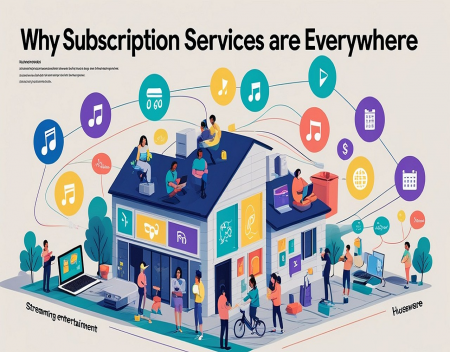
Why Subscription Services