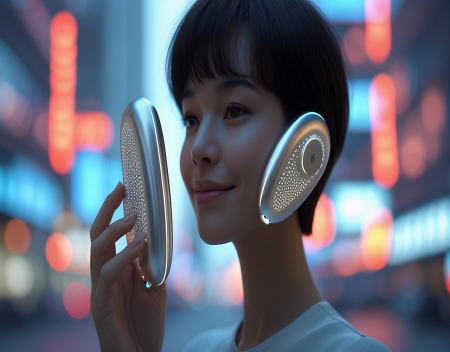
For nearly three decades, screens have defined the mobile technology experience. From early flip phones with tiny monochrome displays to today's powerful smartphones with vibrant high-resolution touchscreens, the screen has remained the primary way people interact with mobile devices. Yet despite continuous improvements in display technology, a growing number of industry experts believe the future of mobile computing may involve far less screen usage—or perhaps no screens at all.
At first glance, the idea sounds unlikely. Screens are deeply integrated into everyday life. People use them to communicate, consume media, navigate, work, shop, and socialize. However, technology trends suggest that future mobile experiences may increasingly rely on voice, artificial intelligence, wearable devices, augmented reality, and ambient computing rather than traditional displays.
One reason for this shift is that smartphones are reaching a point of maturity. While manufacturers continue to improve cameras, processors, batteries, and displays, the fundamental interaction model has changed very little over the past decade. Users still spend much of their day staring at rectangular screens, tapping icons, and navigating apps. Many technology companies are now exploring ways to make interactions more natural and less dependent on visual interfaces.
Artificial intelligence is one of the key technologies driving this transformation. Modern AI assistants are becoming increasingly capable of understanding natural language and responding to complex requests. Instead of opening an app, navigating menus, and entering information manually, future users may simply ask an AI assistant to perform tasks on their behalf.
Imagine booking a flight, scheduling appointments, ordering groceries, or finding information through a conversation rather than through a series of screens and buttons. As AI systems become more advanced, many routine interactions may occur through voice commands or intelligent background automation.
Wearable technology is another major factor. Smartwatches have already demonstrated that many notifications and tasks can be handled without pulling out a smartphone. Future wearables may become even more capable, providing information through audio, subtle visual cues, or even haptic feedback.
Smart glasses represent one of the most frequently discussed alternatives to traditional smartphone screens. Instead of looking down at a device, users could see digital information projected directly into their field of view. Navigation directions, messages, notifications, and contextual information could appear when needed and disappear when not required.
This concept is closely related to augmented reality, which overlays digital information onto the physical world. Rather than switching attention between reality and a phone screen, users could interact with digital content while remaining engaged with their surroundings. Augmented reality could transform navigation, education, gaming, shopping, and workplace productivity.
Voice interfaces are expected to become significantly more sophisticated as well. Current voice assistants often struggle with complex conversations, but advances in artificial intelligence are rapidly improving their capabilities. Future systems may understand context, remember preferences, and perform multi-step tasks with minimal user input.
As voice technology improves, many common smartphone activities could occur entirely through conversation. This would reduce the need to constantly unlock devices and navigate applications manually.
Another emerging concept is ambient computing. In an ambient computing environment, technology fades into the background and becomes less visible. Devices communicate with one another and respond intelligently to user needs without requiring constant interaction.
For example, a person's calendar, vehicle, smart home, wearable devices, and AI assistant could work together automatically. Instead of opening apps and entering commands, users would simply express goals while technology handles the details behind the scenes.
Advances in audio technology may also contribute to a screenless future. Wireless earbuds are becoming increasingly powerful and capable. Future devices could provide personalized information through discreet audio channels throughout the day, eliminating the need to constantly look at a display.
However, significant challenges remain. Screens are incredibly effective for displaying detailed information, images, videos, maps, and documents. Many tasks simply work better with visual interfaces. Activities such as photo editing, video production, spreadsheet analysis, and content creation still benefit greatly from large displays.
Privacy is another concern. Voice-based and wearable systems often rely on continuous monitoring of user activity and surroundings. Ensuring that personal information remains secure and private will be a critical challenge as these technologies become more advanced.
User acceptance may also take time. People have spent decades adapting to screen-based interfaces. Moving toward voice, augmented reality, and ambient computing will require changes in habits and expectations. New technologies must prove they offer genuine advantages rather than simply replacing familiar methods.
It is important to recognize that the future may not involve the complete disappearance of screens. Instead, screens may become one option among many. Users could interact through voice when convenient, augmented reality when visual information is needed, and traditional displays for complex tasks.
The most likely outcome is a hybrid future where technology becomes more flexible and adaptive. Instead of relying solely on smartphones, people may use a combination of AI assistants, smart glasses, wearables, and ambient systems that work together seamlessly.
In the end, the future of mobile technology may be defined not by bigger or better screens, but by reducing our dependence on screens altogether. As artificial intelligence, augmented reality, and wearable computing continue to advance, the next major evolution in mobile technology could be making devices less visible while making them more useful than ever before.
Great experience with Computer Geek. They helped with my website needs and were professional, respon . . . [MORE].

Great, quick service when my laptop went into meltdown and also needed Windows 11 installed. Also ca . . . [MORE].
It was a great experience to working with you. thank you so much. . . . [MORE].
Thank you so much for great service and over all experience is good . highly recommended for all peo . . . [MORE].
We engaged The Computer Geeks in mid-2023 as they have a reputation for API integration within the T . . . [MORE].
The Future of Television
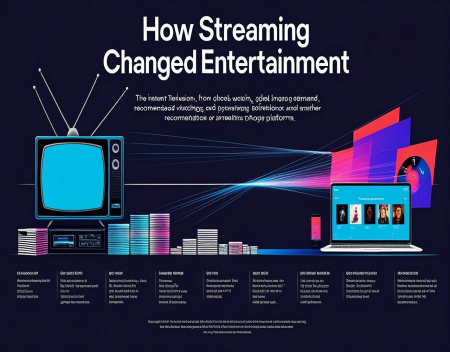
How Streaming Changed Ent
Digital Minimalism in a C