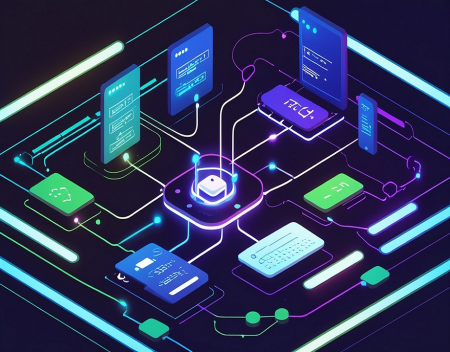
Modern software rarely operates in isolation. The apps and websites we use every day often depend on dozens, hundreds, or even thousands of other systems working behind the scenes. When you order something online, check the weather, use a mapping application, make a payment, or log into a website using an existing account, there is a good chance that multiple software systems are communicating with each other.
One of the technologies that makes this possible is the API, or Application Programming Interface.
APIs provide a standardized way for different software applications and services to communicate. Open APIs, in particular, have become an important building block of modern software, allowing developers to connect their applications to services and information created by other companies and organizations.
What Is an API?An API is essentially a set of rules that allows one piece of software to communicate with another.
Imagine a restaurant. You don't normally walk into the kitchen and tell the chef exactly how to prepare your meal. Instead, you give your order to a server. The server communicates your request to the kitchen and eventually brings the result back to you.
An API works in a similar way.
An application sends a request through an API, another system processes that request, and the API returns the appropriate information or result.
For example, a weather application doesn't need to build its own network of weather stations around the world. It can request weather information from a weather service through an API and display the results to its users.
What Makes an API "Open"?The term "open API" generally refers to an API that is publicly available for developers to use, although access may require registration, authentication, or payment.
Open APIs allow outside developers to interact with a service without needing to understand or access the service's underlying software.
A company might provide an API that allows developers to retrieve product information, process payments, access maps, send messages, analyze data, or perform countless other tasks.
The developer simply follows the rules provided by the API.
APIs Connect Different ServicesOne of the biggest benefits of APIs is that they allow software systems to work together.
Consider an online shopping website.
The website might use one system for managing products, another for processing payments, another for calculating shipping costs, another for sending email notifications, and another for tracking packages.
These systems don't necessarily need to be created by the same company.
APIs can provide the connections that allow them to communicate.
This approach has become fundamental to modern software development.
APIs Make Development FasterDevelopers don't have to build everything from scratch.
If a company needs mapping functionality, it may be able to use an existing mapping API.
If it needs online payments, it can connect to a payment provider through an API.
If it needs to send text messages, it can use a communications service.
This saves enormous amounts of development time.
Instead of spending months building infrastructure that another company has already developed, developers can connect their application to an existing service.
This allows businesses to focus on what makes their product unique.
APIs and Mobile AppsMobile applications rely heavily on APIs.
When you open a modern app, the application running on your phone is often communicating with remote servers.
For example, a social media application may use APIs to retrieve your messages, upload photographs, retrieve posts, and send notifications.
The smartphone provides the interface that you interact with, while much of the actual data and processing takes place on remote systems.
APIs provide the communication layer between the mobile application and those systems.
APIs and WebsitesWebsites also depend heavily on APIs.
A modern website may communicate with databases, payment systems, authentication services, analytics platforms, email services, mapping systems, artificial intelligence services, and many other platforms.
This is why a seemingly simple website can actually involve a complicated collection of technologies.
The user sees a single website, but numerous APIs may be operating behind the scenes.
APIs and Cloud ComputingCloud computing has made APIs even more important.
Cloud platforms allow businesses to access computing resources, storage, databases, artificial intelligence services, security systems, and other infrastructure through software interfaces.
Developers can create applications that automatically interact with these services.
For example, an application could automatically create a cloud server, store a file, analyze an image using an AI service, and send the results to a user.
All of these operations can be controlled through APIs.
APIs and Artificial IntelligenceArtificial intelligence is creating another major wave of API usage.
AI providers can expose their models through APIs, allowing developers to add artificial intelligence capabilities to their own applications.
A company doesn't necessarily need to build its own large AI model.
Instead, it can connect its software to an AI service through an API.
This could allow an application to generate text, analyze documents, create summaries, classify information, process images, or perform other AI-powered tasks.
The result is that advanced AI capabilities can become features inside ordinary software.
APIs Create Software EcosystemsA successful API can become the foundation of an entire ecosystem.
When companies provide useful APIs, outside developers can create applications and services that extend the original platform.
This can create a network effect.
The more developers use an API, the more applications can be created around it. Those applications can attract more users, which can increase demand for the underlying service.
Some of the world's largest technology platforms have built enormous ecosystems around their APIs.
APIs Also Require SecurityOpening an API to outside developers creates security challenges.
APIs often provide access to valuable information or important functions.
If an API isn't properly secured, attackers may be able to exploit it.
Authentication is therefore extremely important.
APIs may require API keys, access tokens, passwords, certificates, or other security mechanisms.
Developers also need to control what each user or application is allowed to do.
An application that only needs to retrieve public information shouldn't automatically receive permission to modify customer accounts.
Rate LimitsAnother important API feature is rate limiting.
An API provider may restrict how many requests a particular application can make during a certain period.
This protects the service from excessive usage and helps prevent abuse.
For example, an API might allow a particular application to make a certain number of requests per minute.
If the application exceeds that limit, additional requests may temporarily be rejected.
Rate limits are especially important for popular public APIs that may serve thousands or millions of developers.
APIs Can Change Over TimeAPIs aren't necessarily permanent.
A company may change how an API works, add new features, remove old functionality, or introduce a new version.
This means developers need to monitor the APIs their applications depend on.
If an important API is changed or discontinued, software that relies on it could stop working.
Good API providers therefore provide documentation, versioning, and advance notice of major changes.
APIs and Business InnovationOpen APIs can also encourage innovation.
A small company can build a sophisticated application by combining services provided by other organizations.
For example, a startup might combine a mapping API, payment API, messaging API, cloud database, and AI service to create an entirely new product.
Without APIs, building such a system would require considerably more infrastructure and development resources.
APIs have therefore helped lower the barrier to creating software businesses.
The Future of APIsAPIs will become even more important as software becomes increasingly connected.
Artificial intelligence, Internet of Things devices, cloud computing, automation, smart homes, connected vehicles, and business applications all depend on systems communicating with one another.
AI agents could make API usage even more interesting.
Instead of a human manually interacting with multiple applications, an AI system could potentially use APIs to retrieve information, perform actions, and coordinate different services automatically.
For example, an AI assistant could potentially retrieve information from a calendar, check a travel service, compare options, and complete other tasks by communicating with multiple APIs.
Final ThoughtsOpen APIs are one of the hidden foundations of modern software.
Most users never see them, but they are constantly working behind the scenes to connect applications, websites, databases, cloud services, payment systems, artificial intelligence models, and countless other technologies.
They allow developers to reuse existing capabilities instead of rebuilding everything from scratch.
More importantly, APIs allow completely different companies and systems to work together.
As software becomes more interconnected, APIs will become increasingly important. The next generation of applications will likely depend on even more services communicating seamlessly in the background.
The modern digital world isn't built from isolated applications. It is built from connected systems, and APIs are the bridges that connect them.
Great experience with Computer Geek. They helped with my website needs and were professional, respon . . . [MORE].

Great, quick service when my laptop went into meltdown and also needed Windows 11 installed. Also ca . . . [MORE].
It was a great experience to working with you. thank you so much. . . . [MORE].
Thank you so much for great service and over all experience is good . highly recommended for all peo . . . [MORE].
We engaged The Computer Geeks in mid-2023 as they have a reputation for API integration within the T . . . [MORE].

The Future of Smart Homes

Technology Trends Every S

The Hidden Costs of Legac