Smartphones have become an essential part of everyday life. We use mobile apps to communicate, shop, bank, navigate, exercise, watch videos, order food, manage finances, and entertain ourselves. With so many apps installed on a typical smartphone, it's easy to forget that many of them are also collecting information about how we use our devices.
Some data collection is necessary for an app to function. A navigation app needs your location, for example, while a messaging app needs access to your contacts or notifications to provide certain features. Other data collection can be used for advertising, analytics, personalization, or business purposes.
Understanding what information apps collect and how they collect it is an important part of protecting your privacy.
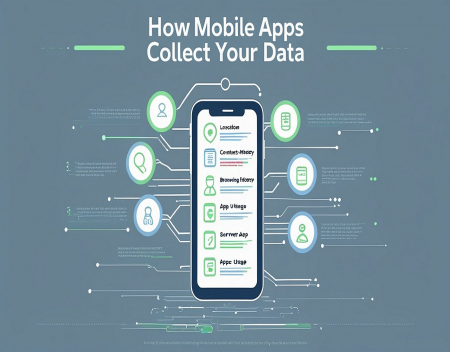
What Kind of Data Do Apps Collect?Mobile apps can potentially collect many different types of information.
Some of the most common include:
The amount of information collected depends heavily on the app and the permissions granted to it.
A simple flashlight app shouldn't need access to your contacts or location. A ride-sharing app, on the other hand, has a legitimate reason to use your location.
The important question isn't simply whether an app collects data. It's why it needs the data and what it does with it.
App PermissionsOne of the most obvious ways apps collect information is through permissions.
When you install or use an app, it may request permission to access certain features of your phone.
These can include the camera, microphone, contacts, photos, location, notifications, and other device functions.
Modern smartphones generally allow users to control many of these permissions.
For example, you may be able to allow an app to access your location only while the app is being used rather than continuously.
Taking a few minutes to review these permissions can significantly improve your privacy.
Location TrackingLocation data can be extremely valuable.
Maps and navigation applications obviously need your location to provide directions. Weather apps may use it to provide local forecasts. Food delivery services need it to determine where an order should be delivered.
But location information can reveal much more than simply where you are at a particular moment.
A history of location data could potentially reveal where you live, where you work, where you shop, where you travel, and how frequently you visit particular places.
For this reason, location permissions deserve particular attention.
If an app doesn't genuinely need continuous location access, consider limiting its permission.
Your Device Is a Source of InformationApps can also collect information about the device itself.
This might include the phone model, operating system version, language settings, screen characteristics, network information, and other technical details.
Much of this information is relatively harmless and can help developers troubleshoot problems or make their applications compatible with different devices.
However, technical information can also contribute to identifying or distinguishing individual devices.
Usage TrackingApps don't necessarily need access to your personal files to learn a lot about you.
They can learn from how you use the application.
For example, an app may record which features you use, how long you spend using the app, what buttons you press, and how frequently you return.
This information can help developers understand which features are popular.
It can also be used to personalize content or advertising.
Over time, these seemingly small pieces of information can create a detailed picture of a user's interests and habits.
Advertising DataAdvertising is one of the major reasons many apps collect information.
Free apps still cost money to develop, maintain, and operate.
Advertising can provide a source of revenue.
Advertisers are generally more interested in reaching particular types of users than simply displaying random advertisements.
Information about your interests, activity, approximate location, and interactions with advertisements can potentially be used to make advertising more relevant.
This is one reason you may search for something on your phone and later see advertisements related to it in another application.
That doesn't necessarily mean your microphone is secretly recording everything you say.
There are many other ways companies can learn about your interests through online activity and data-sharing systems.
Cookies and Tracking TechnologiesMobile apps can use various technologies to identify sessions, understand usage, and connect activity.
Some tracking systems use identifiers associated with the device or advertising ecosystem.
Websites accessed through apps can also use web-based tracking technologies.
The result can be a complicated ecosystem in which information is collected by the app itself, advertising companies, analytics providers, and other third-party services.
Third-Party AnalyticsMany developers use analytics tools to understand how people use their apps.
These services can provide information such as how many people opened an application, which features they used, how long sessions lasted, and where errors occurred.
Analytics can be extremely useful for improving software.
However, users may not always realize how many different companies are involved behind a single application.
An app may communicate with numerous third-party services while running.
This is one reason privacy policies can be surprisingly complicated.
Data BrokersAnother concern is the broader data ecosystem.
Some companies specialize in collecting, analyzing, combining, or selling information.
Data obtained from different sources can potentially be combined to create more detailed profiles.
For example, information from apps, websites, advertising systems, and other sources may be analyzed to determine likely interests or characteristics.
Consumers don't always know exactly how far their information travels once it enters these ecosystems.
What About Your Photos?Photo access deserves special attention.
An app that has access to your photo library may potentially access personal images, depending on the permissions and operating system controls involved.
Modern smartphones increasingly provide more granular options, allowing users to select particular photos rather than giving an application access to their entire library.
Whenever possible, giving an app access only to the information it actually needs is a sensible privacy practice.
Microphone and Camera AccessCamera and microphone permissions can understandably make people nervous.
Apps legitimately need these permissions for functions such as video calls, photography, voice recording, and scanning documents.
However, there's rarely a good reason for unrelated applications to have unrestricted access.
Modern smartphones generally display indicators when the camera or microphone is being used.
Users should pay attention to these indicators and review which applications have access.
Reading the Privacy PolicyPrivacy policies can be long and difficult to understand, but they can provide valuable information.
Before installing an unfamiliar application, look at what types of information it says it collects and why.
Pay particular attention to sections covering data sharing, advertising, analytics, location information, and third-party services.
You don't need to understand every legal detail.
Even a quick review can help you identify apps that request an unusually large amount of information.
How to Reduce App Data CollectionYou don't have to stop using mobile apps to improve your privacy.
Start by reviewing the permissions on your phone.
Remove permissions that an app doesn't need.
Consider limiting location access to "while using the app" when continuous access isn't necessary.
Keep your operating system and applications updated.
Delete apps you no longer use.
Avoid installing applications from questionable sources.
You should also be careful about free apps that request an unusually large amount of personal information.
If the app is free, ask yourself how the company makes money.
Sometimes the answer is advertising or data-driven services.
Final ThoughtsMobile apps can make life considerably easier, but that convenience often comes with data collection.
Some information is necessary for an app to work. Other information can be used for analytics, personalization, advertising, or other business purposes.
The amount of information collected can vary dramatically from one app to another.
The good news is that smartphone users have more control over their privacy than they sometimes realize.
Reviewing app permissions, limiting location access, controlling camera and microphone permissions, keeping software updated, and removing unnecessary apps are all simple steps that can reduce unnecessary data collection.
You don't have to become a technology expert to protect your privacy.
The most important habit is simply to pay attention to what you're allowing an app to access.
Your smartphone contains an enormous amount of information about your life. Taking control of which apps can access that information is one of the simplest ways to keep more of your digital life private.
Great experience with Computer Geek. They helped with my website needs and were professional, respon . . . [MORE].

Great, quick service when my laptop went into meltdown and also needed Windows 11 installed. Also ca . . . [MORE].
It was a great experience to working with you. thank you so much. . . . [MORE].
Thank you so much for great service and over all experience is good . highly recommended for all peo . . . [MORE].
We engaged The Computer Geeks in mid-2023 as they have a reputation for API integration within the T . . . [MORE].

The Rise of Automation in

Why Every Business Needs
ERP Systems for Small Bus