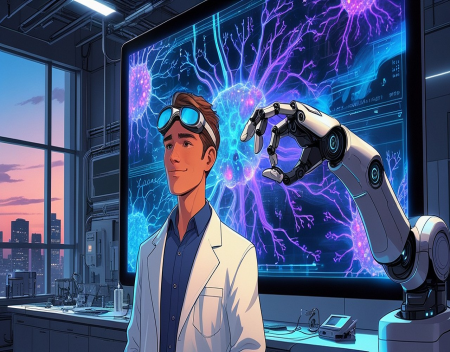
Scientific research has always been driven by curiosity, observation, experimentation, and the relentless pursuit of knowledge. Throughout history, technological advancements such as the microscope, telescope, computer, and internet have dramatically accelerated the pace of discovery. Today, artificial intelligence is emerging as another revolutionary tool that has the potential to transform nearly every field of science. While AI is not replacing scientists, it is becoming an indispensable partner that helps researchers analyze data, identify patterns, generate hypotheses, and solve complex problems faster than ever before.
Modern scientific research often produces enormous amounts of data. Whether studying the human genome, monitoring climate change, observing distant galaxies, or conducting medical trials, researchers must analyze datasets that can contain millions or even billions of individual data points. Processing this information manually would be nearly impossible, but AI excels at finding meaningful patterns within vast collections of data.
One of the most significant contributions of AI is its ability to analyze information at incredible speed. Machine learning algorithms can process years of research data in hours or even minutes, allowing scientists to focus more on interpreting results and designing new experiments rather than spending countless hours organizing information.
Medicine is one of the fields where AI is already making a substantial impact. Researchers use artificial intelligence to analyze medical images, identify disease patterns, predict patient outcomes, and assist in drug discovery. Developing a new medication traditionally requires years of laboratory work and extensive clinical testing. AI can accelerate the early stages of this process by predicting how different chemical compounds may interact with specific diseases or biological targets.
This does not eliminate the need for laboratory testing or clinical trials, but it can significantly reduce the number of compounds researchers need to investigate, saving both time and resources.
Genetics is another area experiencing rapid AI-driven advancements. The human genome contains billions of DNA base pairs, creating an immense amount of information to analyze. AI systems can identify genetic variations associated with diseases, study inherited traits, and help researchers better understand how genes influence human health.
These insights are supporting the development of personalized medicine, where treatments may eventually be tailored to an individual's unique genetic profile rather than relying solely on standardized therapies.
Astronomy has also embraced artificial intelligence. Modern telescopes generate enormous quantities of observational data every night. AI systems help astronomers identify galaxies, detect exoplanets, classify stars, and discover unusual astronomical events that might otherwise go unnoticed.
As future observatories produce even larger datasets, AI will become increasingly important for sorting through the overwhelming amount of information collected from space.
Climate science represents another major application of artificial intelligence. Researchers use AI to analyze weather patterns, simulate climate models, monitor deforestation, track ocean temperatures, and predict natural disasters. These systems can combine information from satellites, weather stations, ocean buoys, and environmental sensors to create increasingly accurate models of Earth's changing climate.
Improved climate predictions can help governments and communities prepare for severe weather events, manage natural resources more effectively, and develop strategies for adapting to environmental changes.
Artificial intelligence is also transforming chemistry and materials science. Scientists are using AI to predict the properties of new materials before they are physically created in laboratories. This capability may accelerate the development of stronger construction materials, more efficient batteries, improved solar panels, and advanced electronic components.
Instead of relying entirely on trial and error, researchers can use AI to narrow the search for promising candidates before conducting expensive laboratory experiments.
Physics researchers are benefiting as well. Large scientific facilities such as particle accelerators generate extraordinary amounts of experimental data. AI helps identify rare events, classify particle interactions, and detect subtle patterns that might indicate new physical phenomena. These capabilities enable scientists to process complex experiments more efficiently while increasing the likelihood of making important discoveries.
One of AI's greatest strengths is recognizing patterns that humans might overlook. Because machine learning algorithms can evaluate enormous datasets without becoming fatigued, they sometimes identify relationships that would be difficult or impossible for researchers to detect manually. These discoveries can lead to new scientific questions and entirely new areas of investigation.
Artificial intelligence is also improving collaboration among researchers. AI-powered systems can search scientific literature, summarize research papers, identify related studies, and recommend relevant publications from around the world. With millions of scientific papers published each year, keeping up with current research has become increasingly difficult. AI helps researchers stay informed while reducing the time spent searching for information.
Laboratory automation is another rapidly growing area. Robotic systems guided by AI can perform repetitive experiments, monitor results, adjust procedures, and collect data with remarkable precision. This allows researchers to conduct experiments continuously while minimizing human error and freeing scientists to focus on analysis and innovation.
Despite these impressive capabilities, artificial intelligence is not replacing the scientific method. AI can identify correlations, generate predictions, and suggest hypotheses, but human researchers remain responsible for designing experiments, verifying results, interpreting findings, and ensuring that conclusions are scientifically valid.
Scientific discovery depends not only on data analysis but also on creativity, critical thinking, skepticism, and ethical judgment. These qualities remain firmly within the domain of human researchers.
There are also important challenges associated with AI in scientific research. Machine learning systems are only as good as the data they receive. Poor-quality, incomplete, or biased datasets can produce misleading results. Researchers must carefully validate AI-generated findings through traditional scientific methods before accepting them as accurate.
Transparency is another concern. Some advanced AI models operate as "black boxes," producing results without clearly explaining how conclusions were reached. In scientific research, reproducibility and transparency are essential. Scientists must understand not only what an AI predicts but also why it reached that conclusion.
Ethical considerations are equally important. AI-assisted research involving healthcare, genetics, surveillance, or environmental monitoring must balance innovation with privacy, fairness, and responsible use of data. Establishing clear ethical guidelines will become increasingly important as AI becomes more deeply integrated into scientific work.
Looking ahead, artificial intelligence is likely to become an essential research tool across nearly every scientific discipline. Future AI systems may design experiments, simulate complex physical systems, identify promising research directions, and collaborate with scientists in ways that significantly accelerate the pace of discovery.
Rather than replacing scientists, AI is expanding what scientists can accomplish. By automating data analysis, uncovering hidden patterns, and accelerating research workflows, artificial intelligence is allowing researchers to focus on asking bigger questions and solving increasingly complex problems.
The future of scientific research will almost certainly be shaped by a close partnership between human intelligence and artificial intelligence. Together, they have the potential to unlock discoveries that could improve medicine, protect the environment, advance technology, deepen our understanding of the universe, and enhance the quality of life for generations to come.
Great experience with Computer Geek. They helped with my website needs and were professional, respon . . . [MORE].

Great, quick service when my laptop went into meltdown and also needed Windows 11 installed. Also ca . . . [MORE].
It was a great experience to working with you. thank you so much. . . . [MORE].
Thank you so much for great service and over all experience is good . highly recommended for all peo . . . [MORE].
We engaged The Computer Geeks in mid-2023 as they have a reputation for API integration within the T . . . [MORE].
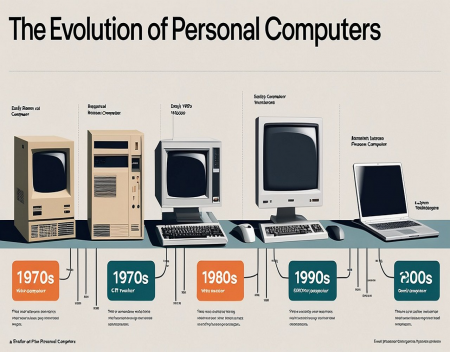
The Evolution of Personal

The Hidden Cost of Free A
The Psychology of Notific